Venice from a Bird's Eye View
Venice is a wonderful, incredibly beautiful, and romantic city in Italy. Today, we'll take a helicopter ride over the historic center of the City of Lovers on the water and see Venice from a bird's eye view. 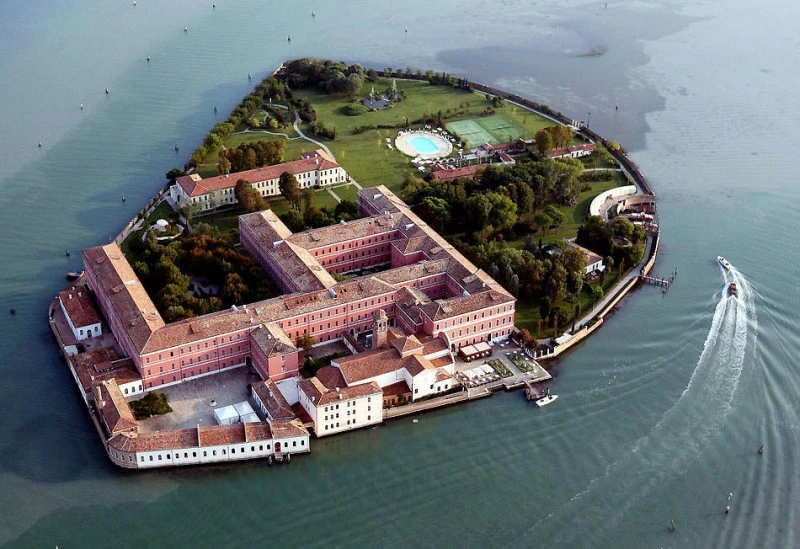
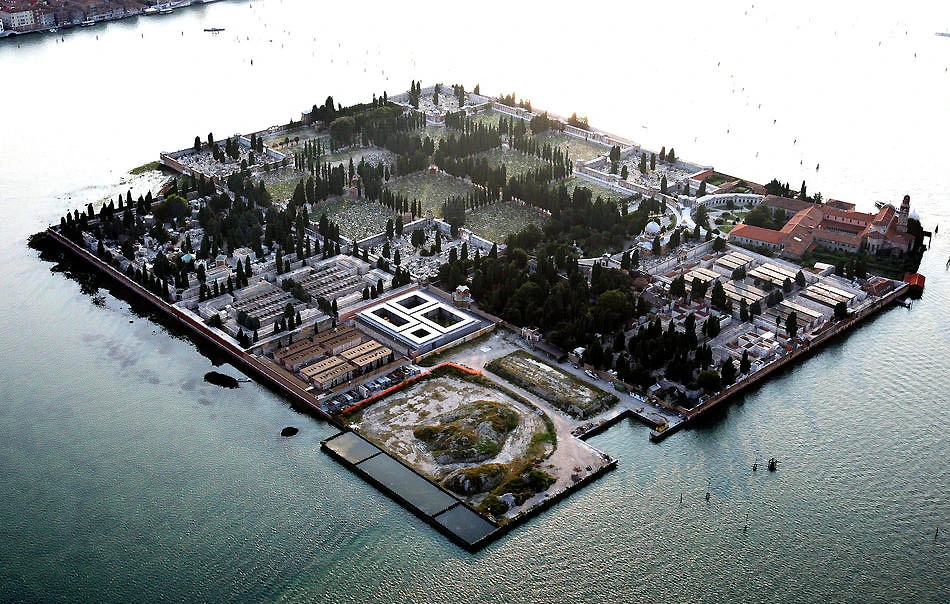
The historic center of Venice is located on 118 islands in the Venetian Lagoon. 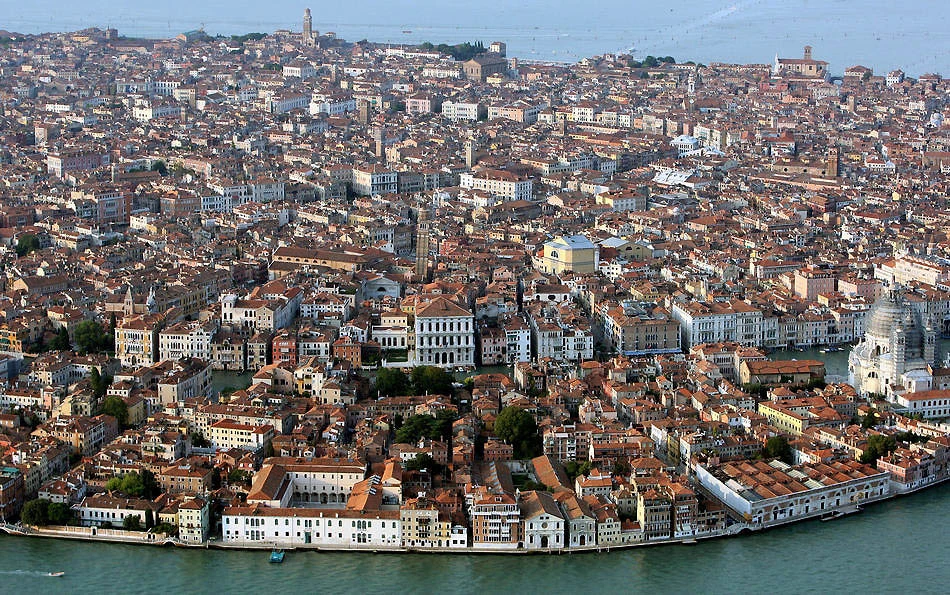

Как садят рис
Смотреть видеоThe islands of the Venetian Lagoon are separated by 150 canals and channels, spanned by about 400 bridges (including the Rialto Bridge and the so-called Bridge of Sighs, both dating back to the late 16th century).
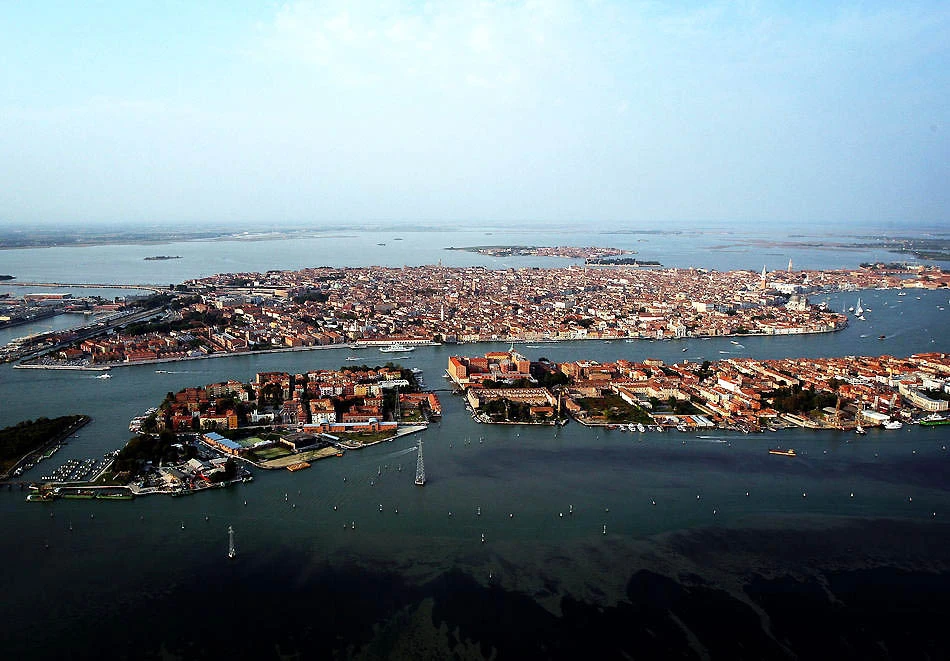
The islands of Venice are a seaside resort, a center of international tourism of global significance, and a venue for international film festivals, art, and architectural exhibitions.
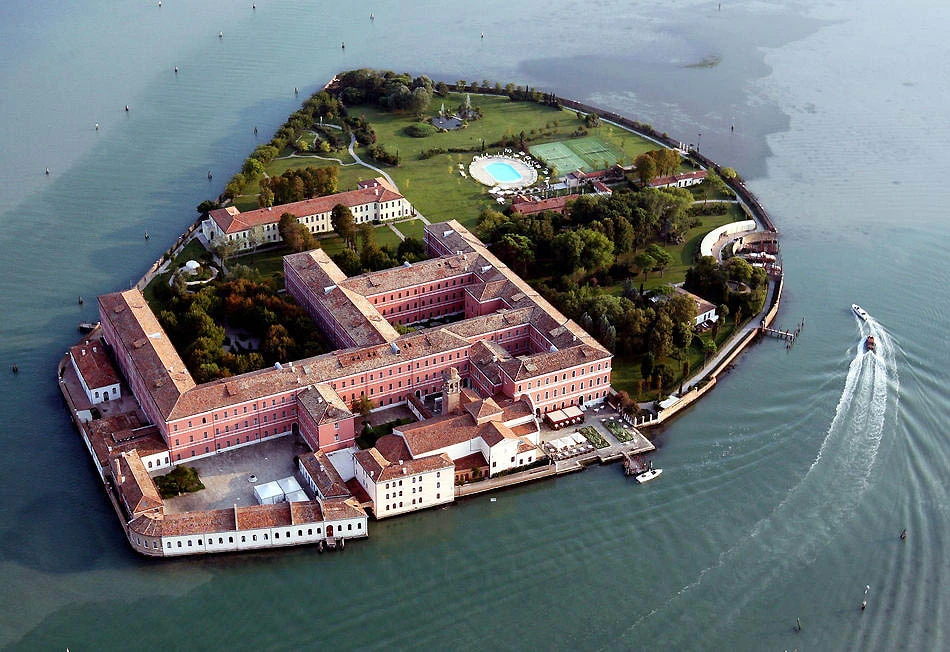
Intra-city transportation in Venice is provided by motorboats, gondolas, and barges.
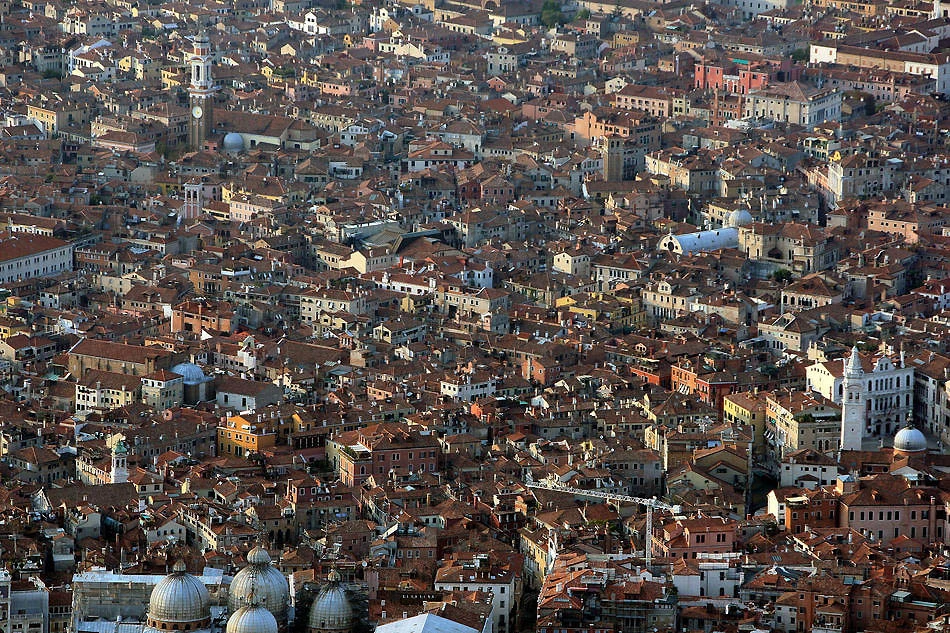
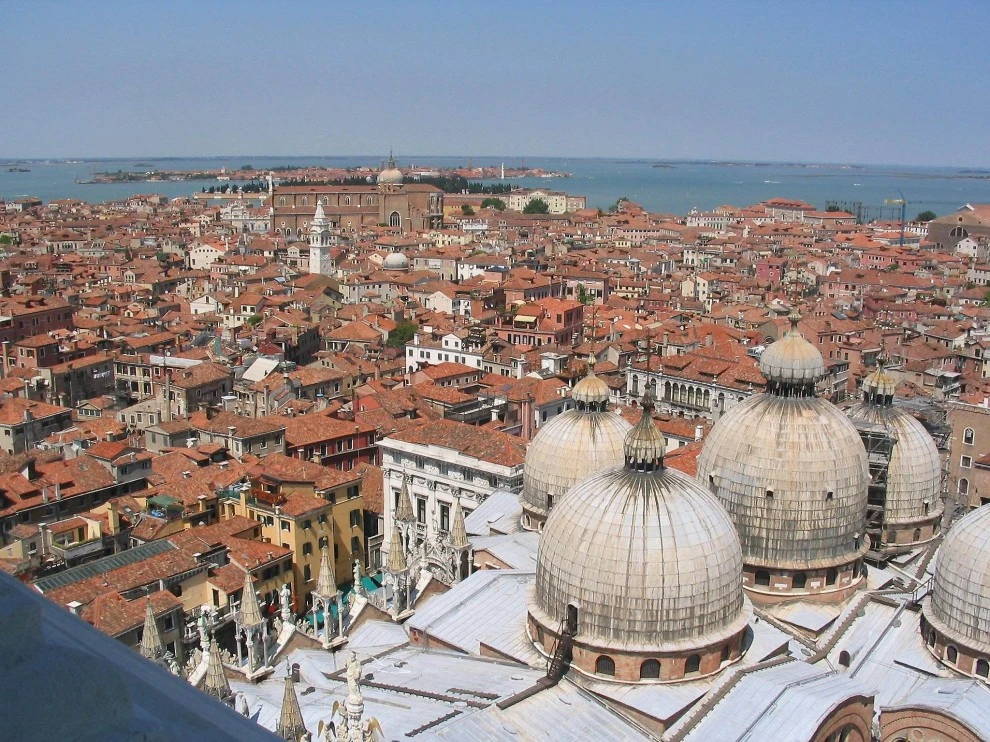
The densely populated historic center of Venice.
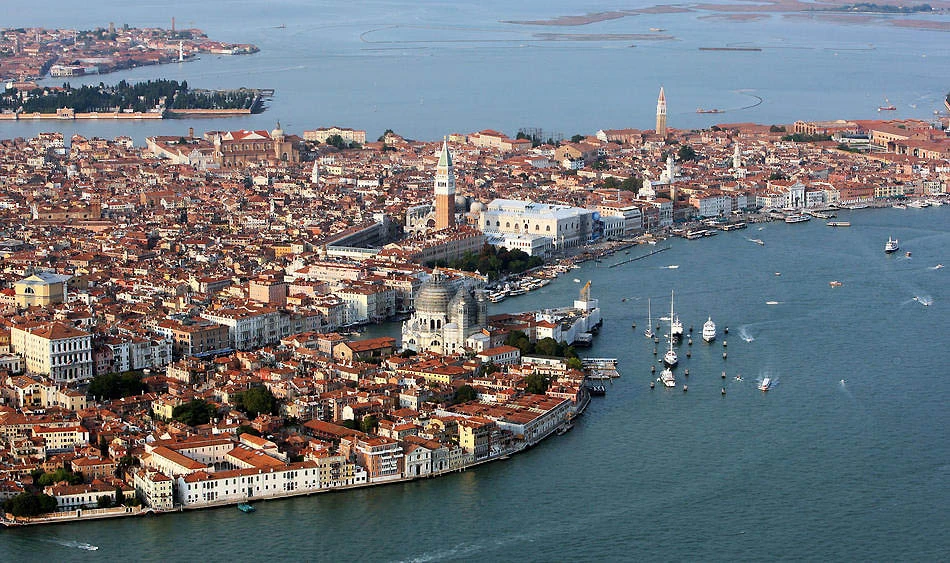
The historic center of the city is St. Mark's Square. This is the center of public life, the heart of Venice, the site of ceremonies, religious and public festivals. It's hard to believe now, of course, that many centuries ago, gardens belonging to the nuns of the nearby Benedictine monastery blazed here.
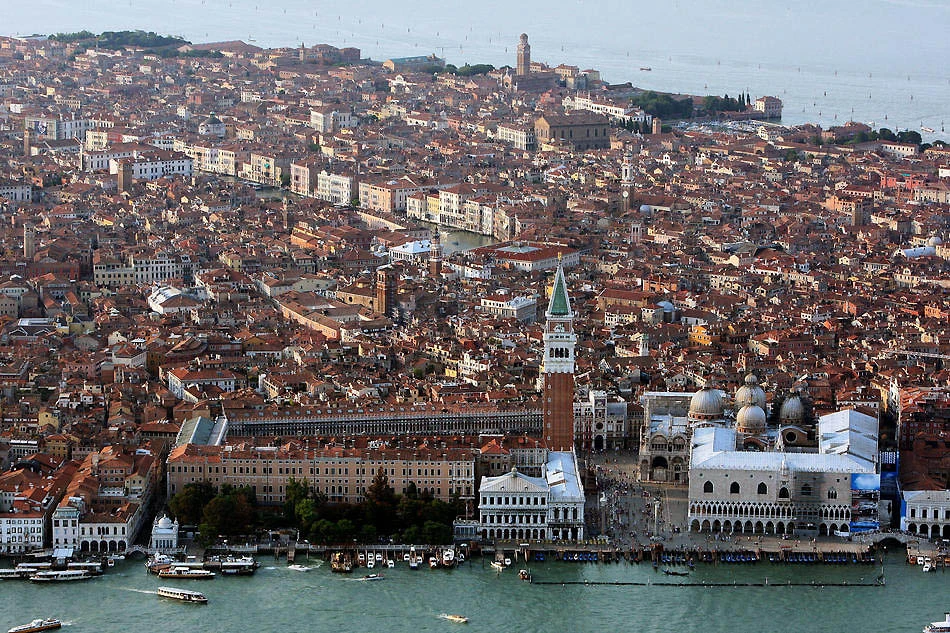
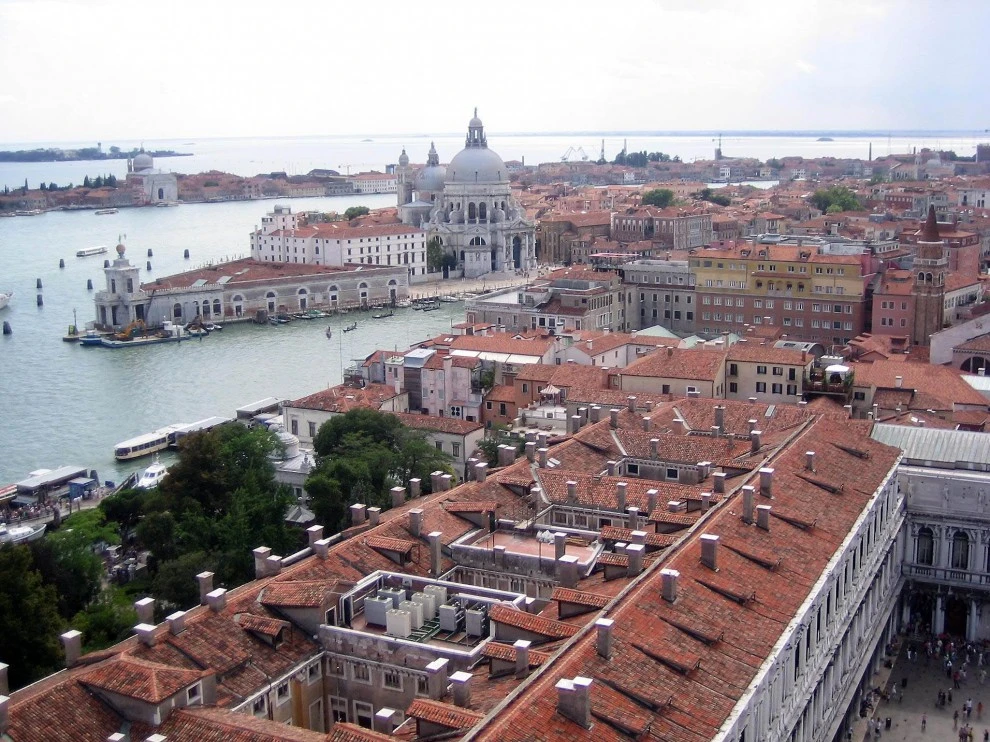
In St. Mark's Square stands the most grandiose building in all of Venice – the Doge's Palace (lower left corner). Looking at the Doge's Palace, it appears as if it's tilted upside down with its foundations facing upward and its roof facing downward. The central part of the facade is adorned with two richly decorated balconies. They were built so that the Doge could appear before the people.
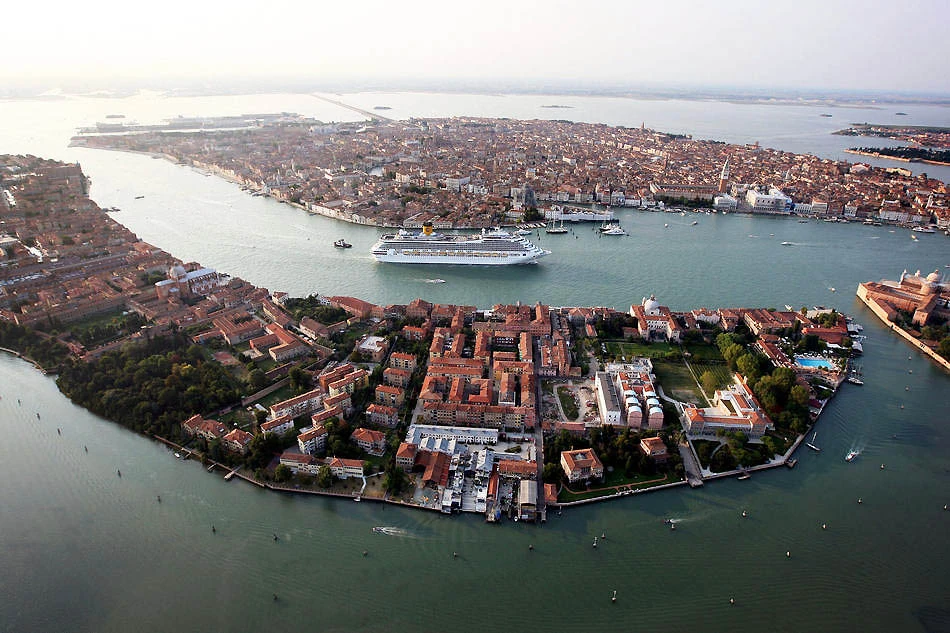
Venice is a popular cruise destination. The local cruise ship terminal handles up to 1.5 million passengers annually.
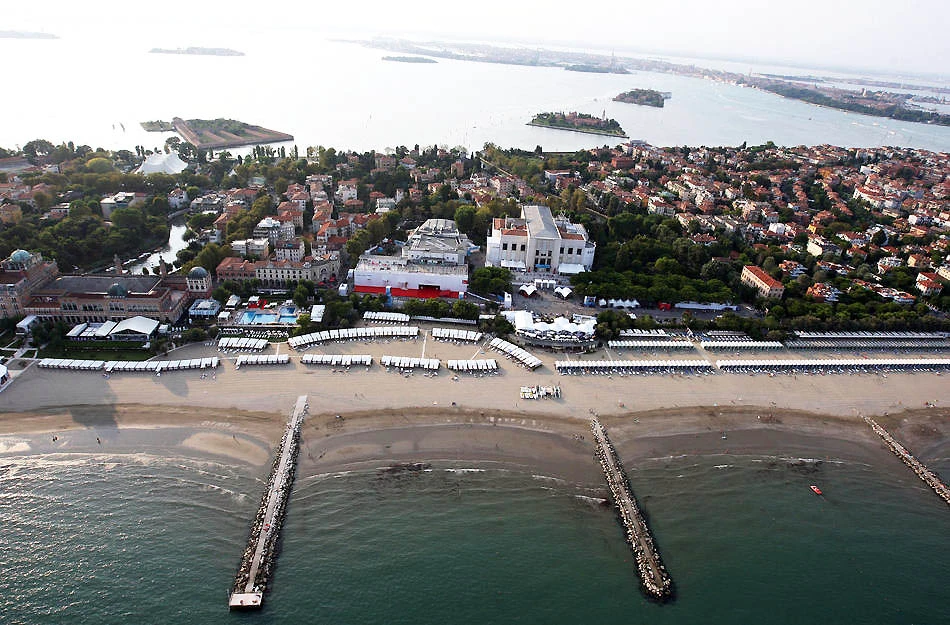
Those visiting the city on the water should see St. Mark's Square, the Doge's Palace, the Church of San Giorgio Maggiore, Palazzo Grassi, the Spanish and Italian Synagogues, stroll across the Bridge of Sighs, the Rialto Bridge, continue to the Clock Tower and St. Mark's Bell Tower, and cruise along the Grand Canal.
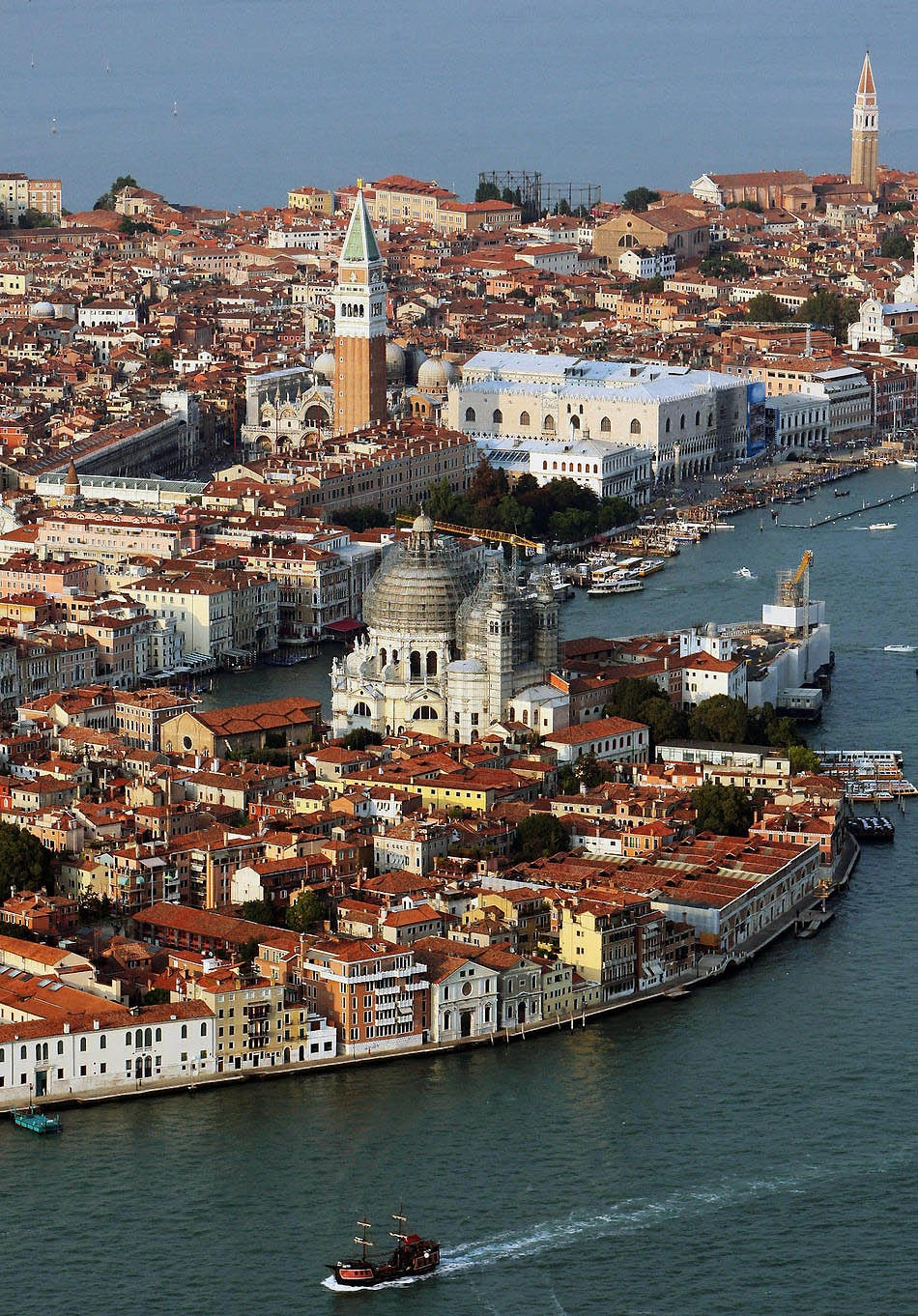
However, it can be said that Venice lives under constant threat. The water that makes the city unique is also its headache.
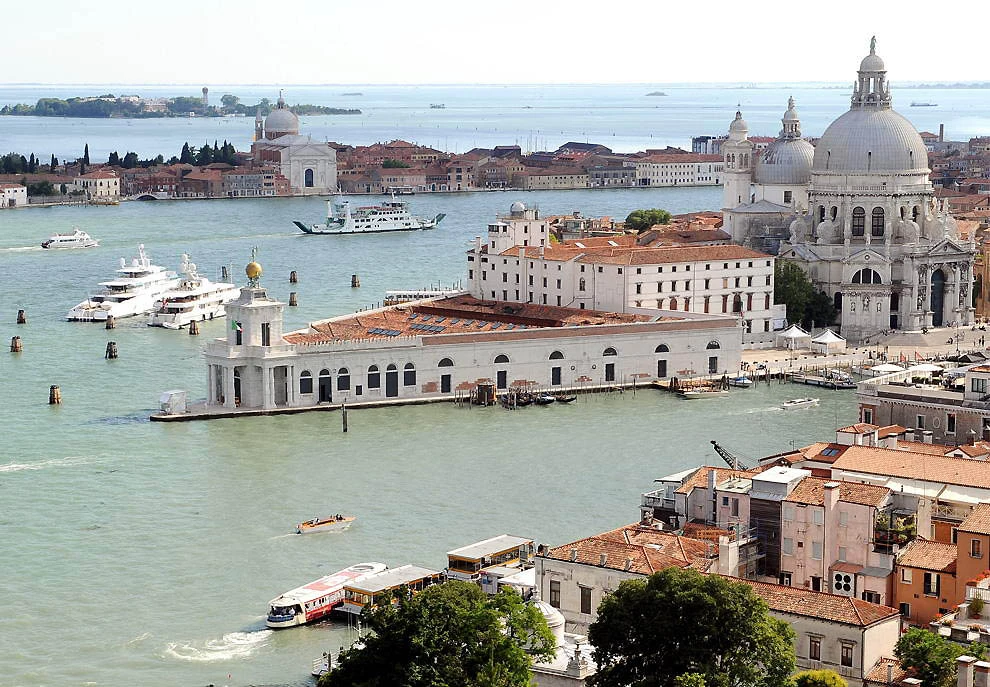
Venice is gradually sinking beneath the waves—a fact that was already faced by the ancient settlers, who were forced to rebuild the city twice, moving to higher islands. (Photo is clickable)
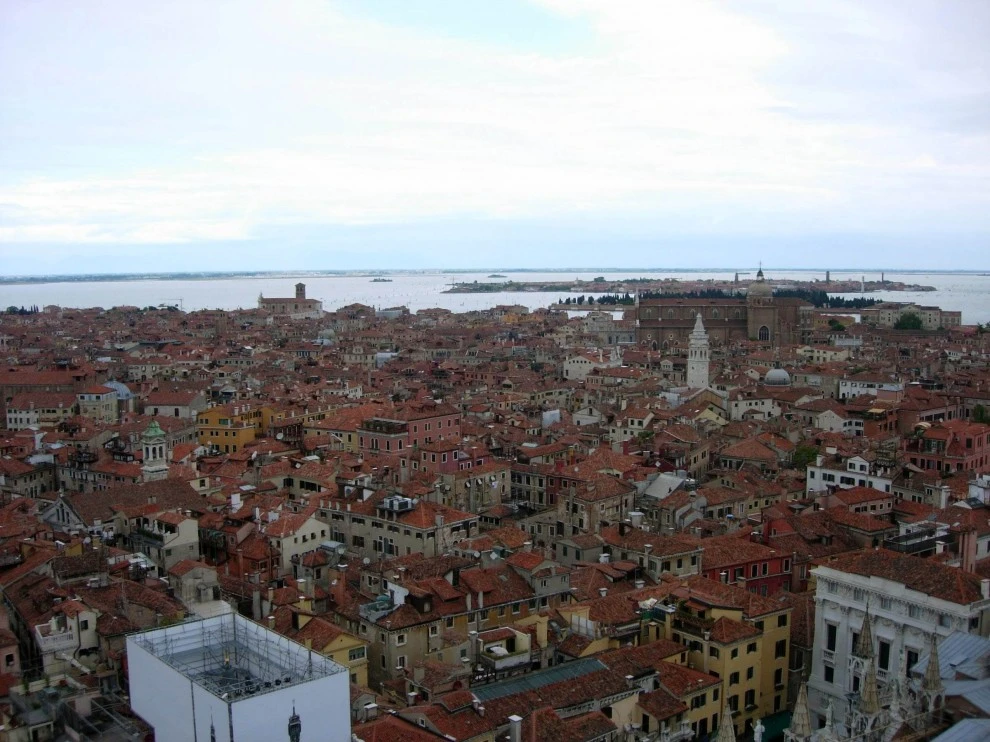
Throughout the 20th century, Venice sank into the lagoon at a rapid rate (up to 5 mm per year), resulting in a 23 cm subsidence of the land.
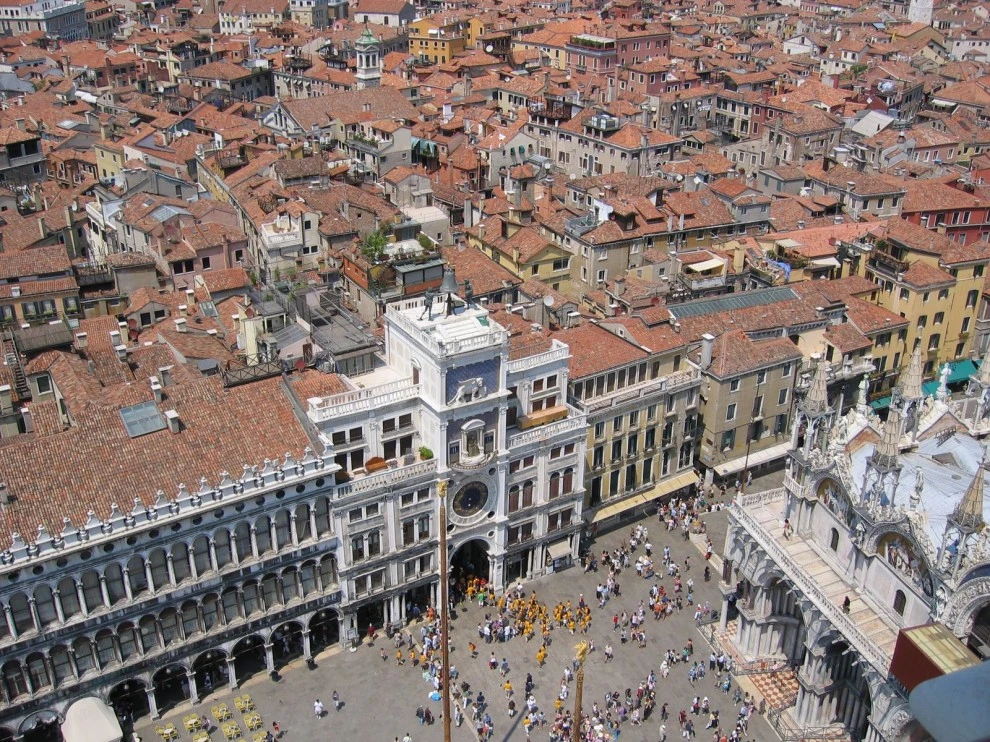
The main cause of the disaster was industrial water extraction from artesian wells and the resulting lowering of the aquifer. The gradual flooding of the city was also influenced by the increasing pressure of ground objects: buildings and structures, people, etc. After the wells were closed, the city's subsidence slowed but did not stop. (Photo clickable)
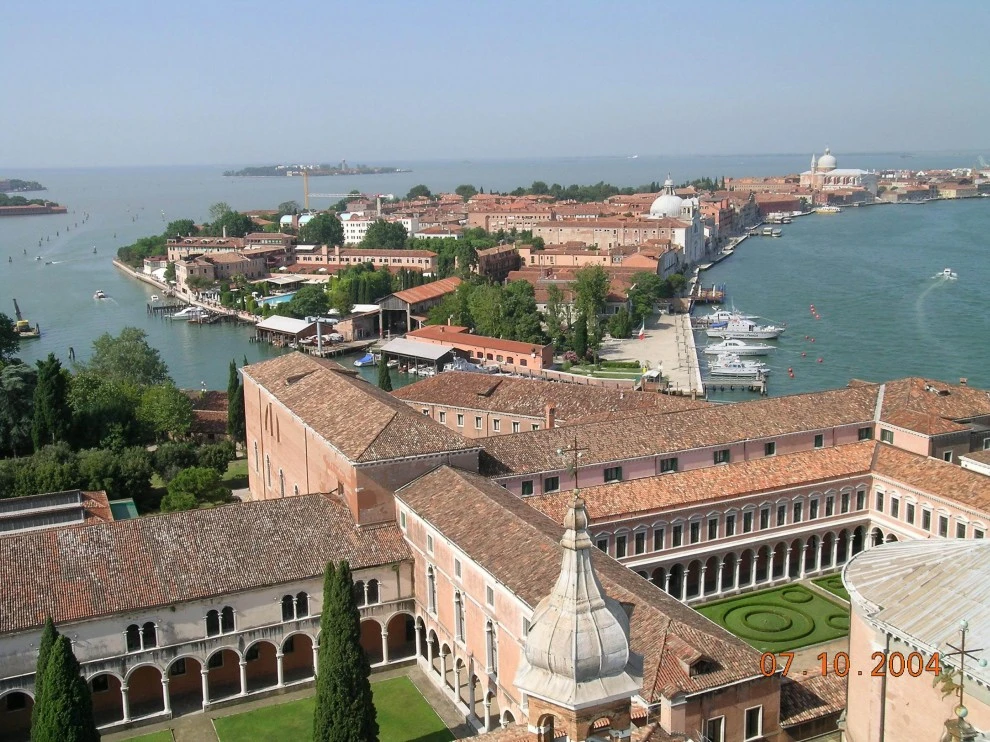
According to scientists, Venice could become uninhabitable as early as 2028. (Photo clickable)
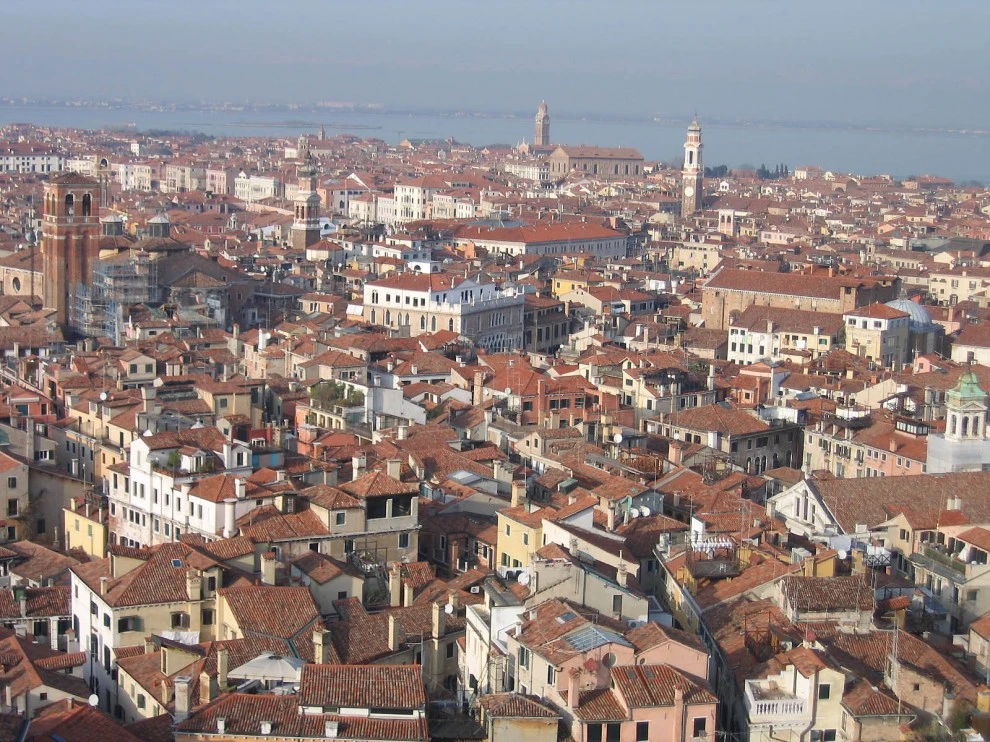
To save this unique city, the "Moses" project was developed, which envisions the construction of hermetic barriers around the city. The project received expert approval and was officially opened in 2003 with the laying of the foundation stone by Silvio Berlusconi. (Photo clickable)
However, the construction of dams has been heavily criticized due to the low effectiveness of similar flood protection systems tested in the Netherlands and the environmental consequences (a lack of seawater could lead to the extinction of many unique and rare species inhabiting the lagoon). (Photo clickable)
Despite its image as a romantic city that attracts people from all over the world, Venice has made the rather dubious list of the world's smelliest cities. Venice earned this title due to its less-than-ideal sewage system, with waste dumped from hundreds of Venetian mansions directly into the city's famous canals. (Photo: Clickable)

Download
Archive size 3.56 Mb, downloaded 33 times