10 Stunning Aerial Views of Deserts
Photographer George Steimetz has flown a motorized paraglider over deserts around the world, from China to Africa and Antarctica, capturing stunning images. A dozen of them are collected in this issue. 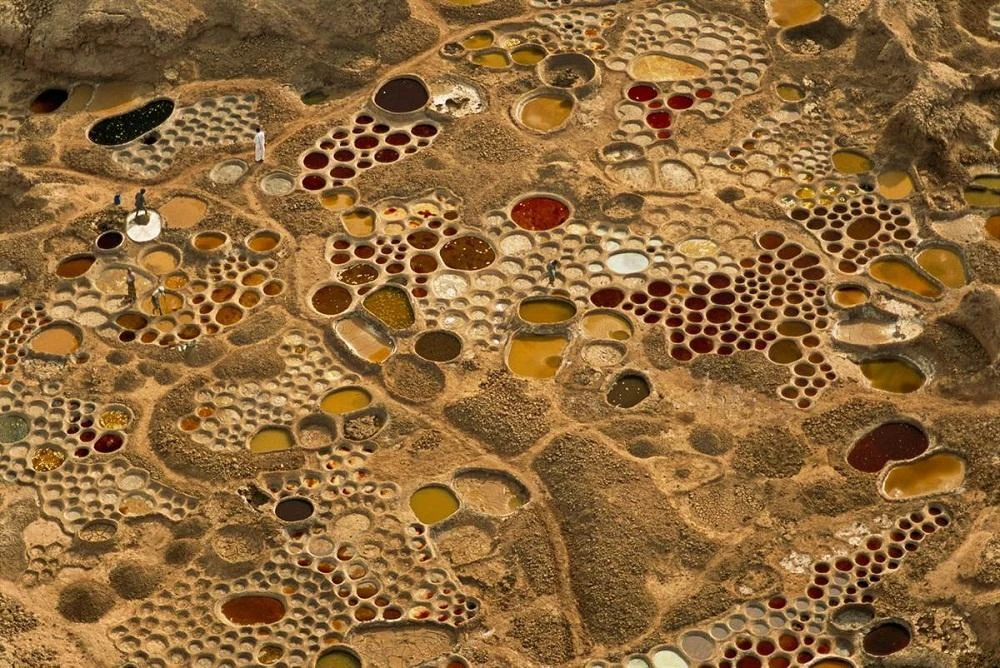
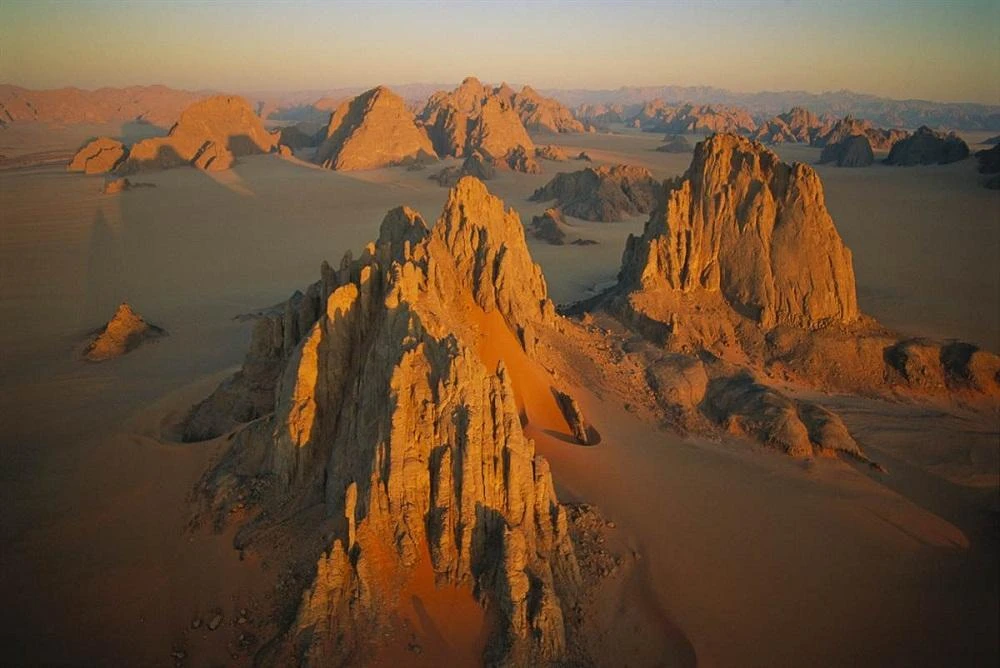
Kamasay Valley in Chad
Sandstone outcrops poke through orange dunes in the Tibesti region, a few kilometers from the Libyan border. The orange sand is formed by the erosion of Nubian sandstone. 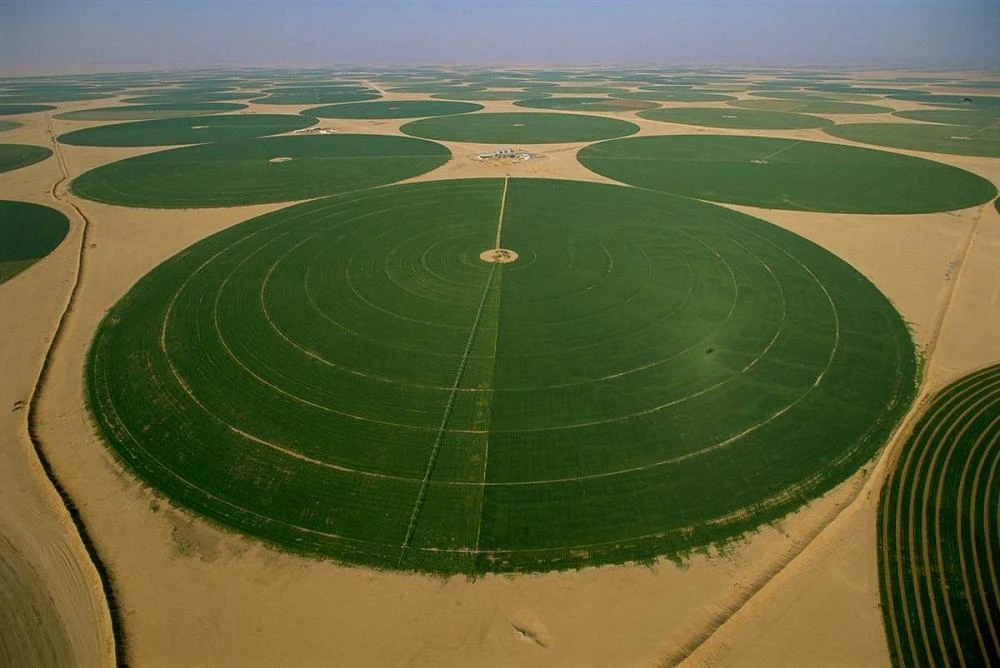

Как садят рис
Смотреть видеоRub al-Khali, Saudi Arabia
Alfalfa is grown for animal feed on irrigated desert lands on the edge of Wadi al-Dawasir. Each circle is almost a kilometer in diameter. Water and fertilizer are sprinkled to make the soil at least a little more fertile. The water comes from a well 100-200 meters deep, where it accumulated as a result of rainfall hundreds or even thousands of years ago. There has been no rainfall here for 20 years.
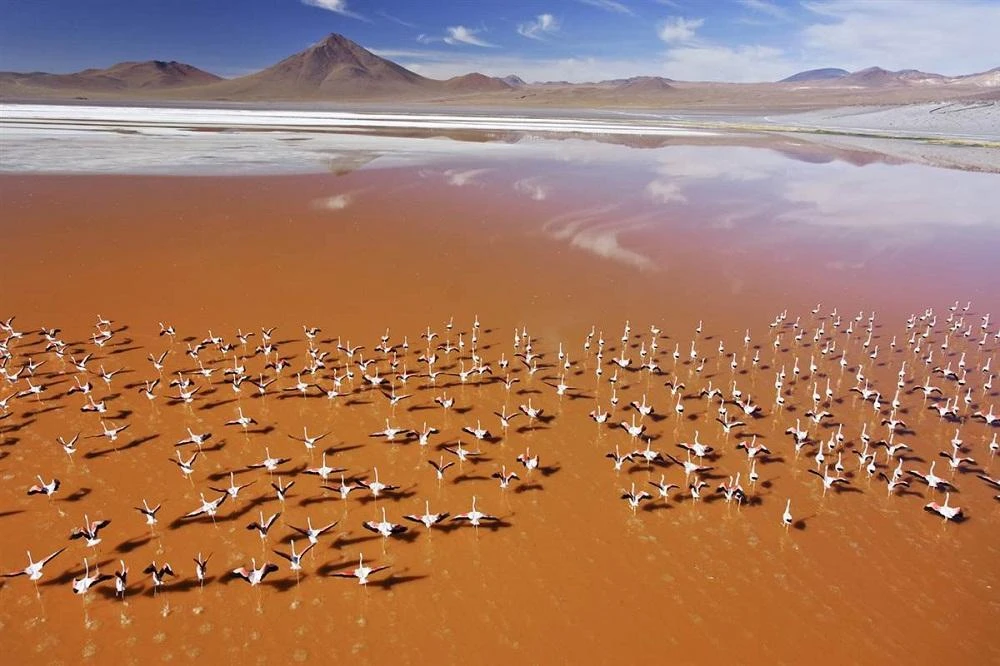
Laguna Colorado, Bolivia
A flock of rare flamingos on a lake in Bolivia, located at an altitude of 4,260 meters in the Andes. The water is colored by red algae blooming thanks to the nutrients found in the hot springs. The lake contains several small borax islands, as well as the largest flamingo population of any body of water in the Altiplano desert. Three species of flamingos live here: the Andean flamingo, the Chilean flamingo, and James's flamingo.
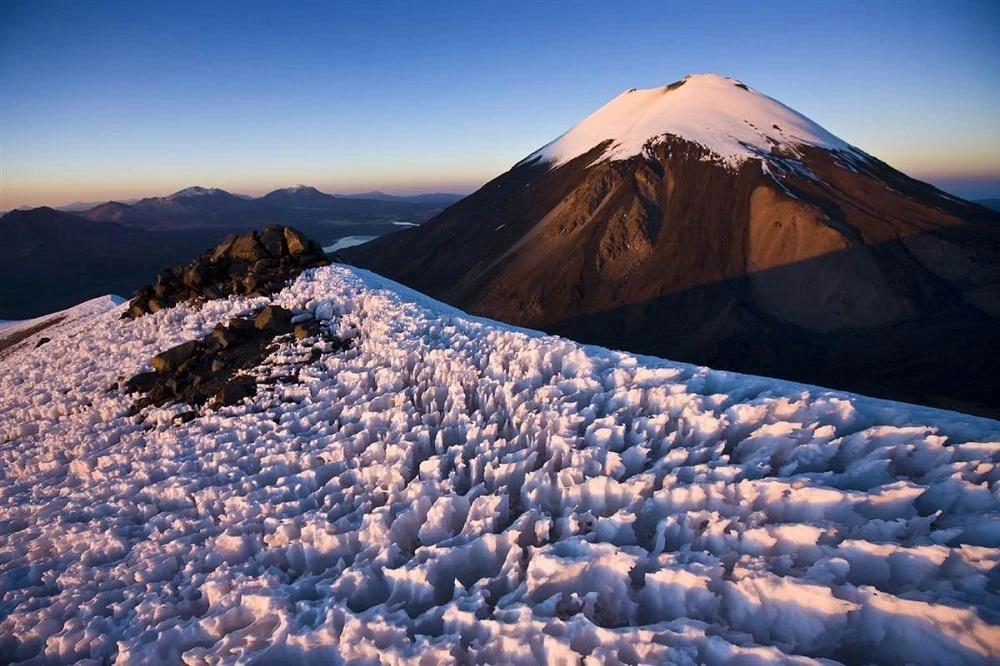
Parinacota Volcano, Bolivia
Ice of this unusual shape forms primarily in the high-altitude deserts of the Andes and Himalayas at altitudes of 6,000 meters. Its formation is caused by a combination of melting and sublimation processes, the evaporation of ice without an intermediate water phase. The image shows Parinacota Volcano, at 6,342 meters. Its rise above the permanent snow cover has accelerated in recent decades due to rapid climate change. To the left of Parinacota is Pomerape Volcano.
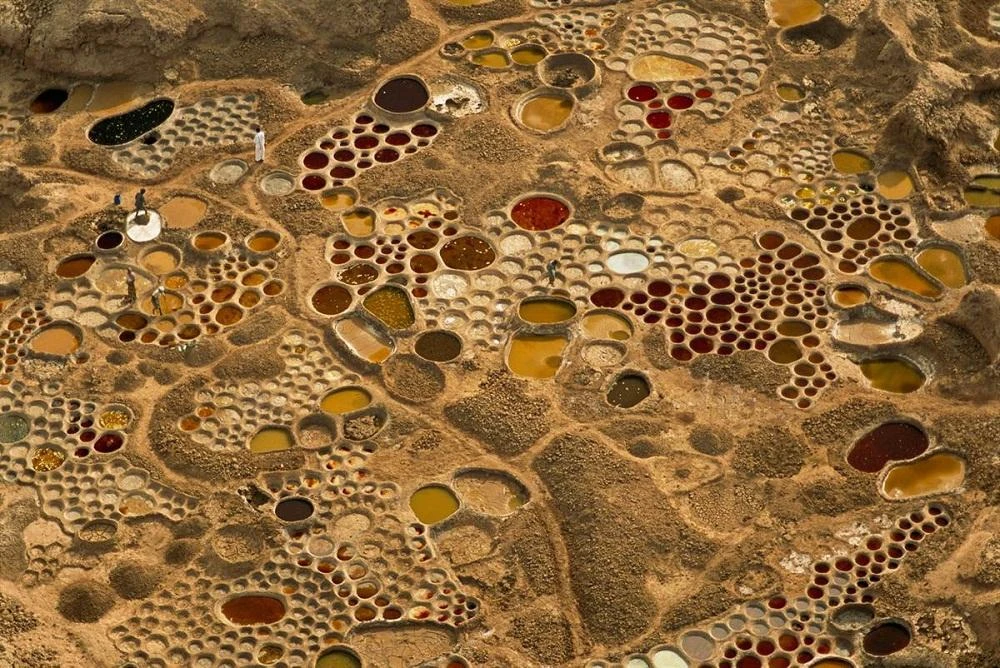
Tegidda N'tesoum, Niger
Saltwater pools appear like a mosaic on the desert surface. Water from shallow wells mixes with salty soil, creating a slurry. The colors and shades depend on the color of the mud, algae, and the amount of salt. The salt is consumed by local animals.
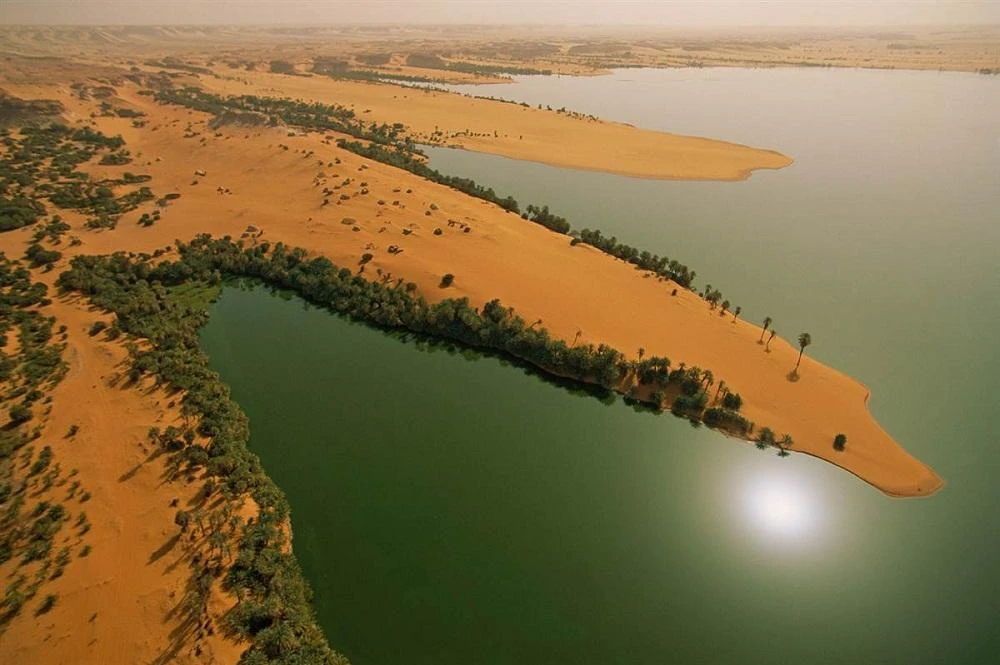
Ounianga Kebir, Chad
Small huts are scattered across the sandy peninsulas of Lake Ounianga Kebir, also known as Yoa, in northern Chad. People live directly under date palms. Freshwater accumulated here as a result of rainfall 5,000 years ago, when the Sahara was a wetland, and is stored in large aquifers of Nubian sandstone that run through the central Sahara.
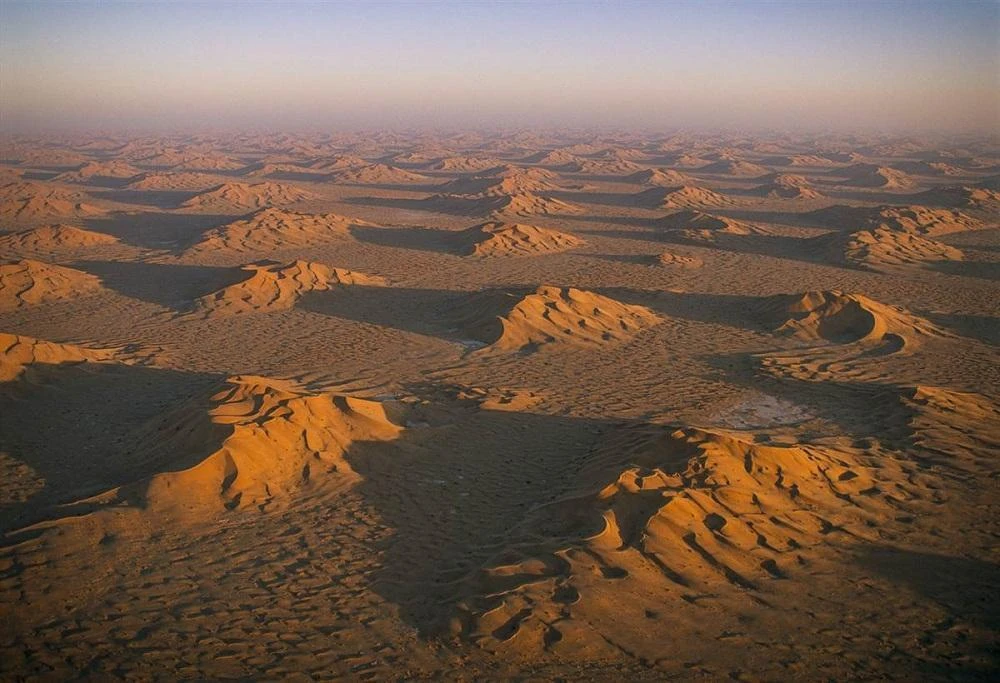
Rub al-Khali, Oman.
Water occasionally emerges from the mountains and dissolves in the sand. Bedouins still graze their camels here.
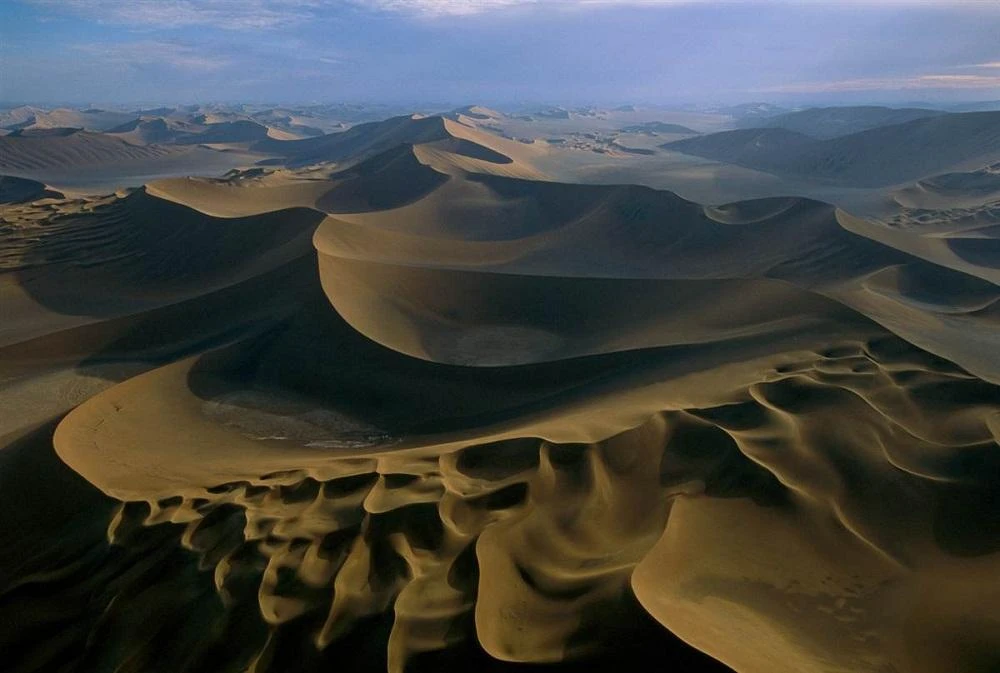
Dasht-e Lut, Iran
The megadunes reach over 275 meters in height and stretch for over 880 meters. They are formed by strong winds lifting sand and silt from the site of a dried-up lake.
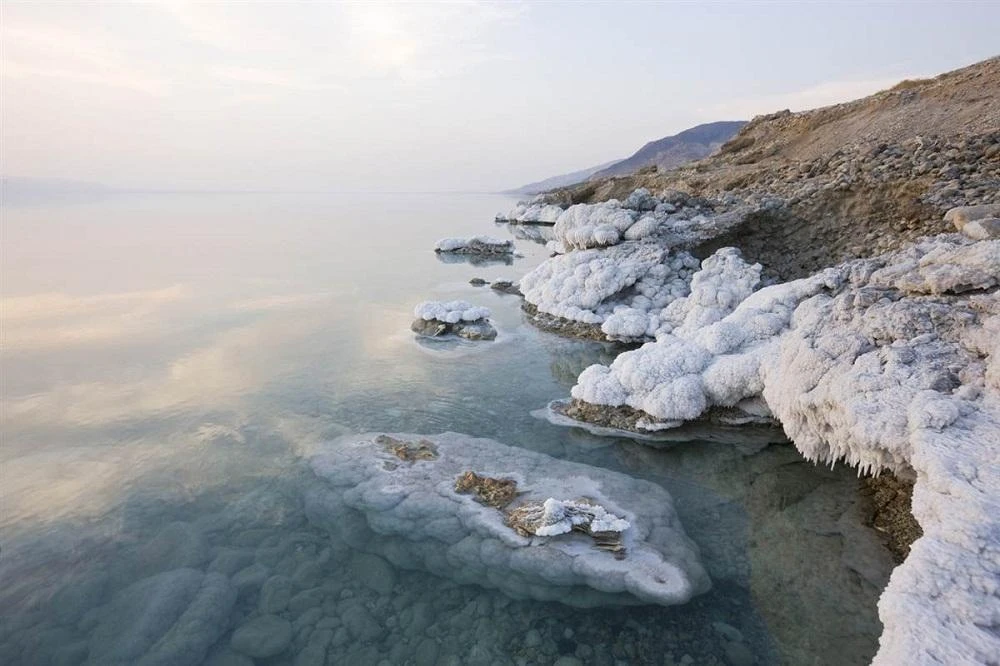
Dead Sea, Jordan
The Dead Sea is not only one of the saltiest bodies of water on the planet, but also the lowest point on Earth's surface. On the Jordanian shore of the Dead Sea, waves have formed a thick layer of stalactites and salt crystals.
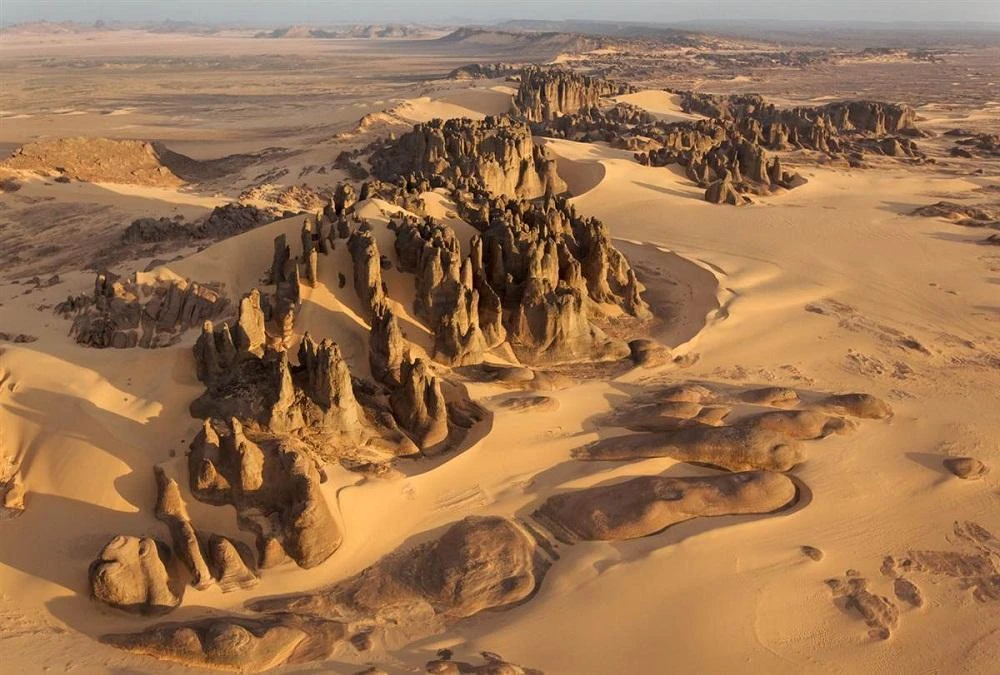
Tassili du Hoggar, Algeria
The beautiful peaks of these natural rock sculptures were formed by the Harmattan winds of the Central Sahara.

Download
Archive size 1.09 Mb, downloaded 41 times