A passionate artist who got carried away: the story of the Peacock Room (12 photos)
In 1876, British shipowner Frederick Richards Leyland purchased a luxurious mansion in the fashionable London district of Kensington. He soon hired architect Richard Norman Shaw to remodel and decorate the house. However, the talented Thomas Jekyll, known for his work in the Anglo-Japanese style, was responsible for remodeling the dining room. 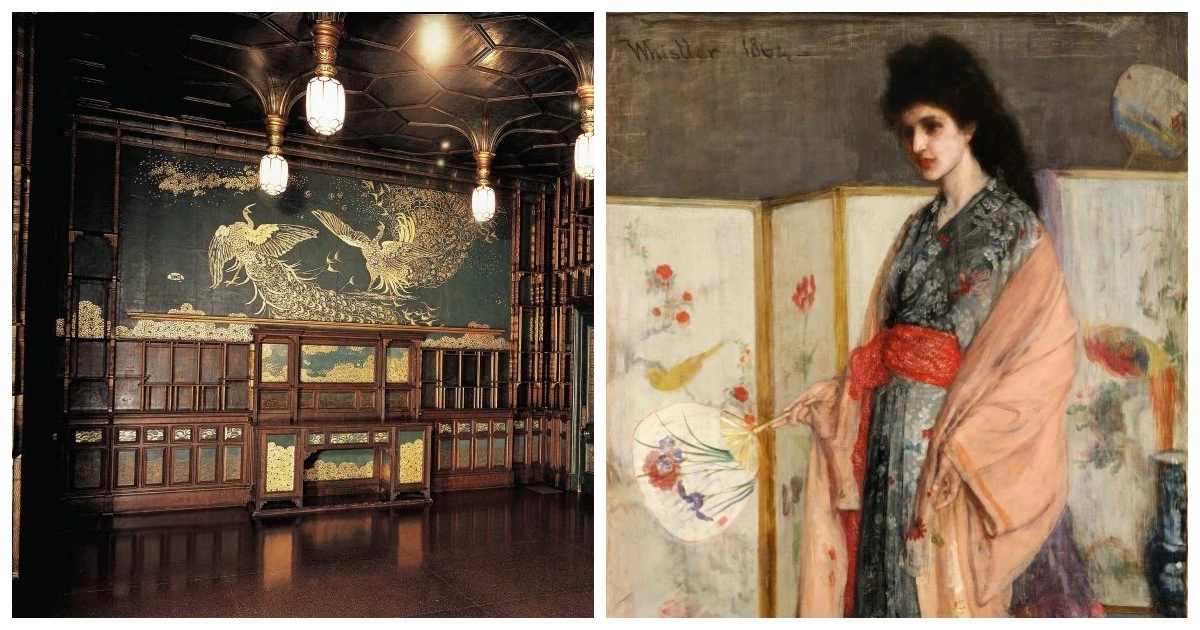
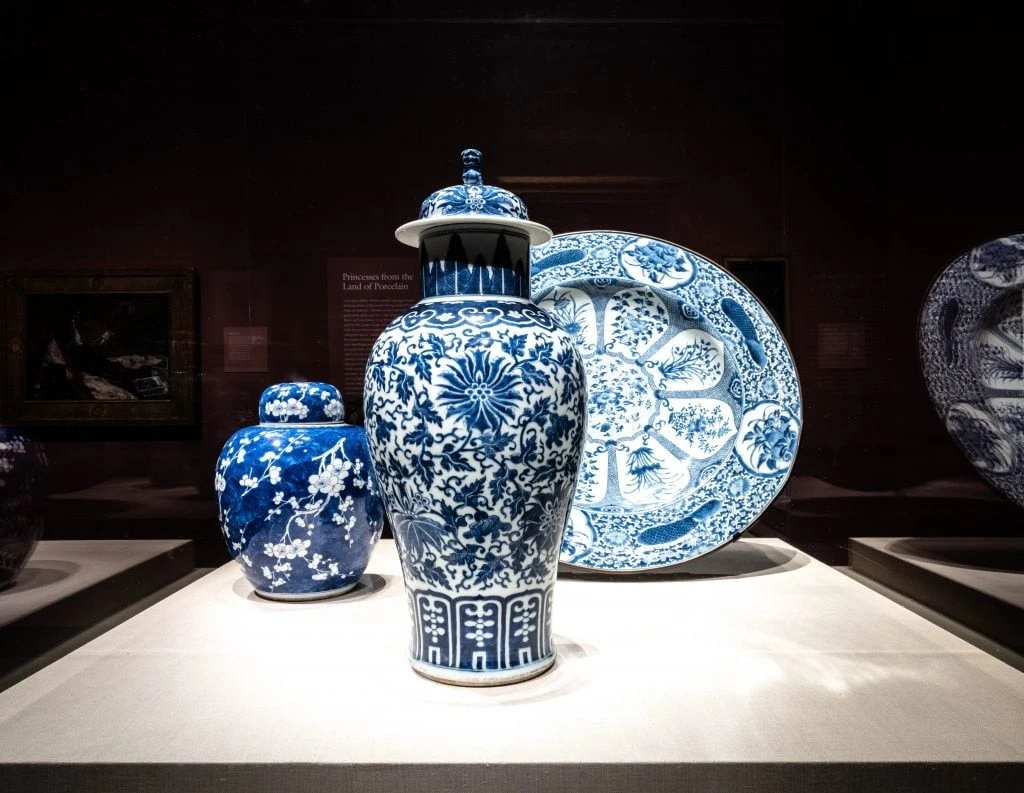
Leyland had an extensive collection of Chinese blue and white porcelain, mainly from the Kangxi period, which he wanted to display in the dining room. 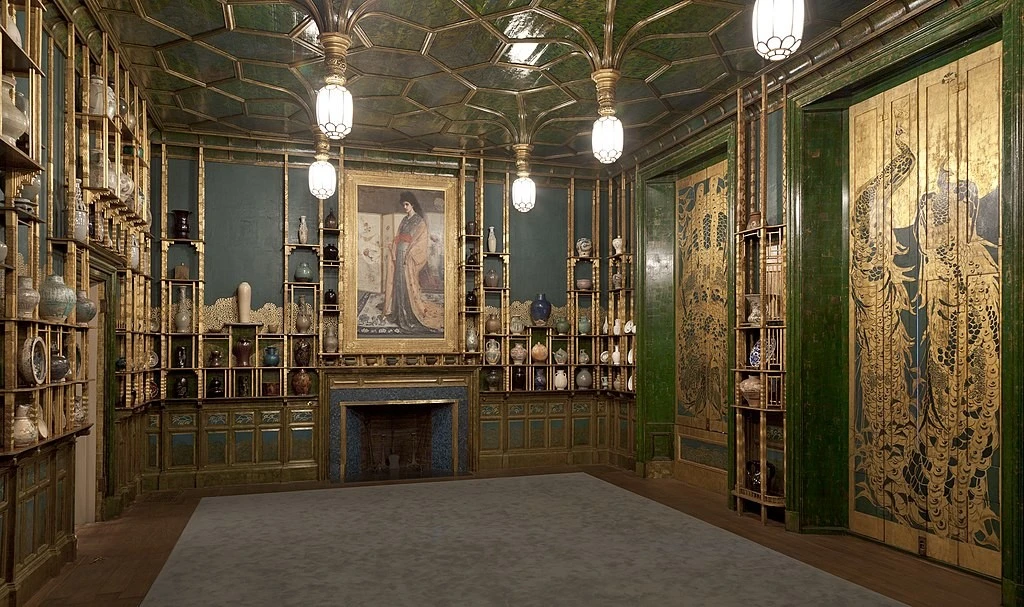
For this, Jekyll created intricate carved walnut shelves and complemented them with gilded leather, which he covered the walls with. Above the fireplace, a painting by American artist James McNeill Whistler, "The Porcelain Princess," took pride of place. 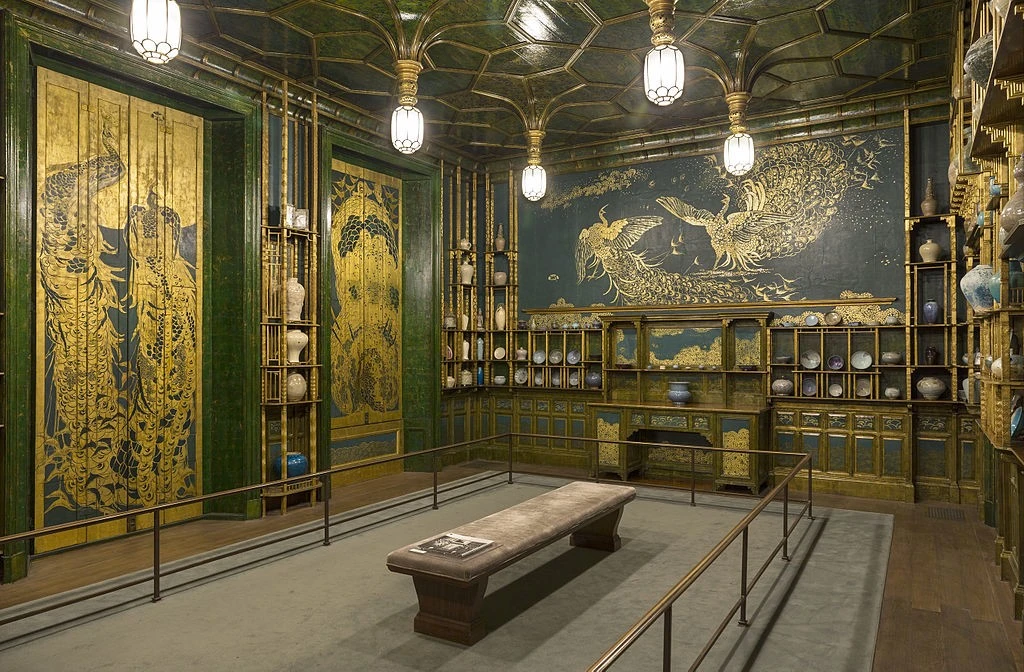

At this time, Whistler himself was working on the design of the hall. When Jekyll asked Leyland what colours to use for the shutters and doors of the dining room, Leyland suggested consulting Whistler. The artist decided that the shades of the carpet and the flowers on the leather panels clashed with his Princess.
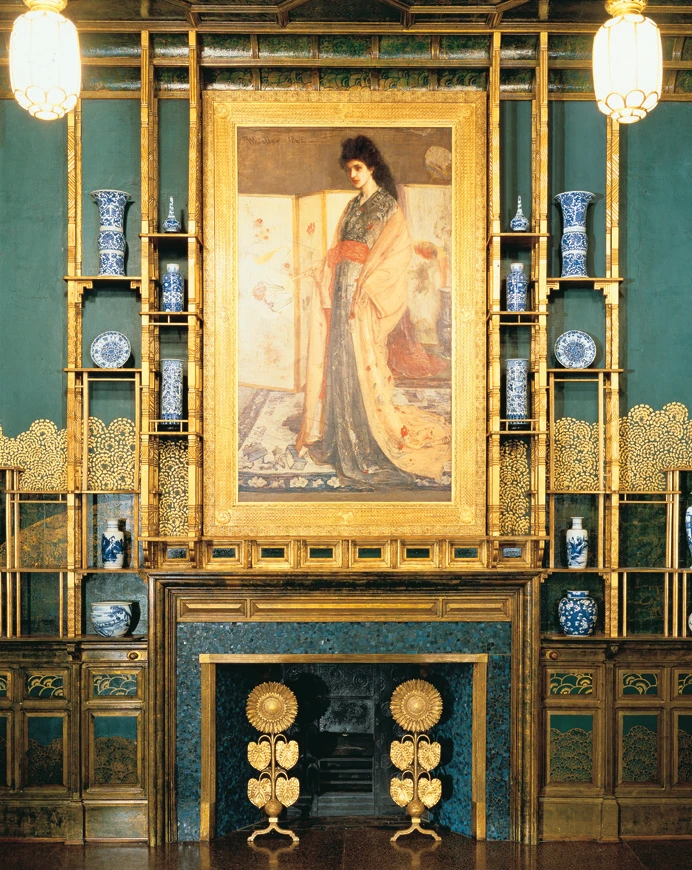
With Leyland's permission, he touched up the walls with subtle touches of yellow, and reproduced the wave pattern from Jekyll's stained-glass door on the cornices and wood panelling. Leyland approved the changes and left for Liverpool on business. Jekyll soon fell ill and dropped out of the project.
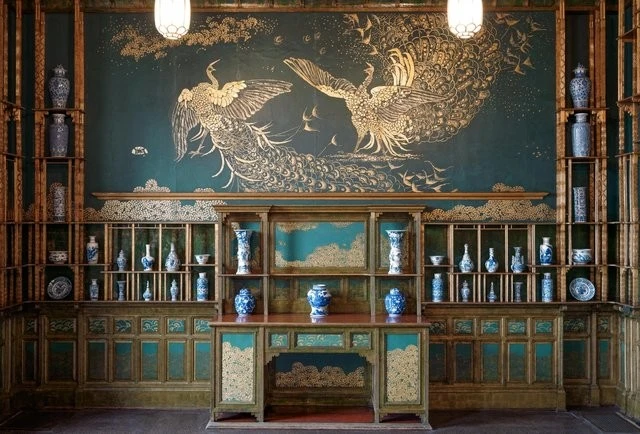
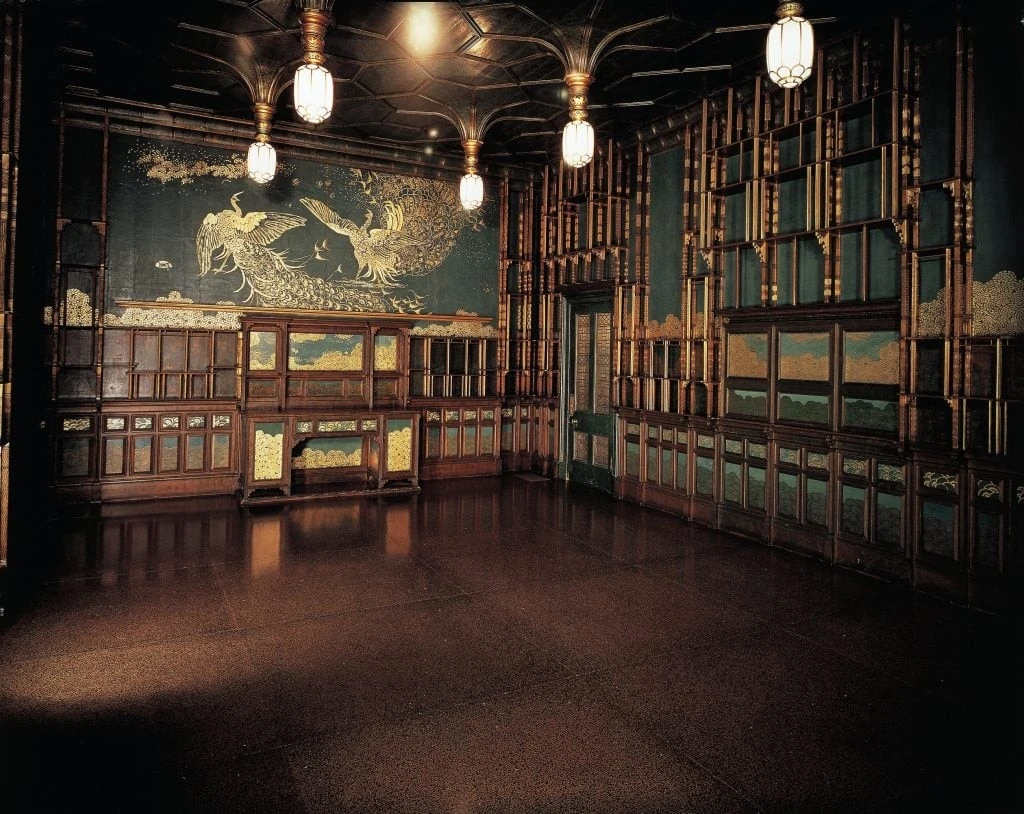
Left alone, Whistler gave free rein to his imagination. He covered the ceiling and walls with "Dutch metal" (imitation gold leaf), and painted lush peacock feathers on top. He gilded Jekyll's shelves, and painted four magnificent peacocks on the shutters.
A Surprise for the Customer
In the end, he agreed to pay half the amount and banished Whistler from the house forever.
The Artist's Revenge
The offended Whistler planned a counterattack. As a final touch, he painted a large panel on the wall opposite the Princess depicting two fighting peacocks, an allegory for the damaged relationship between artist and client.
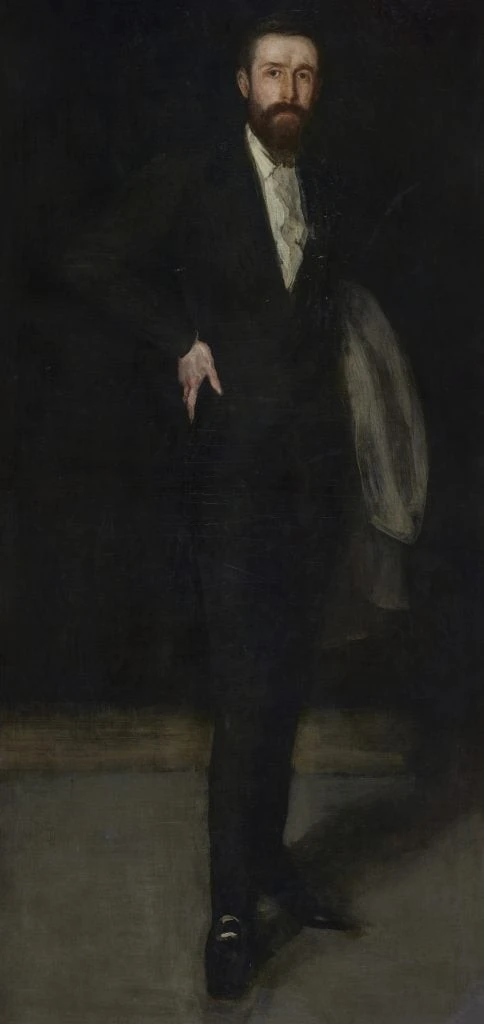
Portrait of F. R. Leyland
The left peacock symbolized Whistler himself, and the right one, a stingy patron. Coins glitter on his chest and tail, and a few are even scattered at his feet.
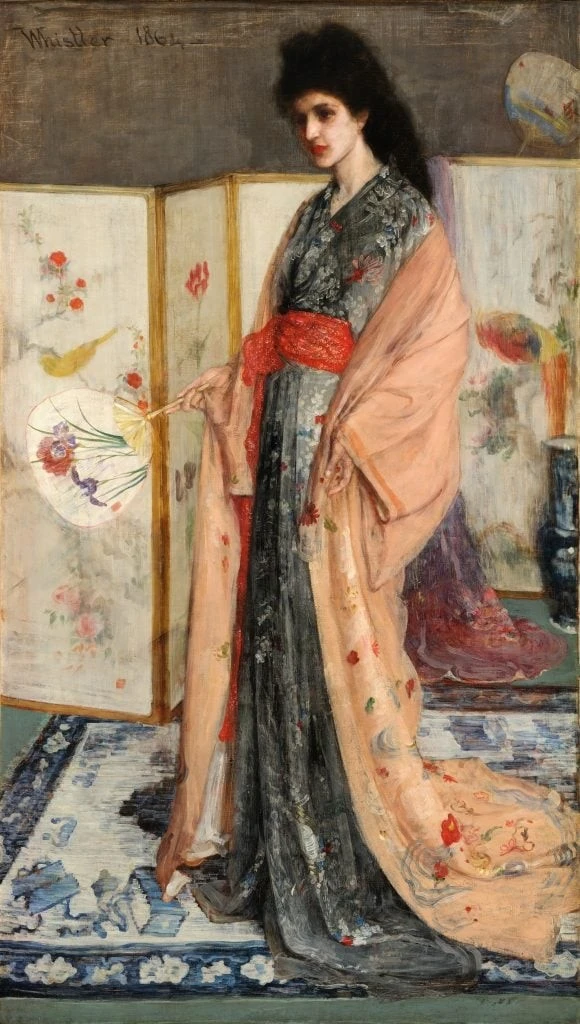
James McNeill Whistler, "The Porcelain Princess" (1863).
To make sure Leyland got the hint, Whistler called the mural "Art and Money, or the History of This Room." When he finished, he left and never saw the Peacock Room again.
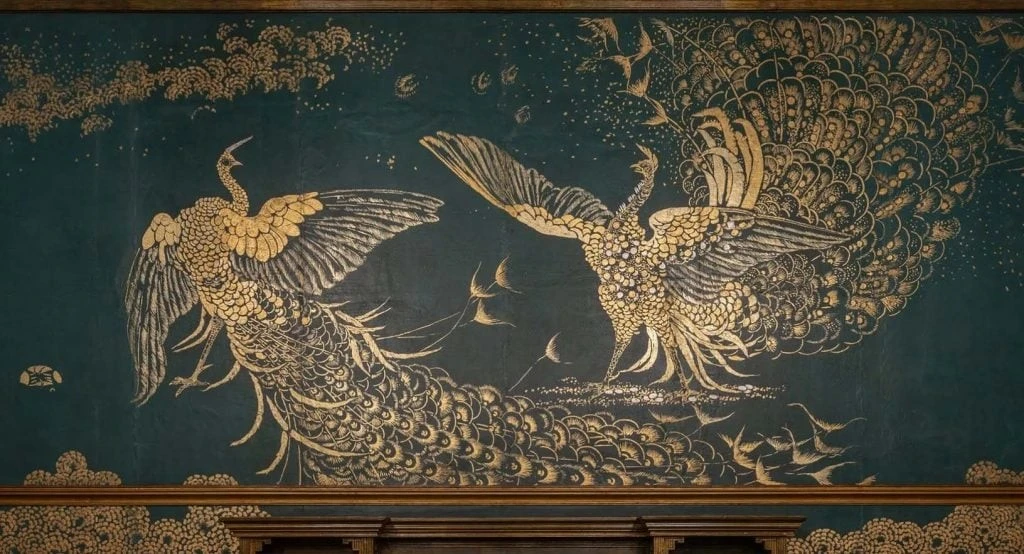
Leyland never admitted that he liked the room, but he clearly recognized its value: for 15 years, he did not change the slightest detail in it. After his death in 1892, the room was inherited, and in 1904, American industrialist Charles Lang Freer bought the room, dismantled it, and moved it to Detroit, where he reassembled it in his home.
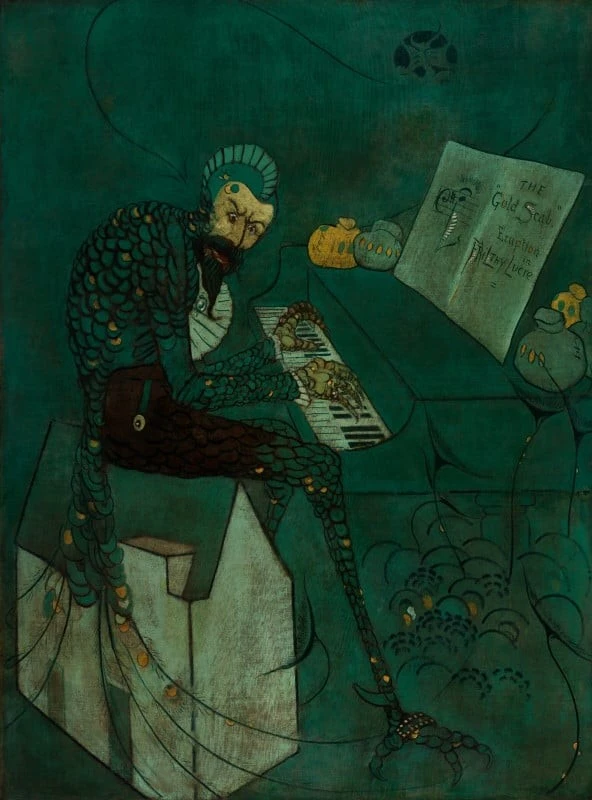
James McNeill Whistler, "Golden Scabbage: An Eruption of Avarice" ("The Creditor") (1879)
He exhibited his own ceramics collection there. After Freer's death in 1919, the Peacock Room became part of the Smithsonian Institution's art gallery in Washington, D.C., where it remains today.
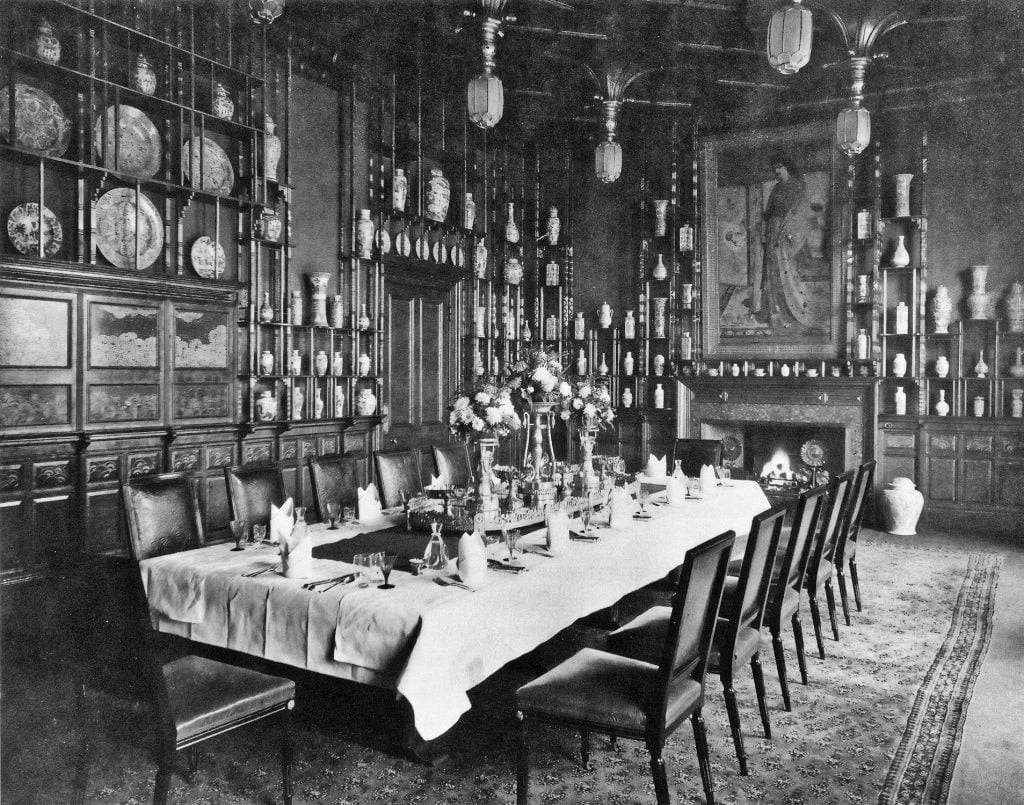
The Peacock Room, ca. 1890

Download
Archive size 2.83 Mb, downloaded 70 times