5 Secrets of the Venus de Milo, Which May Not Be Venus at All (10 photos)
The Venus de Milo was discovered on April 8, 1820. For two centuries, this sculpture has captivated historians, artists, and art historians with its unsolved mysteries. The armless goddess from the Greek island of Milos harbors many mysteries. Moreover, their number grows almost every year. We present the five main mysteries of the sculpture, considered the most enigmatic in history. 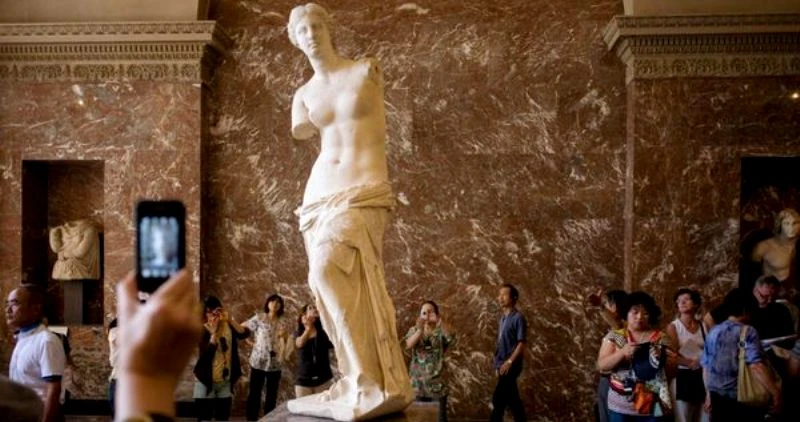
This ancient sculpture of wondrous beauty was discovered not by an archaeologist, but by an ordinary Greek peasant, Giorgos Kendrotas. The artifact was hidden in a niche in the ruins of one of the buildings in the ancient city of Milos. The Greek reported his discovery to the French officers stationed on the island. 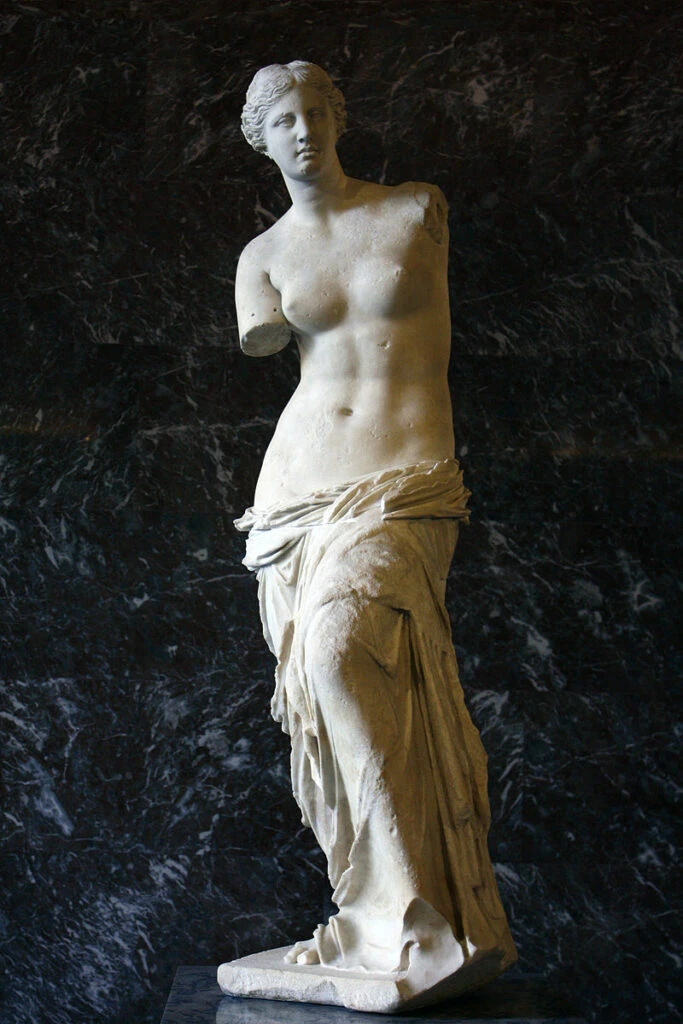
The military weren't experts in antiquities, but they were eager to make a profit selling them. So they sold the statue to Charles François Rivière, the French ambassador to Turkey. Rivière was kind enough to present the statue to King Louis XVIII, who placed it in the Louvre in 1821. The Venus de Milo remains there to this day.
Were there arms?
Surprisingly, we still don't know whether the Venus de Milo had arms when she was discovered. The sculpture has been seen by many credible people, but their accounts are highly contradictory. The classic version states that along with the girl's figure, broken into two pieces, there was also a fragment of an arm—a hand holding an apple. Where Venus's arm went, no one knows. 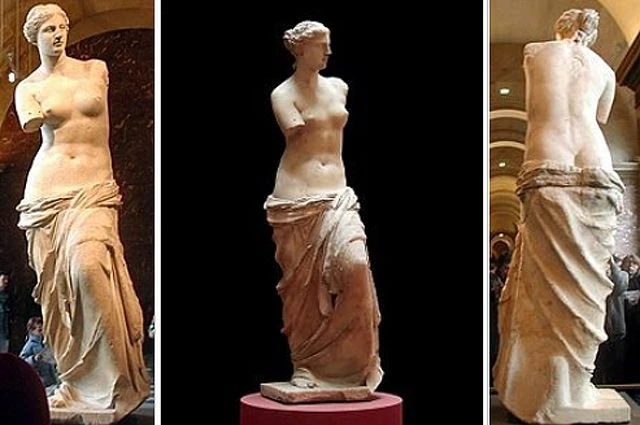

The famous French navigator Jules Dumont d'Urville, who was one of the first to see the sculpture, described it in his memoirs. The officer claimed that Venus had arms. The left one, raised upward, held an apple, and the right one held the folds of the flowing fabric.
The Frenchman's story is dubious. It was Dumont d'Urville who brought Ambassador Rivière a drawing of the statue to Constantinople and offered to sell it. In the drawing, Venus had both arms, but when the statue was delivered to the buyer, it was missing. When asked what had happened, Captain Dumont d'Urville told an adventure story worthy of Jules Verne.
It turns out that while the French sailors were carrying the statue along the path to the sea to load it onto the ship, they were attacked. It's unclear who it was—Greek pirates or Turkish janissaries. The brave French fought off the attack, but in doing so, they repeatedly dropped the precious Venus, breaking off her arms and nose. Once the statue was on the ship, no one wanted to return to the inhospitable shore to retrieve the missing pieces.
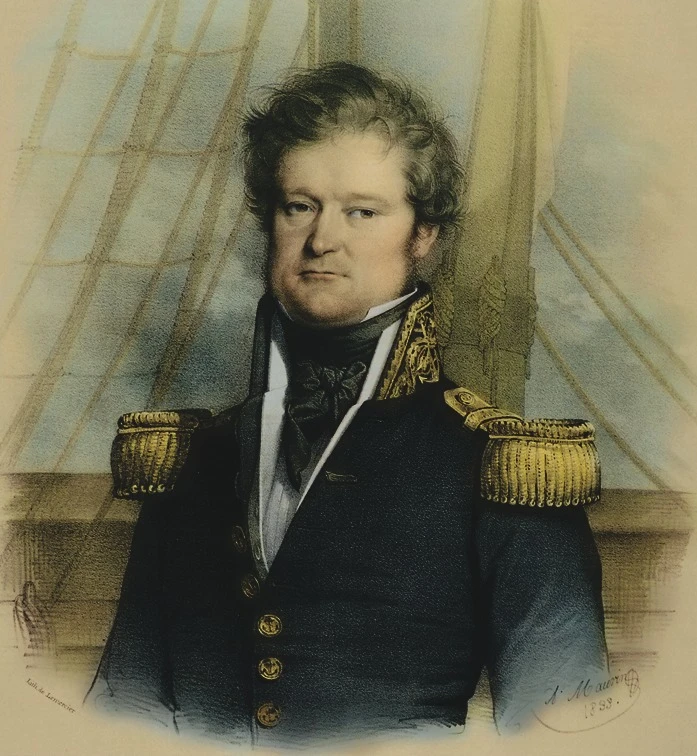
Jules Dumont d'Urville
This is a fine example of adventure fiction, written by a seasoned sailor. But most researchers are convinced that Dumont d'Urville was simply a liar. He drew Venus without arms, but he painted her with arms to present her more favorably to the ambassador. The attack on the shore was a fabrication to justify Venus's unmarketable appearance.
Venus or Amphitrite?
Funny enough, no one knows for sure whom the ancient sculptor intended to depict. The work is currently described at the Louvre as the Venus de Milo—a Hellenistic sculpture created between 130 and 100 BC. This is how it has been recognized worldwide for two centuries.
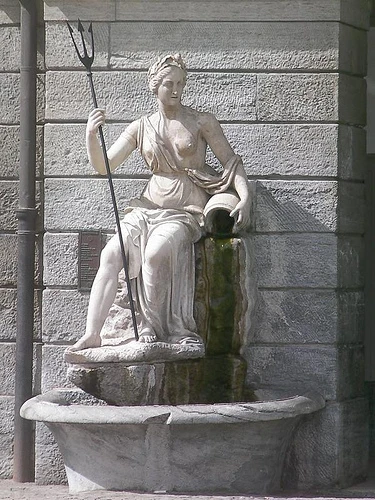
Amphitrite with a Trident
Why did everyone decide that the white marble girl was Venus (Aphrodite)? This conclusion was reached simply because the goddess of beauty is most often depicted partially or completely nude. There are no inscriptions on the sculpture, nor are any of the attributes by which goddesses and gods are often identified.
Some believe that Venus is Artemis, and that she was clutching a bow in her severed hand. Some also claim that the ancient author depicted Danaïs holding an amphora. But most often, they insist that she was holding a trident, and that the girl is none other than the sea goddess Amphitrite. Incidentally, the cult of the mermaid was very popular on Milos. If the figure depicted Venus, then she was supposed to be holding the apple of discord or a shield forged by the god Vulcan.
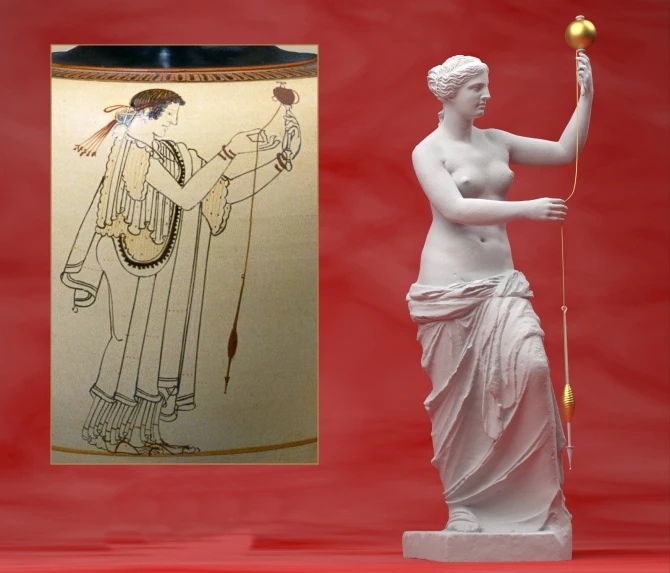
Venus with a Spindle. A modern interpretation by Cosmo Wenman, a designer from San Diego, USA.
Who is the designer?
The Venus de Milo bears a striking resemblance to another sculpture, the Aphrodite of Cnidus, by Praxiteles. For a long time, the artist was believed to be this Greek, who lived in the 5th century BC. But then it was decided that it was created by Alexander of Antioch. Someone recalled that when the statue was found, it was accompanied by a pedestal with the inscription: "Alexandros, son of Menidas, citizen of Antioch on the Maeander, made this statue."
For a time, Alexander was considered the artist, but later doubts were cast on this, too. The pedestal had disappeared, and no reliable evidence of the signature was found. The Venus de Milo is now officially listed as the work of an unknown artist. Scholars have decided this is fair. Perhaps it is a high-quality ancient copy of someone else's work—copying masterpieces was very fashionable in the 5th and 4th centuries BC.
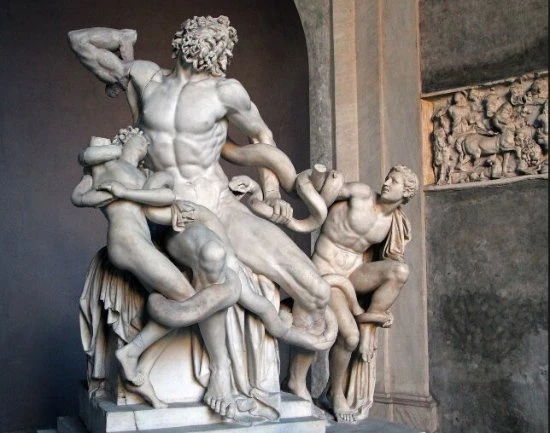
Laocoön and His Sons, Alexander of Rhodes
Antiquities collectors also expressed their opinion. The renowned antiquities collector Claude Tarral once claimed that Venus is the work of the sculptor Alexander of Rhodes, who lived in the 2nd-1st centuries BC. This master's most famous work is the sculpture "Laocoön and His Sons." The question of authorship remains unresolved.
Venus in Color
Like many other Greek and Roman sculptures, the Venus de Milo was once painted. Traces of paint have been found in the folds of her immodest robe. Experts claim that although the remains of the substance are barely visible now, this was once a very vibrant work.
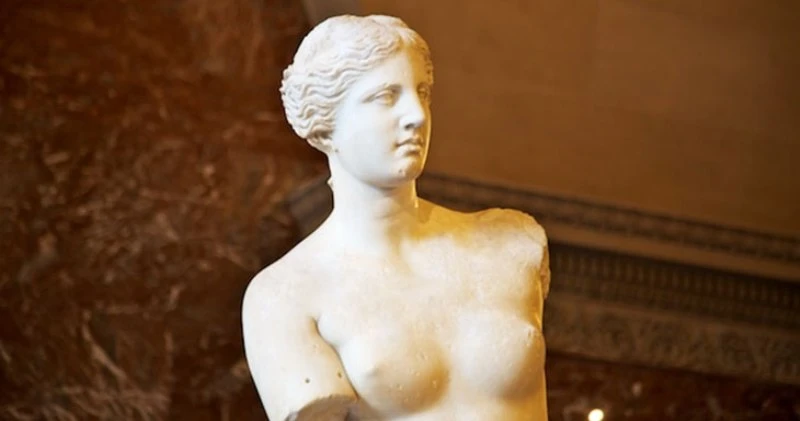
The attachment points of the bracelet are clearly visible here.
Furthermore, Venus wore a bracelet, most likely made of metal, near the shoulder of her right arm. The remaining portion of the arm clearly shows the holes where the accessory was attached. The statue's neck was adorned with a necklace—there are barely noticeable grooves left in the marble. But that's not all. Most likely, the goddess wore... earrings! Venus's earlobes were apparently broken off by some unscrupulous looters in antiquity.
PR Product
Even someone not particularly versed in ancient art will notice that the Venus de Milo is not the most beautiful statue. Yet, it is considered the epitome of female beauty. The secret lies in the simple PR techniques of the early 19th century. In 1815, after Napoleon's defeat, France returned the Venus de' Medici, stolen by the military, to Italy.
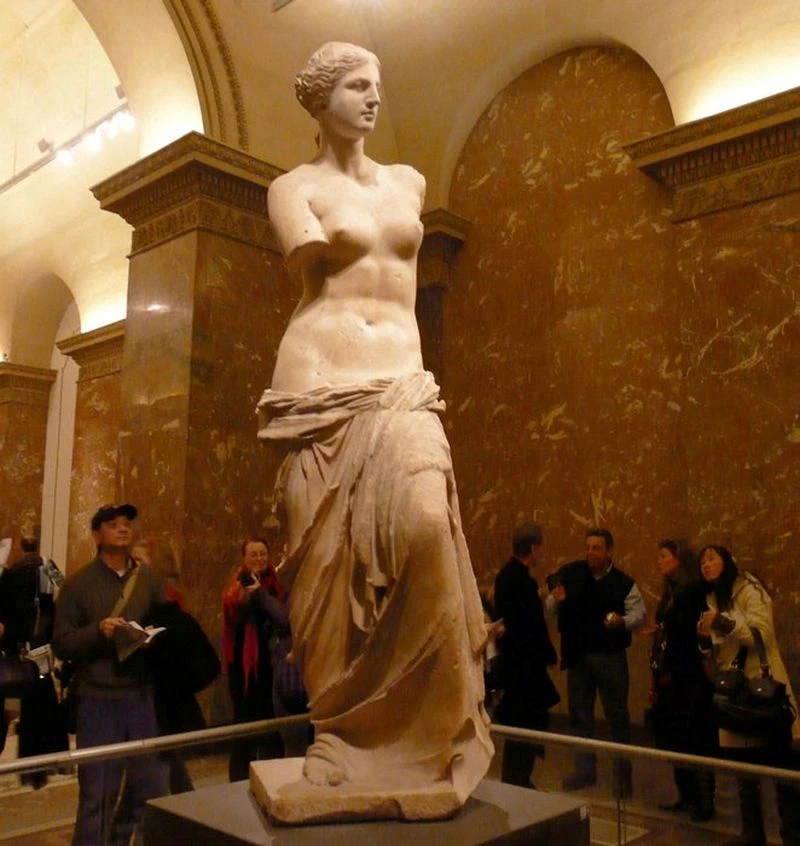
The French were eager to possess something classic, beautiful, a masterpiece. The Venus de Milo, a goddess with broken arms, was chosen as such an object. It was exhibited in the Louvre on May 7, 1821, and the premiere was made a major event. The ambassadors of Turkey, England, and Holland were invited to the museum event. The presentation was expensive and pompous.
The Venus de Milo was meant to be admired, and this was meticulously done. Artists, critics, and art historians sang the sculpture's praises. True, there were also critics who questioned its artistic value. For example, the renowned artist Pierre Renoir found the Venus absurd and described her as a "great gendarme." But the skeptics' voices were lost amid the chorus of praise.

The Armless Venus is still considered the most valuable treasure of the French people. In fact, it was simply stolen from the Greek people by Dumont d'Urville and his cronies. At the time of the sculpture's discovery, there was no law in that country prohibiting the export of antiquities. The long-suffering land of Hellas was plundered by anyone and everyone.

Download
Archive size 941.28 Kb, downloaded 5 times