Unrealistically Beautiful Photos of Waves… of Fog (9 photos)
Photographer Nick Steinberg has been shooting in and around San Francisco for many years, and he's become fascinated by fog. This natural phenomenon has completely captivated him and defined his work. Nick's "Fog Waves" is the term he coined to describe this astonishing fog phenomenon, reminiscent of ocean waves. 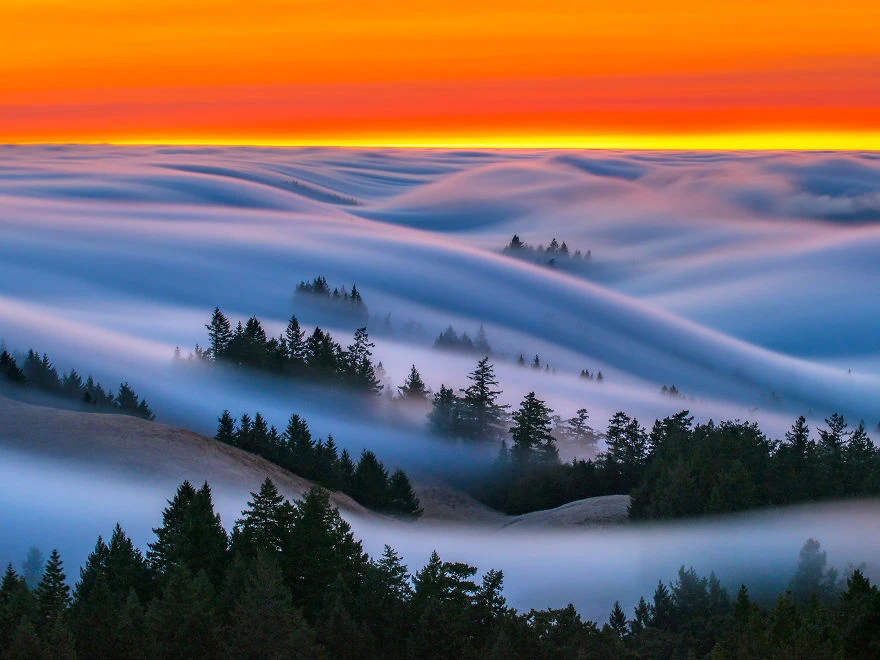
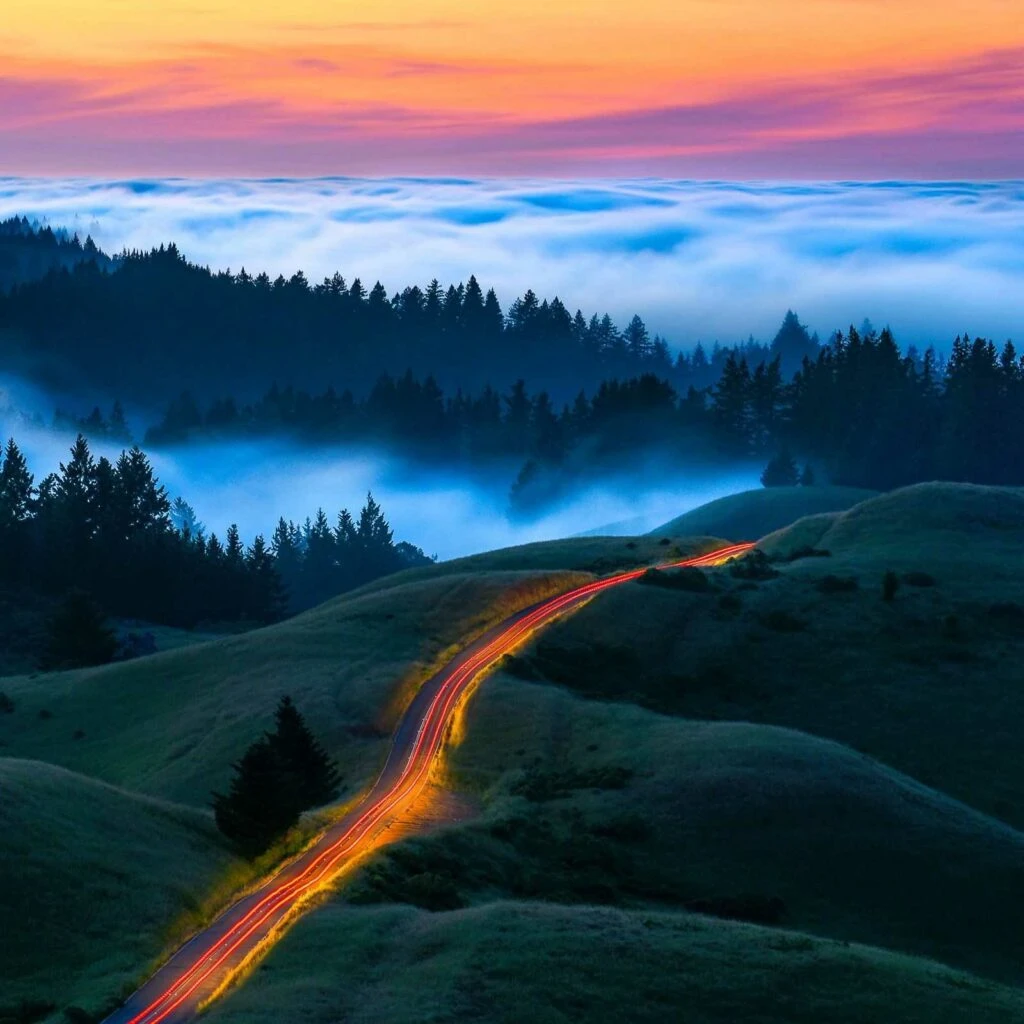
Steinberg checks street cameras, satellite data, and various forecasts to always know where fog has settled, so he can quickly drive up and start shooting. Moreover, the photographer has about 20 like-minded photographers who call themselves "fogaholics" and exchange information about fog as soon as they see it. Steinberg shared the secret of how he manages to capture fog in such an unusual form. 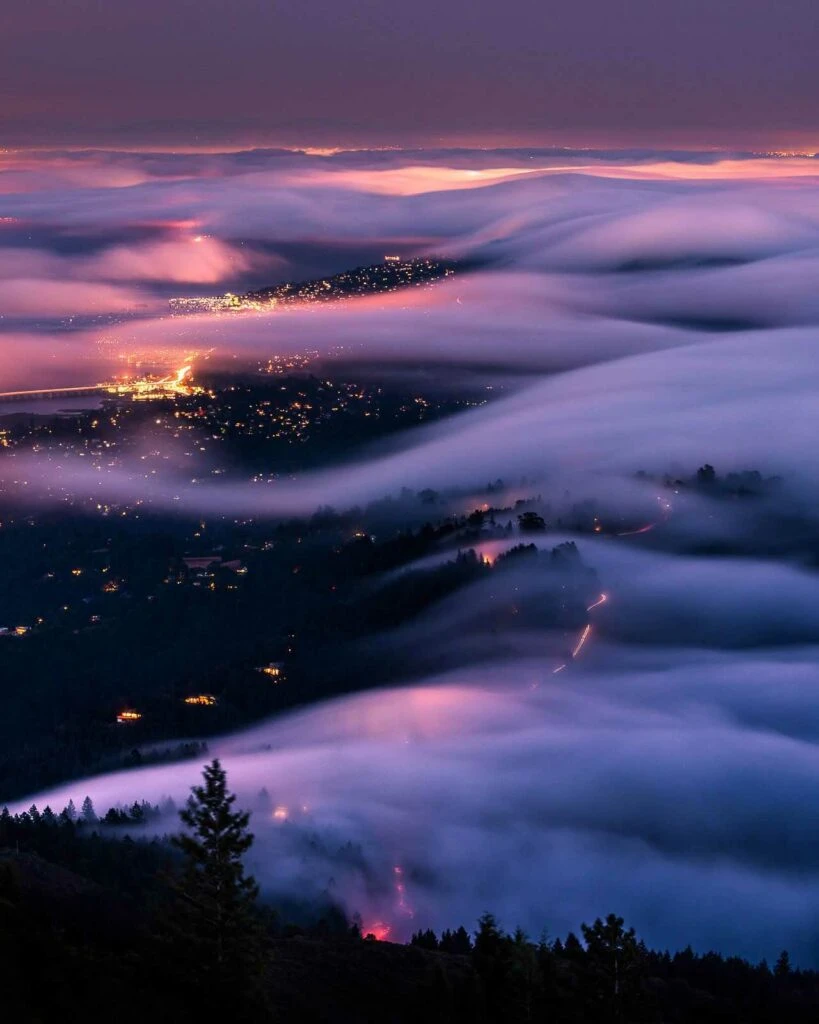

Как садят рис
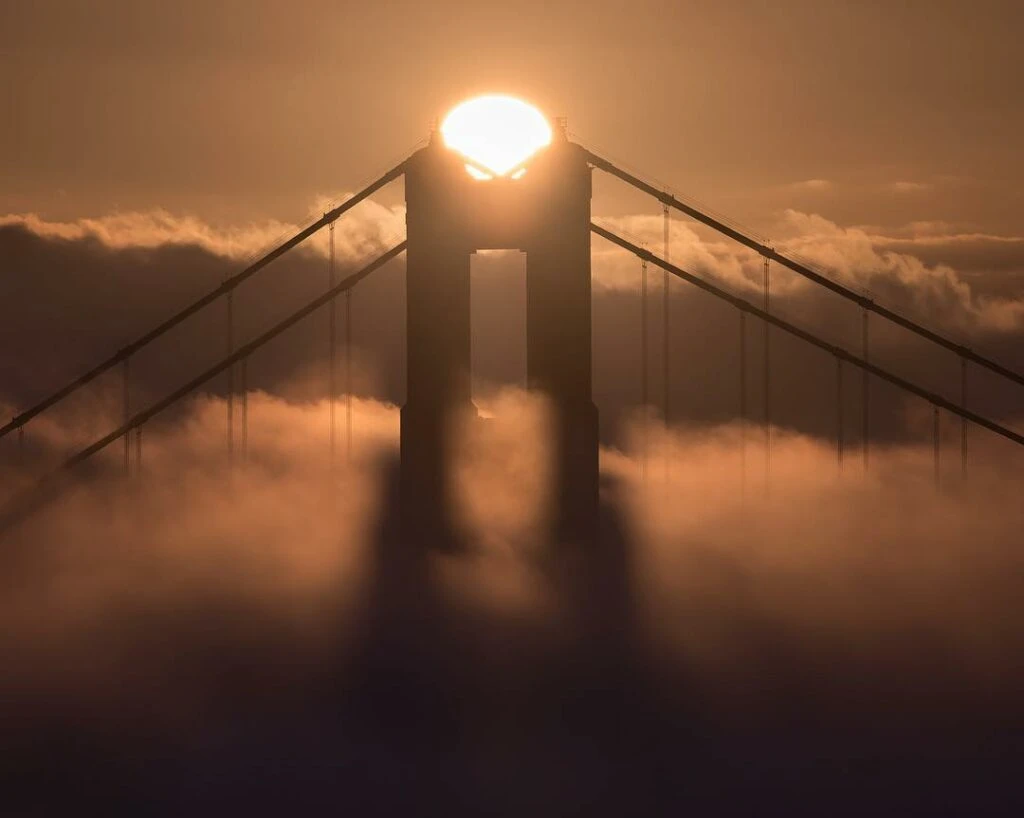
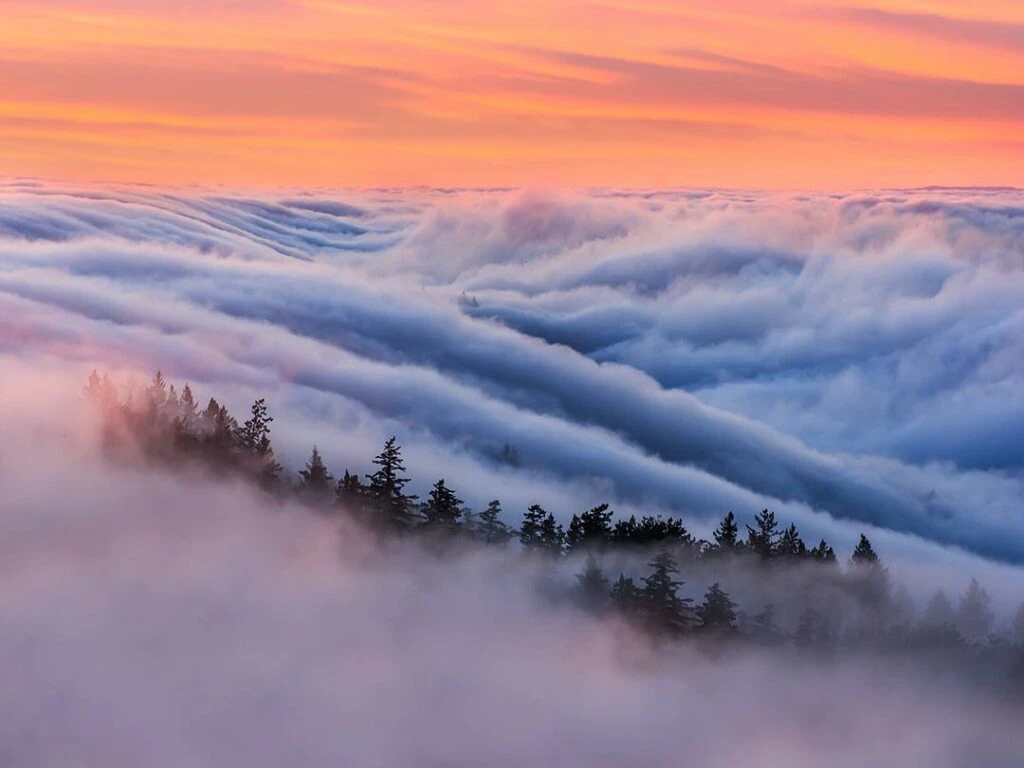
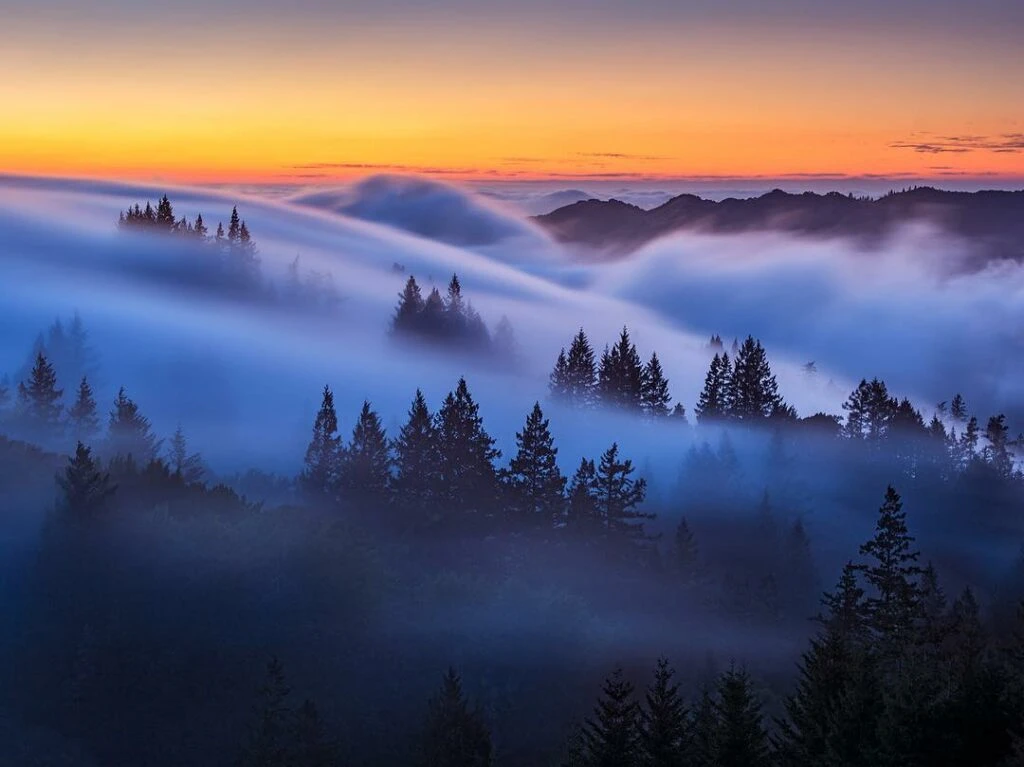
Смотреть видео"Recently, in my research in this area, I discovered something surprising! During the summer months, when fog is formed by large amounts of warm air from the mainland, it rises too high to photograph in the Bay Area (including the Golden Gate Bridge), reaching approximately 1,000 feet (305 m), while the bridge itself is 746 feet (227 m). Furthermore, since it comes from the Pacific Ocean, the coastline is largely unphotographable. So the only option is to climb to high viewpoints, one of the best being Mount Tamalpais, at 2,572 feet (784 m). Mount Tamalpais allows you to, as they say, "rise above it all" and is literally heaven on earth, as you feel like you're on top of the world, almost like you're on a plane, looking down at the clouds. After many trips there, I've discovered that when the fog thickens and reaches the perfect height and density, it begins to move in waves, following the contours of the landscape. That's why I use the phrase "waves of fog": it literally looks like waves and resembles an ocean," the photographer explains.
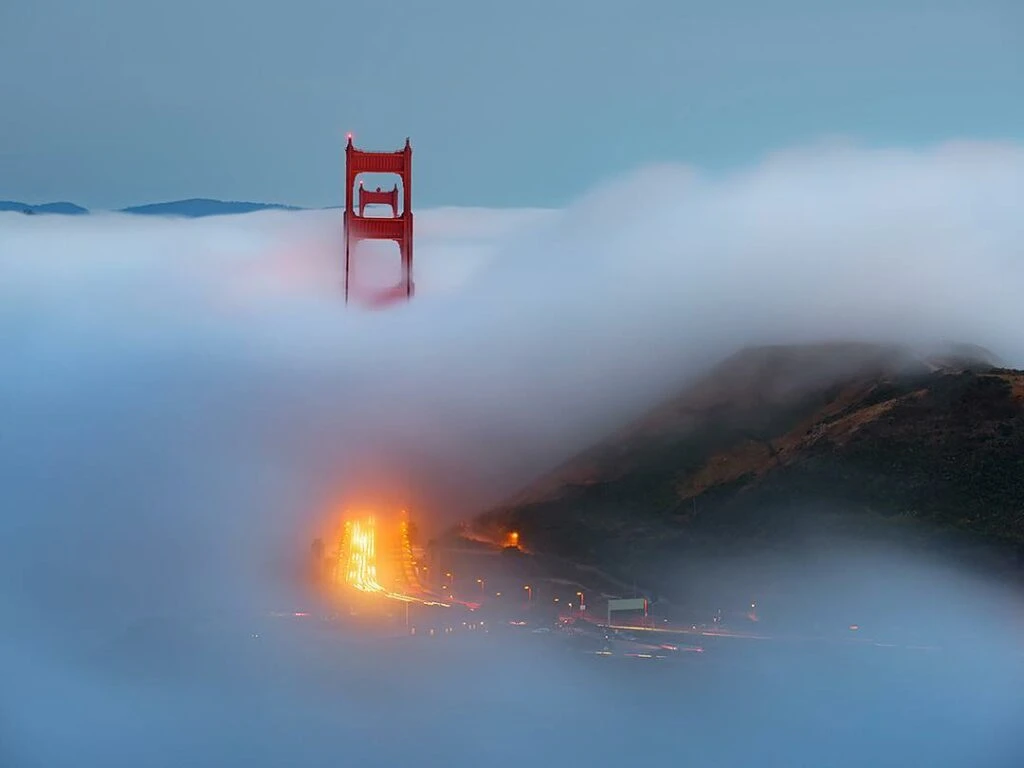
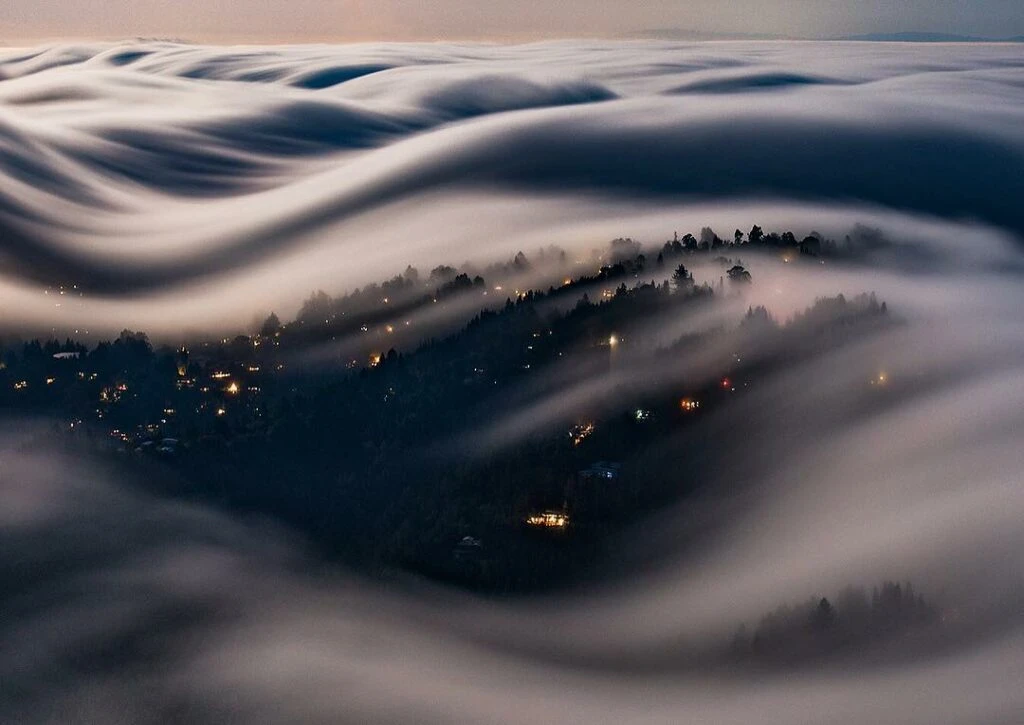
"I realized that by playing and experimenting with different shutter speeds in my camera, I can either freeze movement or accentuate the flow and make it more oily and smooth. This is all done in-camera, not in Photoshop. I achieve this by inserting dark filters called ND, or Neutral Density. They trick the camera into thinking it's nighttime, causing it to slow down the shutter.
By doing this, I can achieve a smooth effect. Sometimes I shoot with shutter speeds of two minutes, depending on the speed of movement. If I overexpose, the fog can turn into mush, and if I underexpose, it will be too textured. Photographing fog is an exploration. It takes a lot of patience, preparation, and knowledge to capture it. Ultimately, the chase is always worth it, and the views from Mount Tamalpais are truly magical!
[thumb]https://cp22.nevsepic.com.ua/post/74/106_files/nevsepic_com_ua_21372303 _461491787540449_1546890140180283_CzFo.webp[/thumb]

Download
Archive size 672.17 Kb, downloaded 11 times