Illusory Galaxies and Constellations of Gasoline and Oil on Asphalt (14 photos)
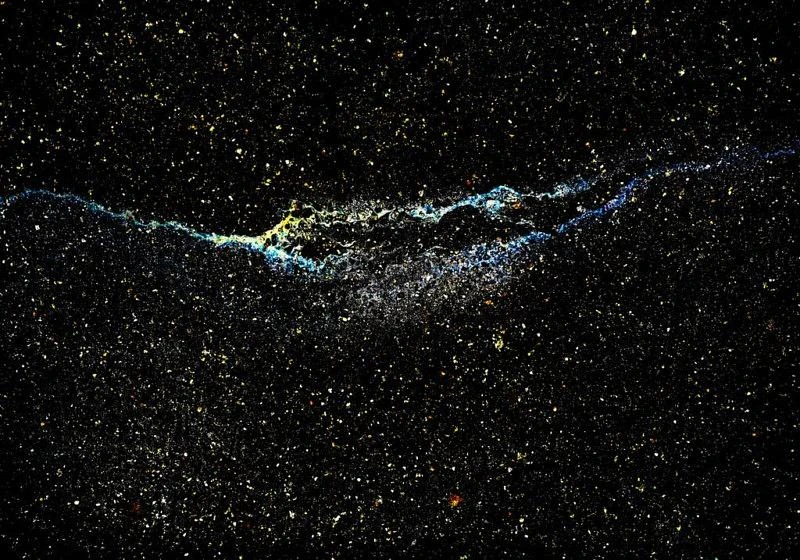
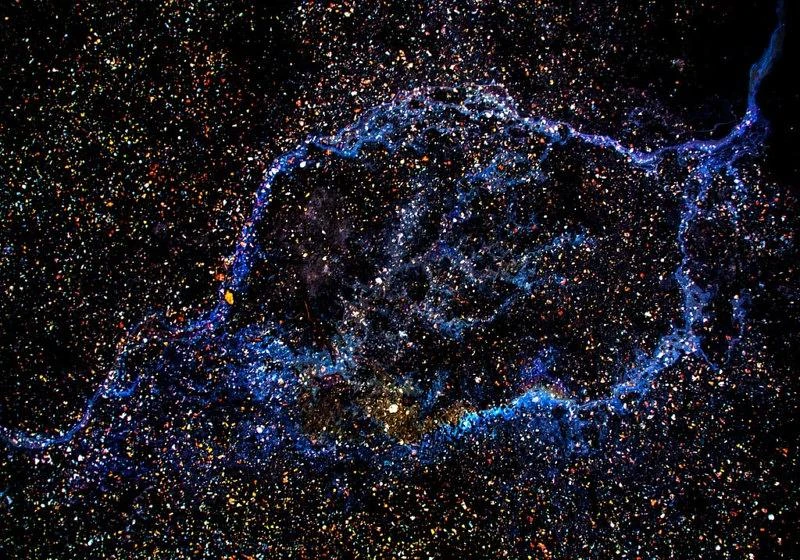
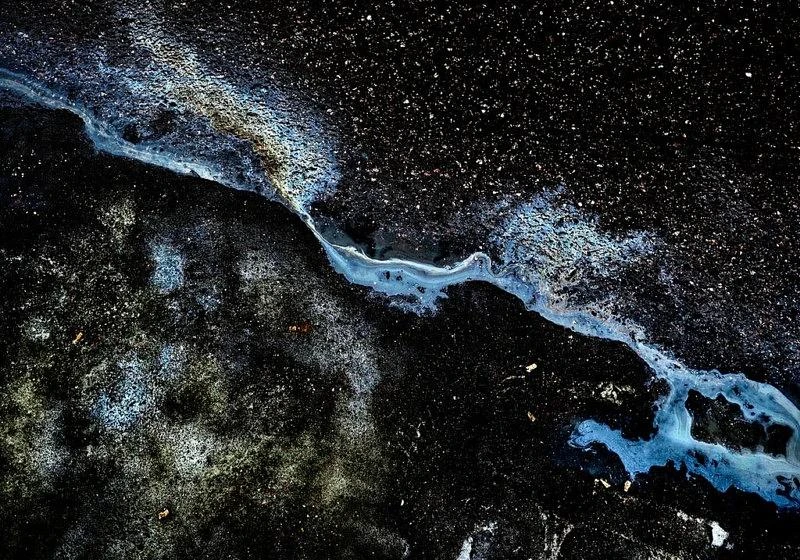
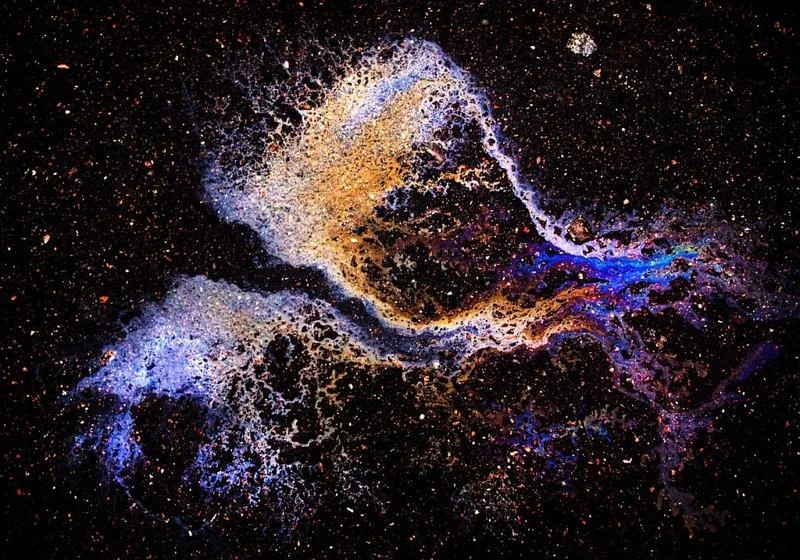
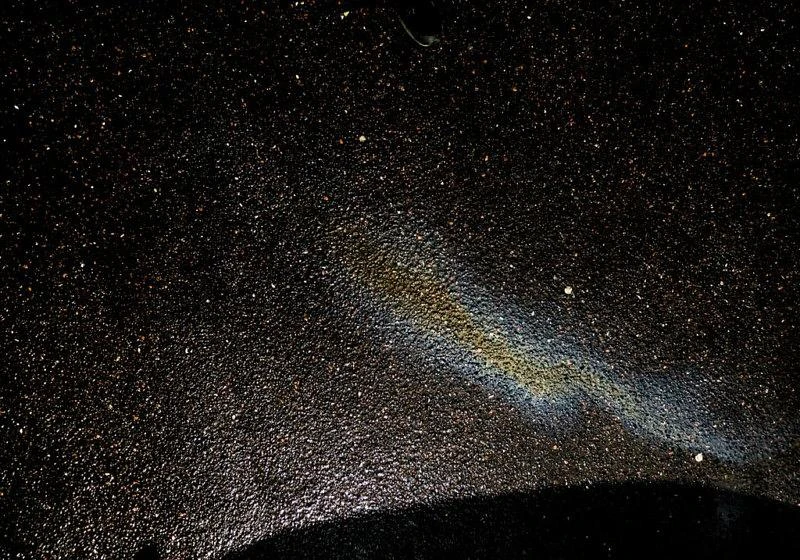
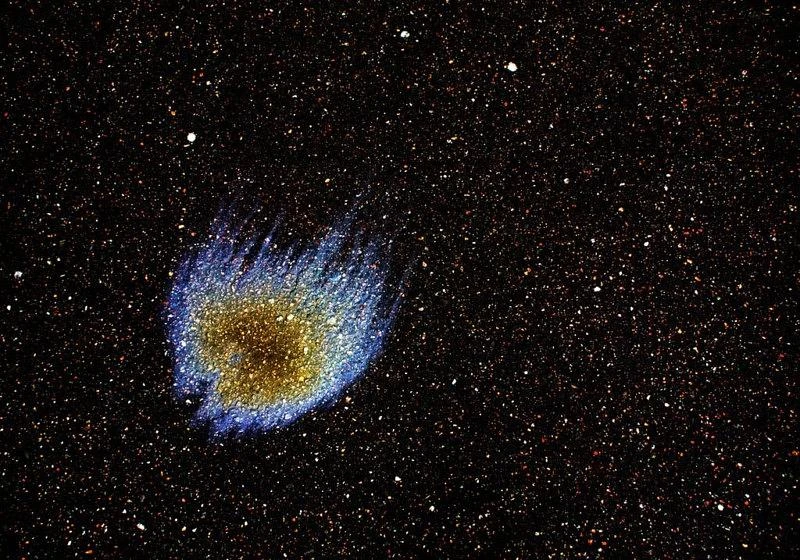
At first glance, it seems like deep space: spiraling galaxies, nebulae, and star clusters shimmering in the bottomless darkness. But look closer: instead of the vacuum of space, there's an ordinary city parking lot, and instead of the light of distant stars, there's the iridescent shimmer of gasoline and motor oil. This mesmerizing illusion was created by Finnish photographer Juha Tanhua in his series, unofficially dubbed "Space on Asphalt." His works make the viewer wonder: where does reality end and imagination begin? 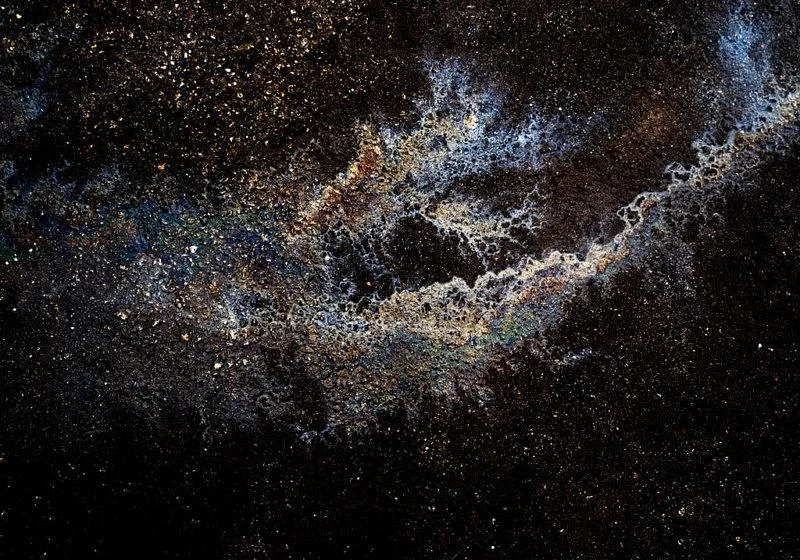
When Dirt Becomes Art
Juha Tanhua is not an astrophysicist or a digital artist, but an observational photographer whose work is built on attention to the smallest details of everyday life. He doesn't use Photoshop, CGI, or other digital manipulation tools. All you see are real puddles on the pavement, captured from a specific angle, with the right lighting, and a precise aperture setting. 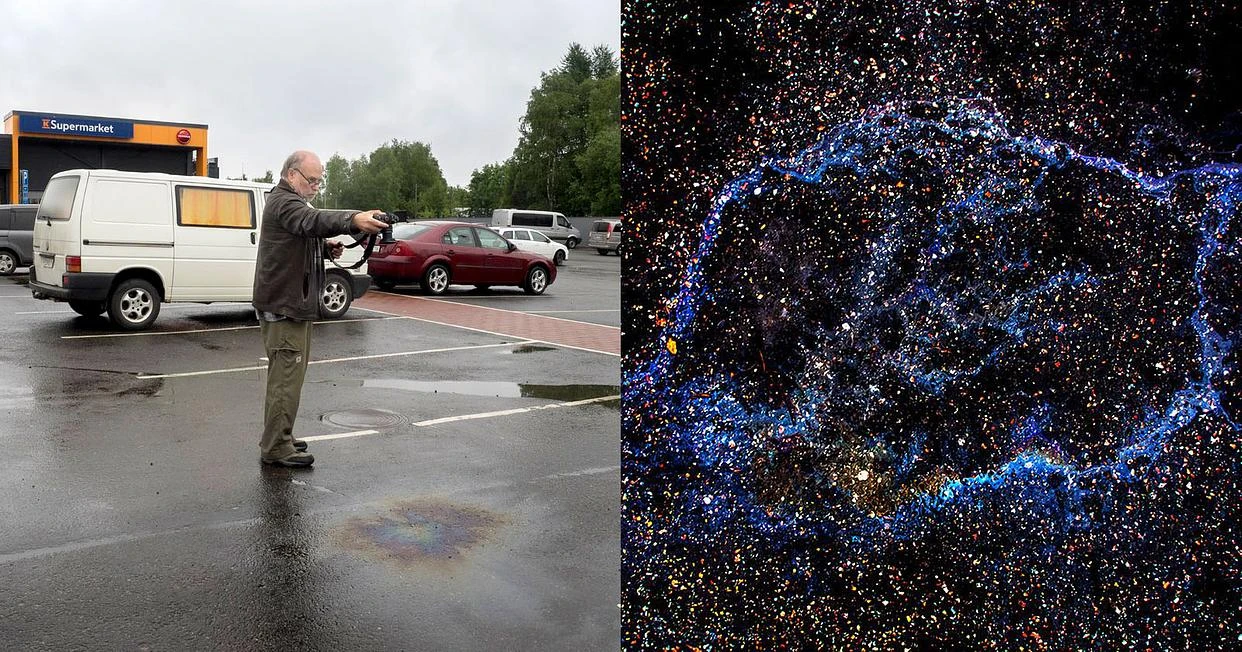
The "cosmic imagery" effect is achieved through a physical phenomenon—light interference on a thin film of petroleum-based substances. When gasoline or motor oil spreads on wet asphalt, they form a film a fraction of a micron thick. Sunlight, reflecting off the upper and lower edges of this film, creates interference fringes, which the human brain interprets as bright, smooth color transitions—from violet to gold, from turquoise to scarlet.
Civilization's Waste as a Mirror of the Universe
Tanhua primarily photographs in abandoned or underused parking lots in Finland—in Helsinki, Tampere, and the surrounding suburbs. He admits the idea came to him by chance: one day, while walking after a rain, he saw a puddle near a car service center shimmering with colors reminiscent of images from the Hubble Space Telescope. Since then, he has been deliberately searching for such "cosmic" spots. 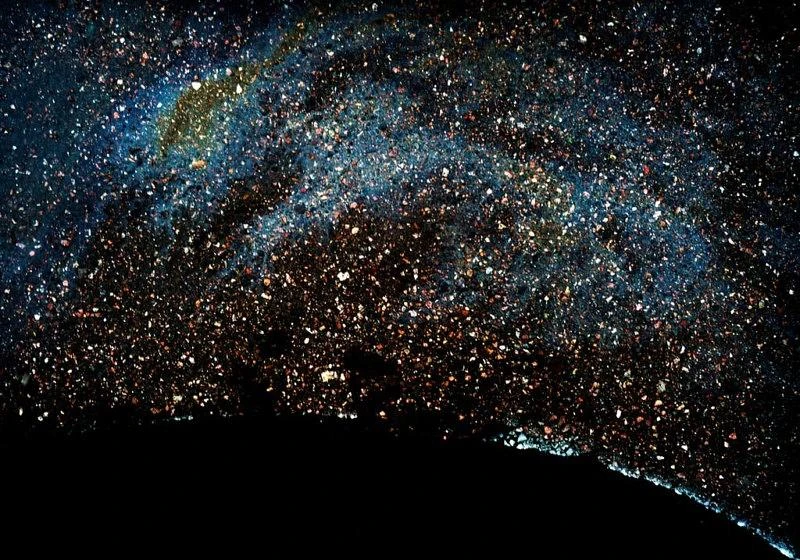

His work is more than just a visual trick. It is a subtle irony about humanity's ecological footprint. What we discard as waste—dirt, industrial fluids, leaks—is transformed into something beautiful, even sacred, in the hands of an artist. Each photograph is a reminder: even in the most unexpected places, beauty can be found if you look at it differently.
How these "galaxies" are created
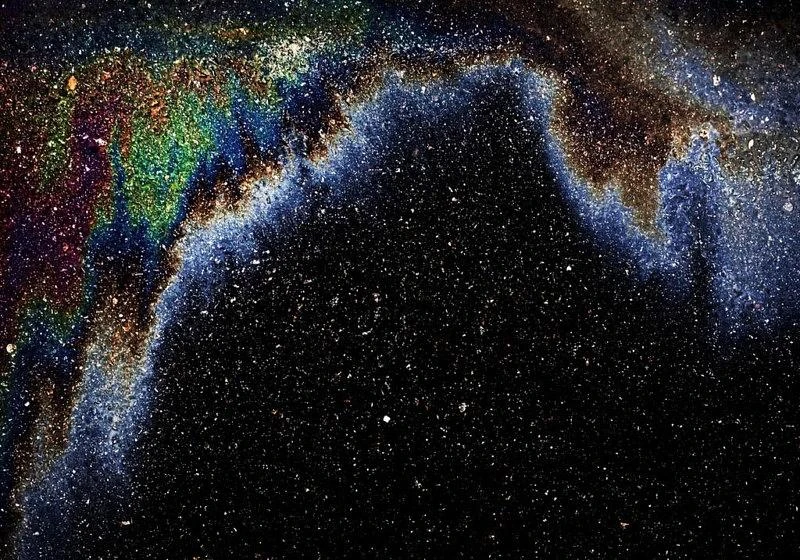
The process is technically simple, but it requires patience. Tanghua shoots in the morning or evening, when the light falls at a low angle—this enhances the iridescent effect. He uses a macro lens and often shoots in manual focus mode to clearly capture the texture of the surface. The background is darkened, and reflections of the sky or buildings are deliberately excluded—so that the viewer has nothing to catch on to.
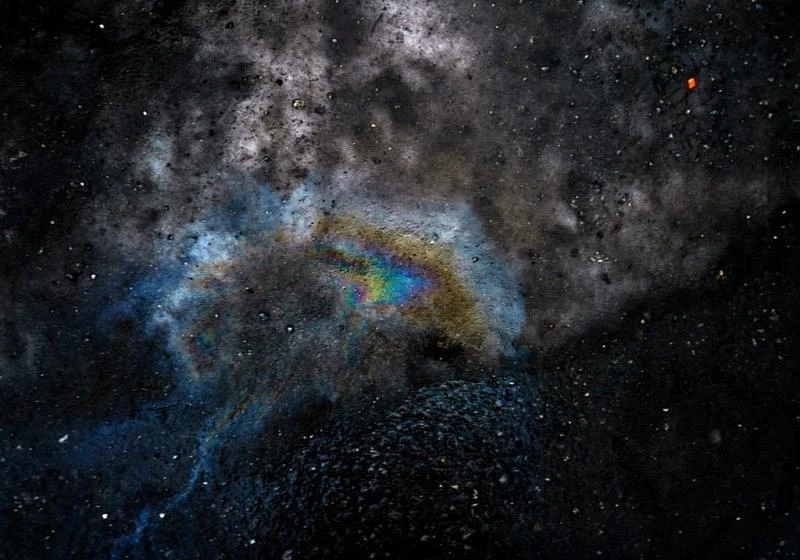
The result is images in which it's impossible to immediately discern the scale. They could be a microscopic fragment of a puddle or a simulation of the universe on a scale of billions of light years. It's this duality that makes the series so powerful.
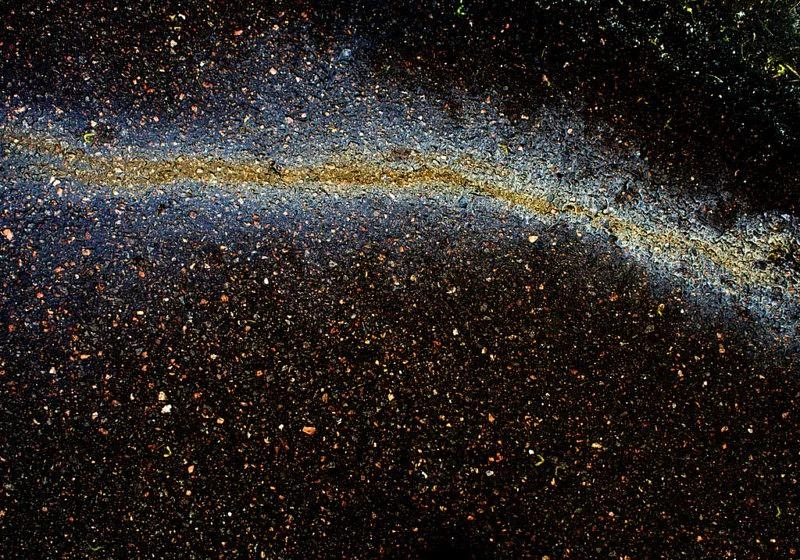
Art that makes us look down
In an era when humanity is looking into space—towards Mars, exoplanets, and black holes—Tanghua's works offer the opposite gesture: to look down, to the earth beneath our feet. His galaxies are not billions of kilometers away, but a few centimeters. They are created not by stardust, but by the breakdown products of petroleum. And yet, they are no less majestic.
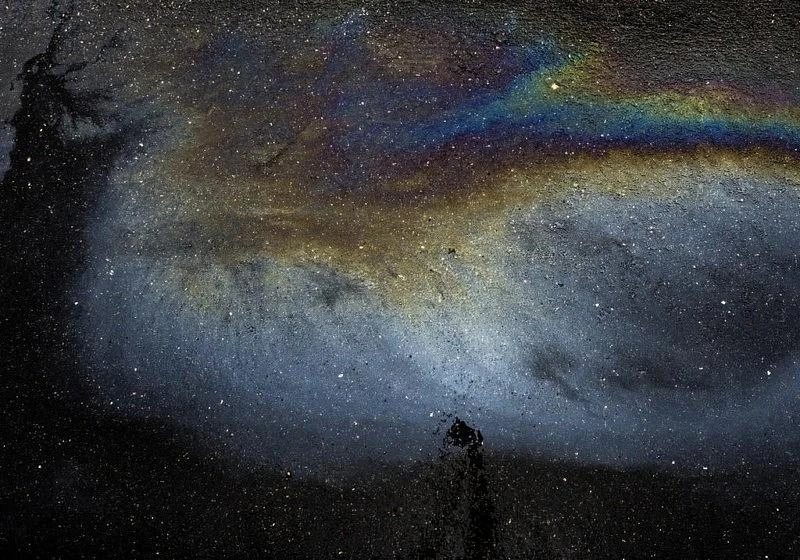
The series received acclaim at international photography exhibitions in Berlin, Helsinki, and Tokyo. Critics note that Tanghua reimagines the genre of "microphotography," transforming it into a philosophical gesture—a fusion of aesthetics, science, and an environmental message.
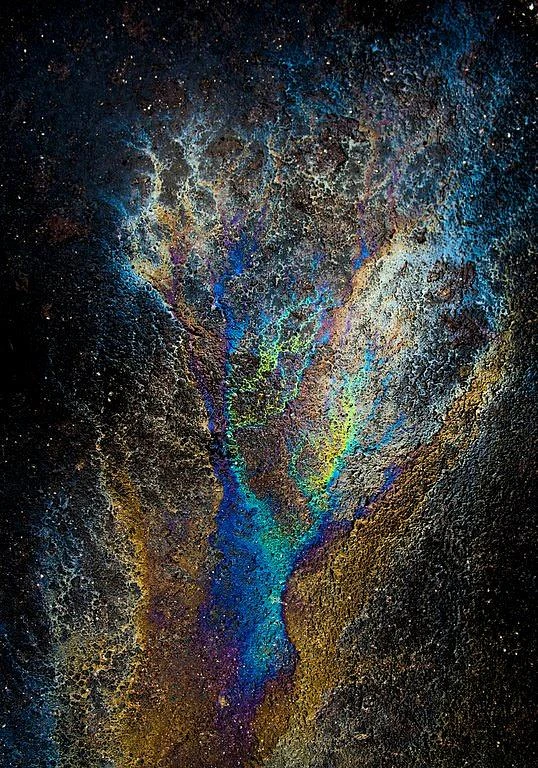
When Reality Feels Like a Dream
Unlike many conceptual photographers, Tanghua does not provide lengthy captions for his work. He believes an image should speak for itself. And indeed, looking at his "galaxies," the viewer begins to form associations: is it a shot from the James Webb, a still from a sci-fi film, or a dream in which space has spread across the asphalt.
Interestingly, similar optical illusions were observed long before the advent of digital photography. As early as the 19th century, scientists described "oil rainbows" as examples of the wave nature of light. But their artistic potential was not recognized until the advent of artists like Tanhua.
See for yourself: video from the author
A Finnish photographer even made a short video showing how a "cosmos" is born from an ordinary parking lot. In it, he approaches a puddle, kneels, and, through his lens, observes others passing by.
Where to see more
You can find Yuha Tanhua's work on his official website and on Instagram, where he posts new "space" finds almost weekly. Some of his photographs were published in the album "Asphalt Nebulae," which became a bestseller among conceptual photography enthusiasts.
Have you ever noticed similar "galaxies" under your feet—on the street, in a parking lot, or in a garage? Or perhaps you've seen something in the everyday that others see as just trash?

Download
Archive size 2.06 Mb, downloaded 3 times