Gibson Girl: How an Illustrator Created America's First Mass Ideal of Beauty (23 works)
One artist—one painted woman—and for twenty years, all of America knew what the ideal lady should look like. The Gibson Girl was athletic, confident, and independent—and yet she never went out without a corset. A paradox? We explain how Charles Dana Gibson created history's first mass-market female image, who his real-life prototypes were, and why World War I killed this ideal forever. 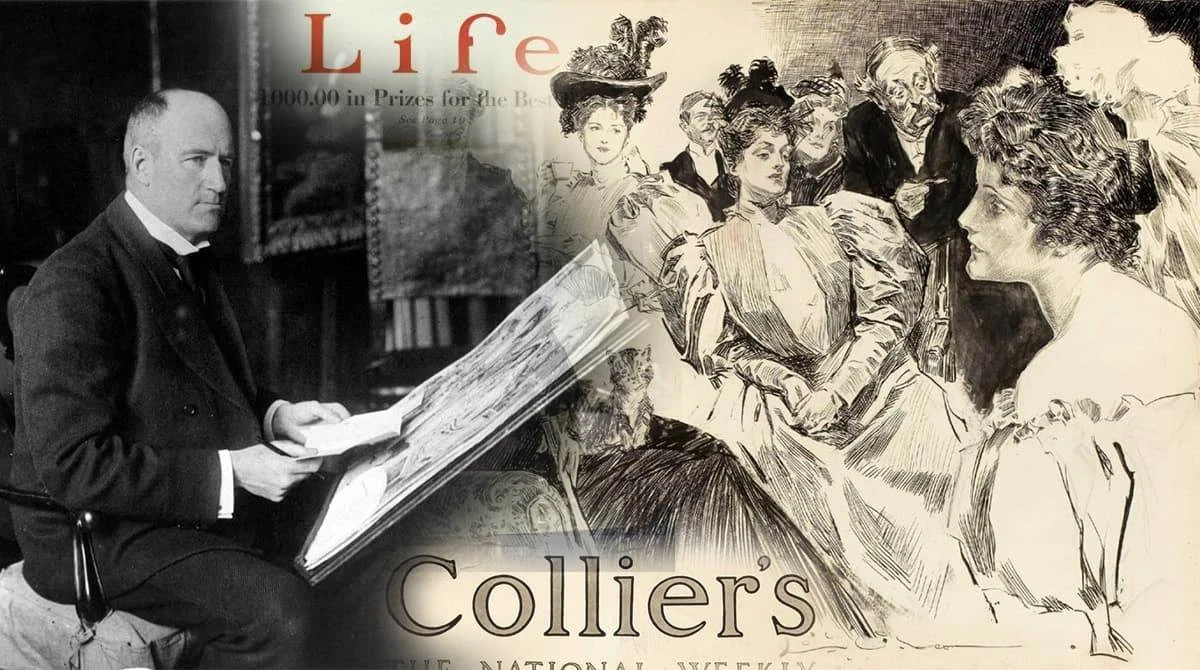
An Artist from a Wealthy Family
Charles Dana Gibson was born on September 14, 1867, in Roxbury, Massachusetts. His family belonged to the wealthy New England elite. His father was passionate about painting and immediately recognized his son's talent. Charles began cutting out paper silhouettes at age 8, and by 12 he was already selling them at exhibitions. 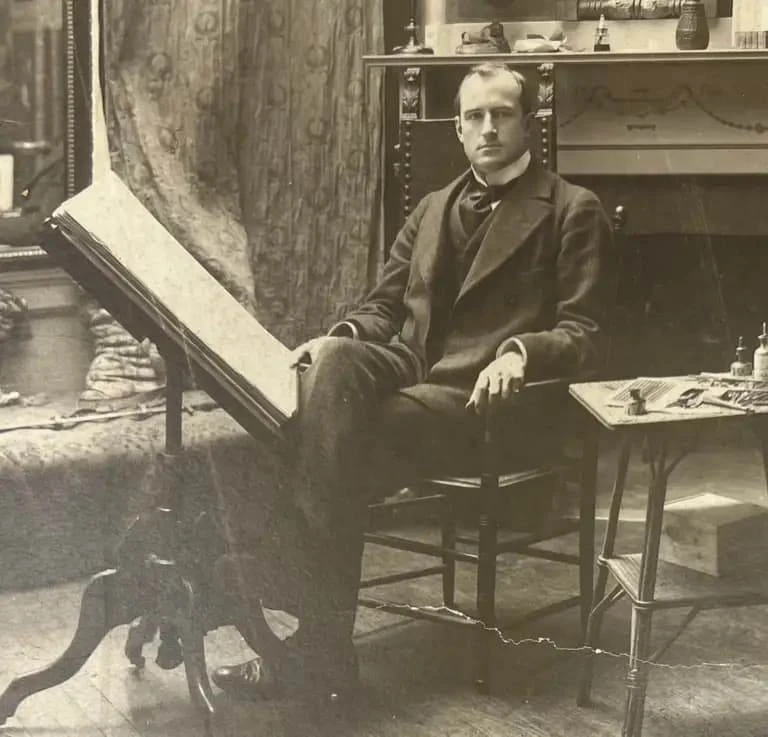
Charles Dana Gibson – Illustrator Who Created the First American Mass Ideal of Beauty
At age 14, thanks to family connections, Charles spent a year in the studio of the sculptor Augustus Saint-Gaudens, one of the leading American muralists of the time. However, sculpture didn't captivate him. He was much more drawn to pen and ink. After the workshop, Gibson enrolled in the Art Students League in New York. In 1885, when his family fell into financial difficulties, he was forced to abandon his studies. 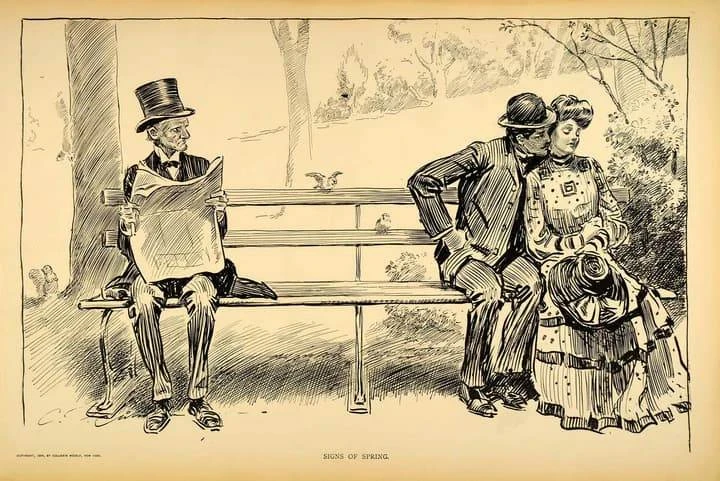

"Signs of Spring," 1906. Gibson masterfully captured the mood of the era with a few strokes.
He never received his diploma. But in 1886, 18-year-old Gibson snuck up the back stairs into the offices of the fledgling Life magazine and sold his first drawing—a pencil sketch of a dog howling at the moon. The fee was $4. But it was a start.
Chronicler of Society
Gibson quickly realized his gift. He drew more than just faces and costumes—he captured the personalities, social postures, and awkwardness of high society. His recognizable style—minimalist yet psychologically precise ink lines—proved ideal for the black-and-white prints of the time. Life published his illustrations weekly for over 30 years. Soon, his drawings appeared in Harper's Weekly, Scribner's, and Collier's Weekly.
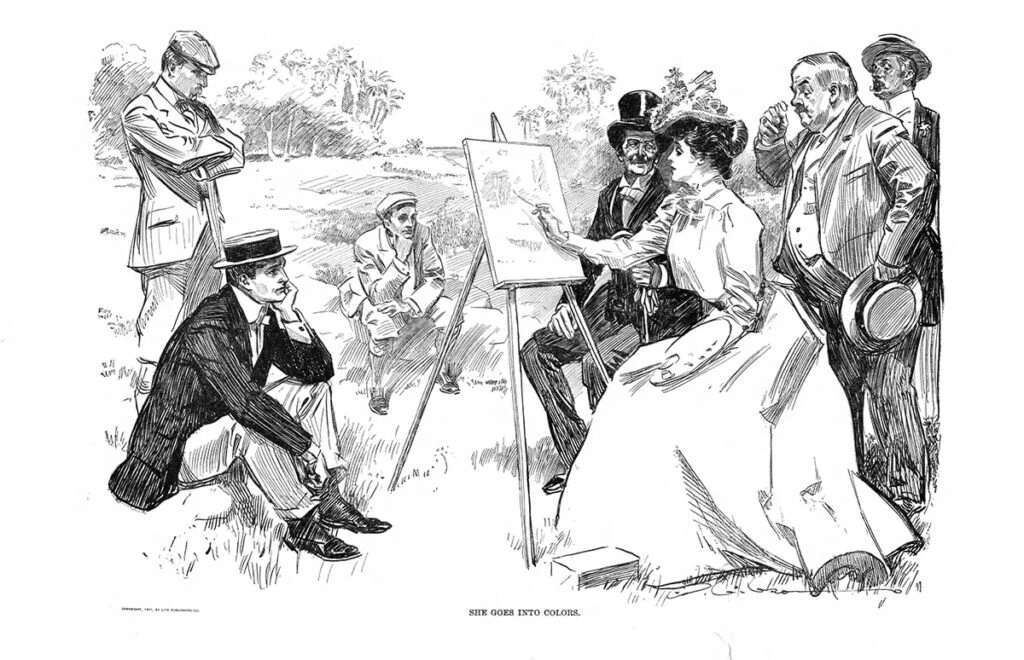
"She Turns to Color," 1899. The Gibson Girl is always busy—idleness is not in her nature.
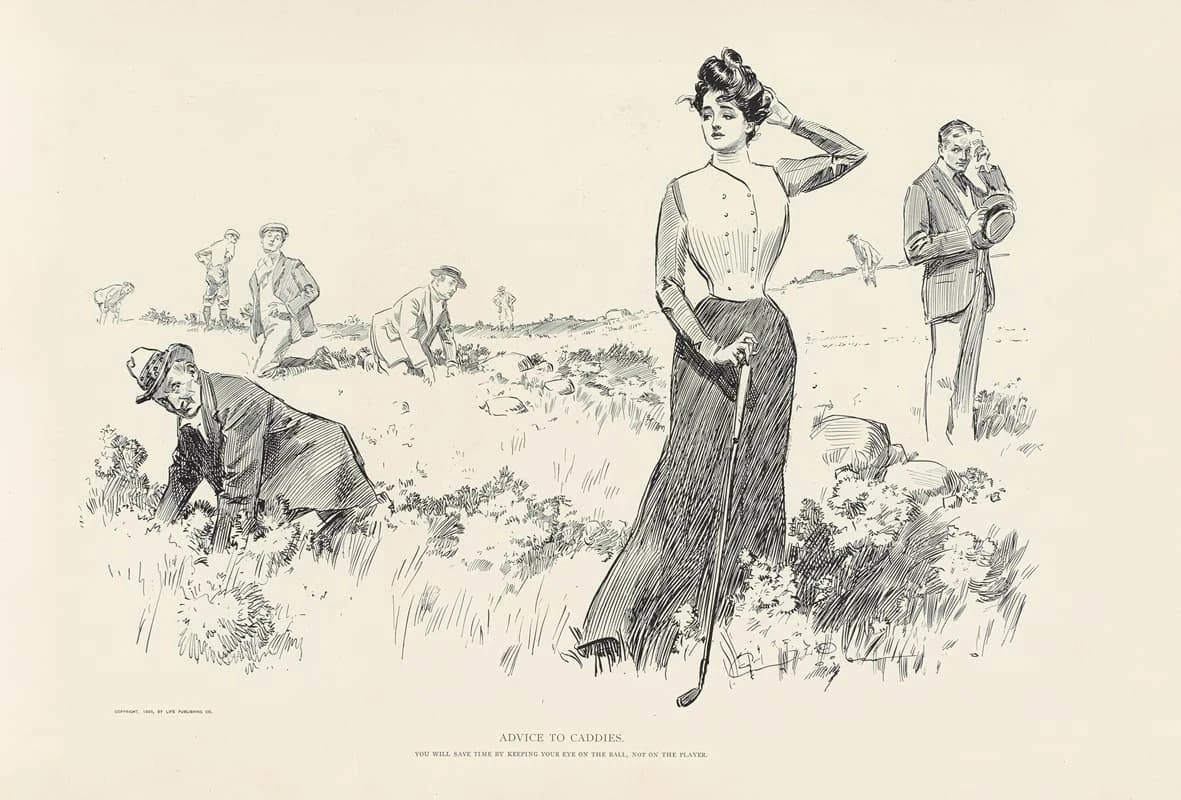
"Advice from a Caddy," 1900. Sports were part of the Gibson Girl's image long before it became the norm.
At the peak of his career, around 1900, Gibson's annual income from magazine contracts reached $75,000—the equivalent of several million today. In 1904, publisher Robert Collier offered him an exclusive contract: 100 illustrations over four years for $100,000. Gibson, out of loyalty to Life, declined the exclusivity but accepted the compromise. In 1918, after the death of the magazine's founder, John Ames Mitchell, he became its editor and later its owner.
The Birth of a Character
The first "Gibson Girl" appeared in illustrations in 1890—several years before the artist met his future wife. Gibson himself explained it simply.
"I saw her on the streets, in theaters, in churches," he said, "I saw her everywhere and in the most varied pursuits. The American nation itself created this type."
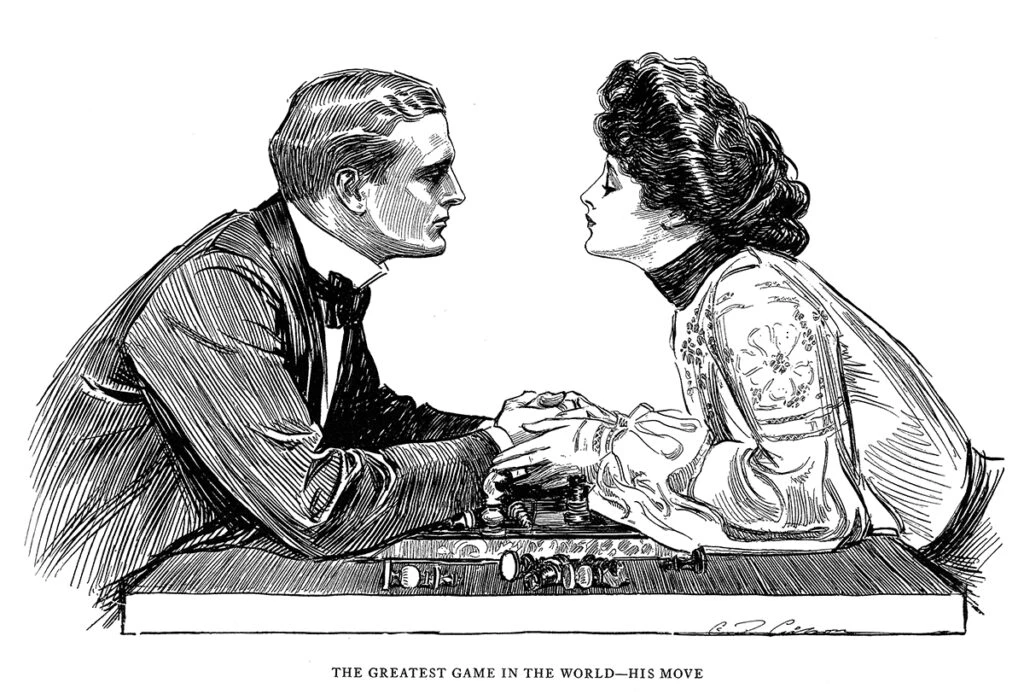
"The Greatest Game in the World Is His Move," 1903. The Gibson Girl often proved smarter than her partner.
The image combined the traits of two female types popular in 19th-century American culture: the "fragile lady"—slenderness and respectability; the "curvy beauty"—wide hips and a striking figure, but without the slightest vulgarity.
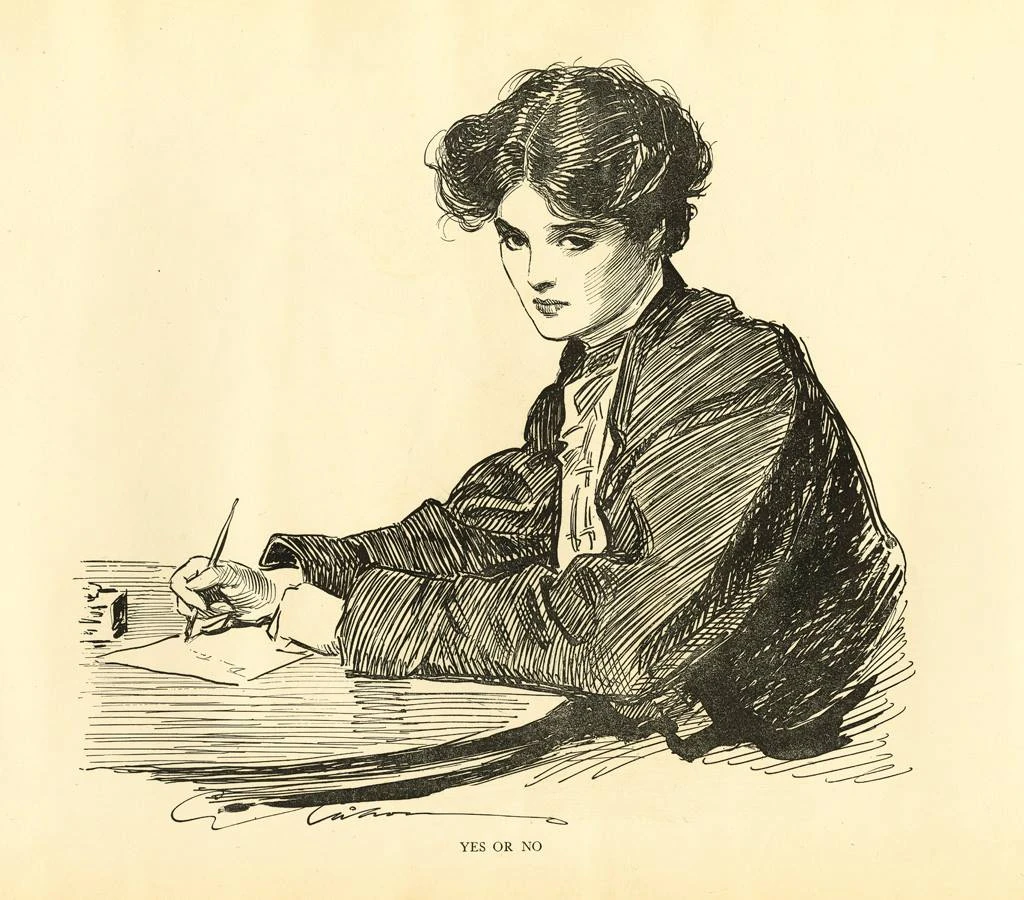
"Yes or No," 1903. The Gibson Girl knew how to keep men on their toes—that's part of her look, too.
The result: a tall, confident woman with voluminous hair styled in a high pompadour and chiseled features. Her posture was enhanced by a special "swan-bill" corset, which created a distinctive S-shaped silhouette: chest forward, hips back.
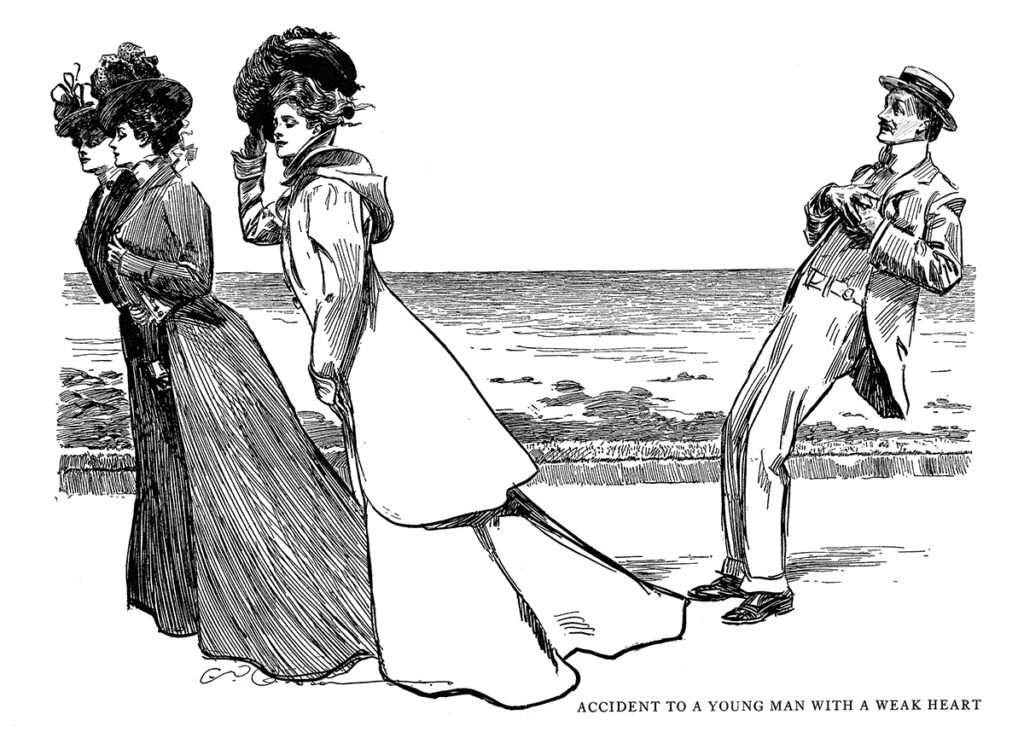
"Accident of a Young Man with a Weak Heart," 1900. The Gibson Girl knew how to make an impression.
In 1894, the first separate album of illustrations was published, and the image instantly became a national sensation. The Gibson Girl became the embodiment of the "New Woman"—the feminist ideal of the independent, active city dweller, which was actively discussed in the press of the 1890s.
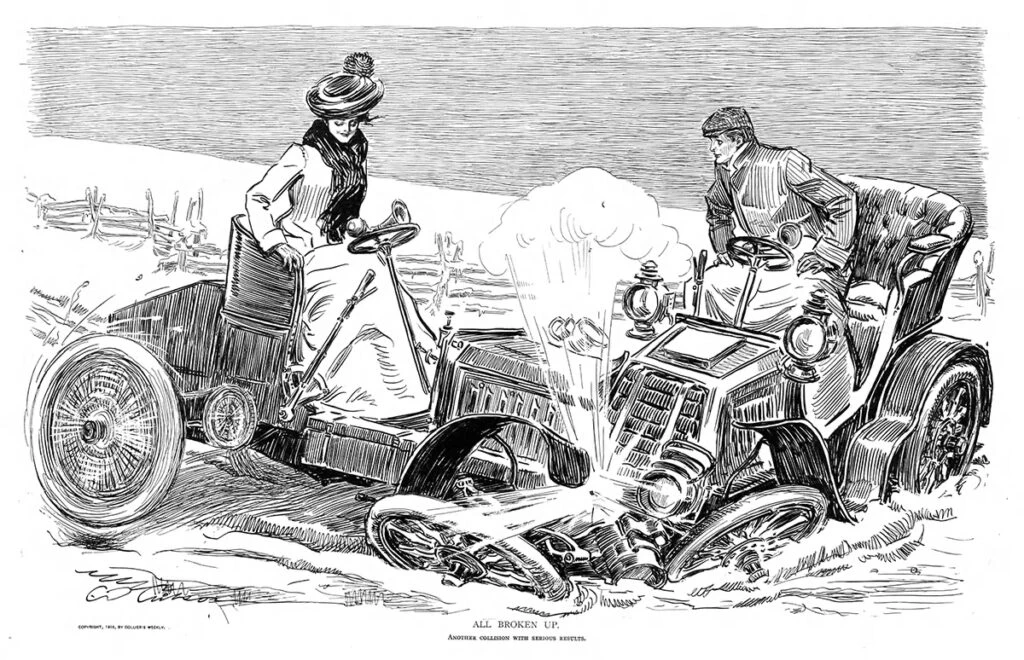
"All Shattered!" Illustration for Collier's Weekly, 1907. Humor and self-irony are an integral part of the image.
Freedom on the Terms of Beauty
The Gibson Girl rode a bicycle, played tennis and golf, rode horseback, and swam. She participated in jury sessions alongside men, played music, and painted. All of this was revolutionary by the standards of the Victorian era, when a woman from polite society wasn't expected to sweat.
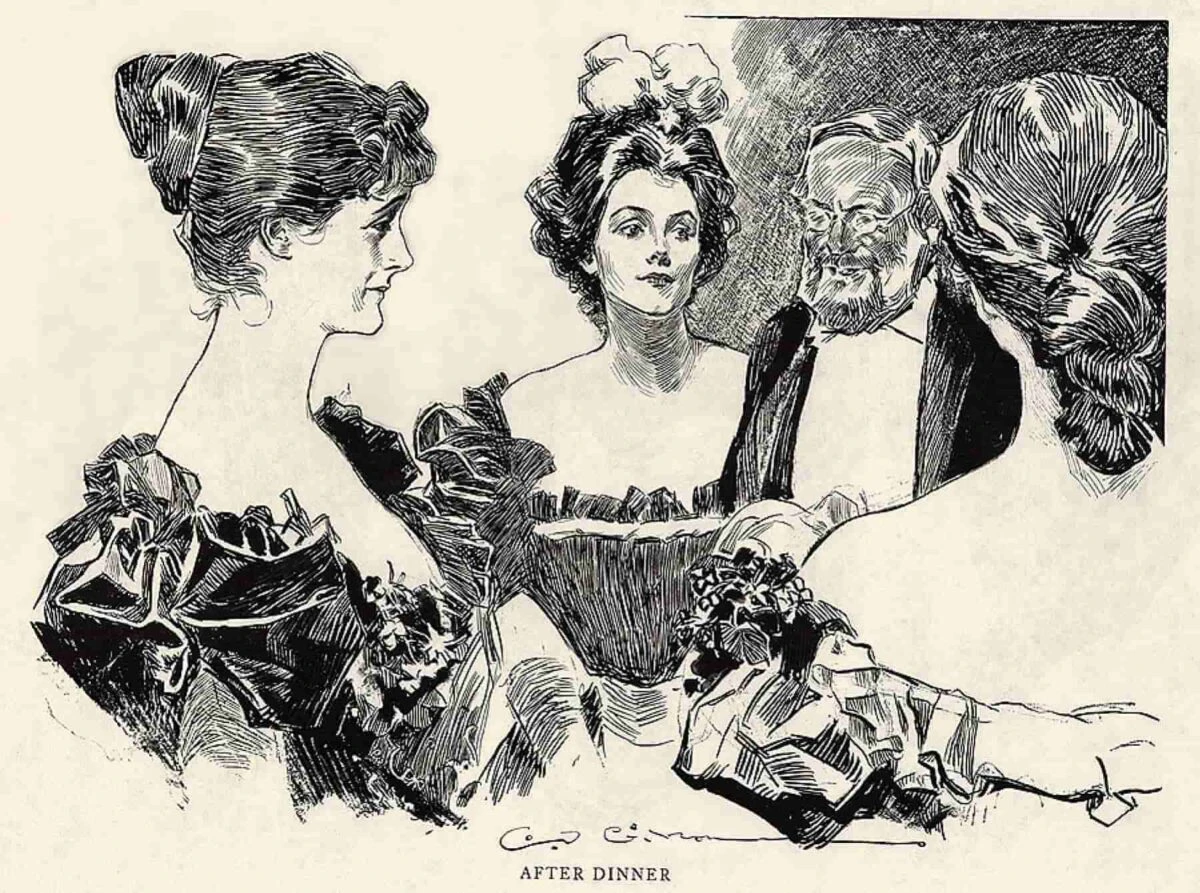
"After Dinner," 1895. Social gatherings were a familiar environment for the Gibson Girl.
But this freedom contained a hidden trap. Being active didn't free her from the corset—it merely became part of her tracksuit. In any life situation, the Gibson Girl remained impeccably beautiful and "feminine"—in the conservative sense of the word. She was allowed to appear in public, but only on one condition: to look right.
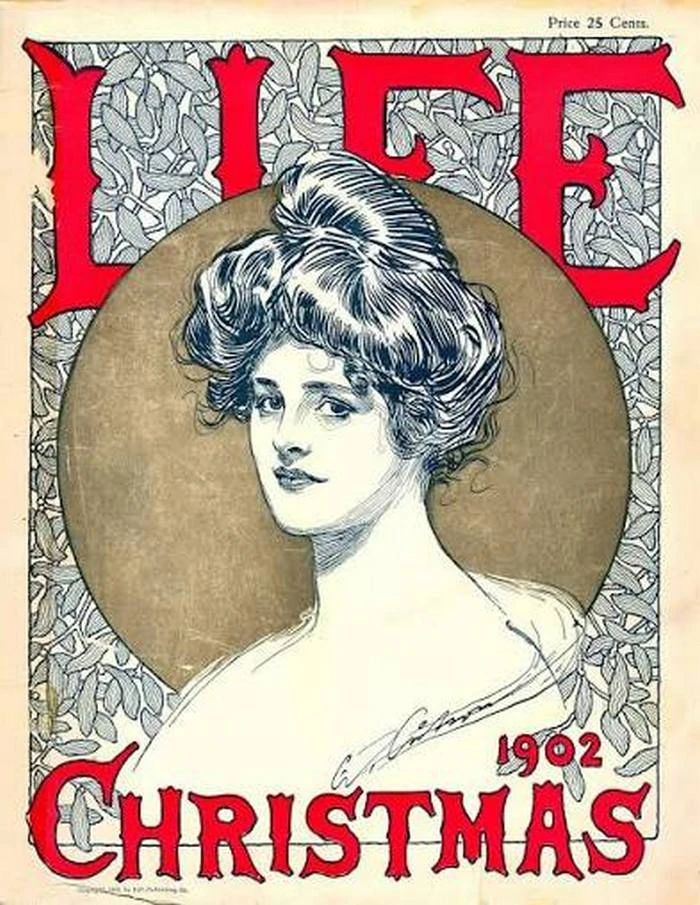
Life magazine cover, 1902. The Gibson Girl was a regular feature on the cover for almost 20 years.
This is precisely why the image sparked controversy. Gibson himself was skeptical of the suffragettes (fighters for women's suffrage). Around 1909, he drew a cartoon, "A Suffragette Husband": a woman sits with her back to her husband, reading a newspaper with the headline "Women Get the Vote," while her husband and dog look sadly away.
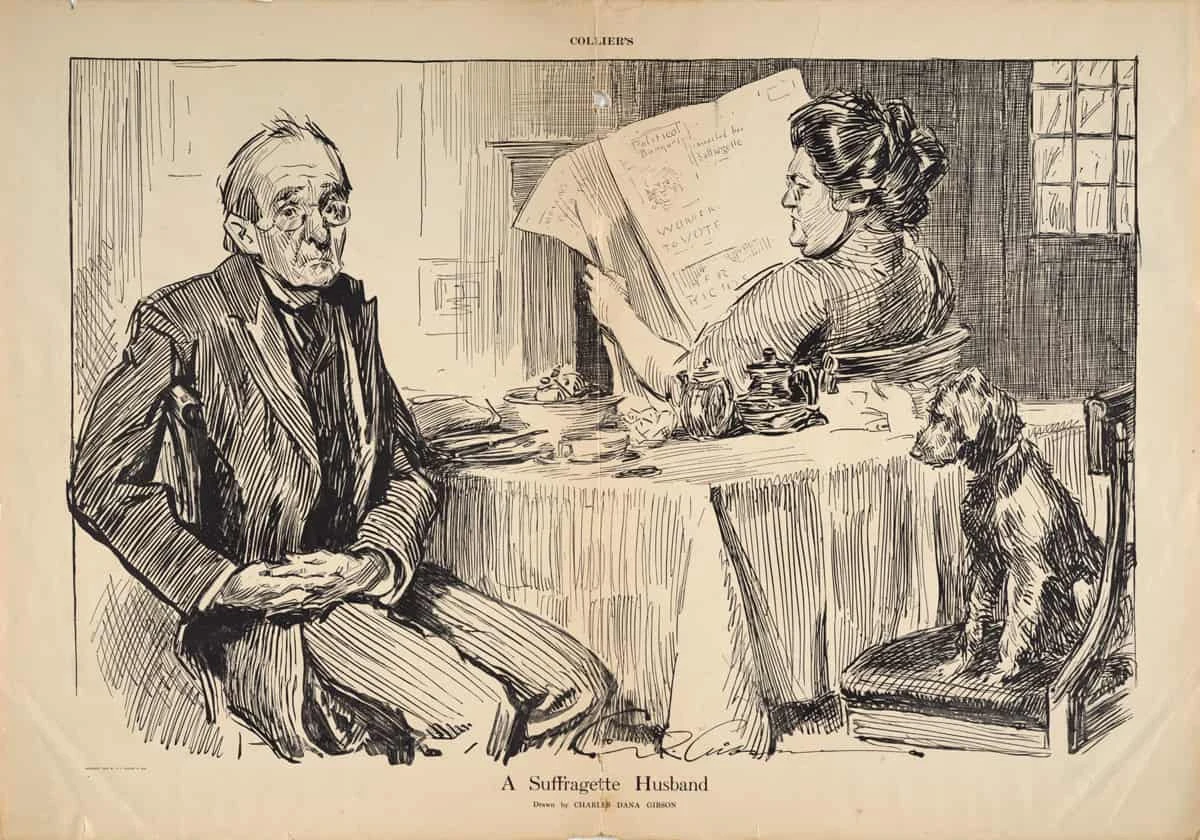
"The Suffragette's Husband," circa 1909. A caricature Gibson himself drew against the suffragettes—while the women in his illustrations inspired them to fight.
Feminist writer Charlotte Perkins Gilman, on the other hand, saw strength in the image: in her words, it embodied women becoming "bolder, stronger, healthier, freer—more human in every way."
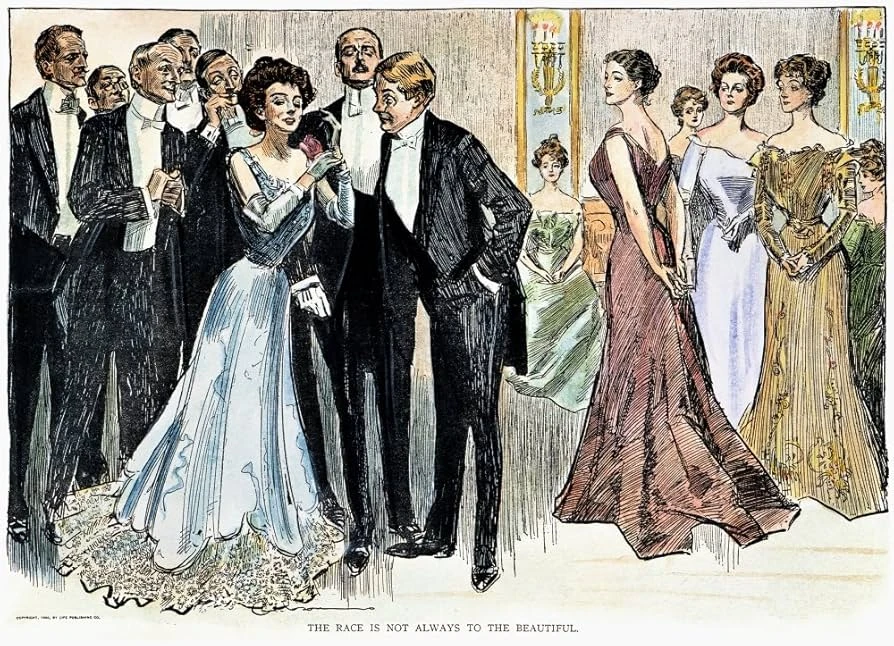
"Victory Doesn't Always Go to the Prettiest," 1903. Gibson regularly teased high society.
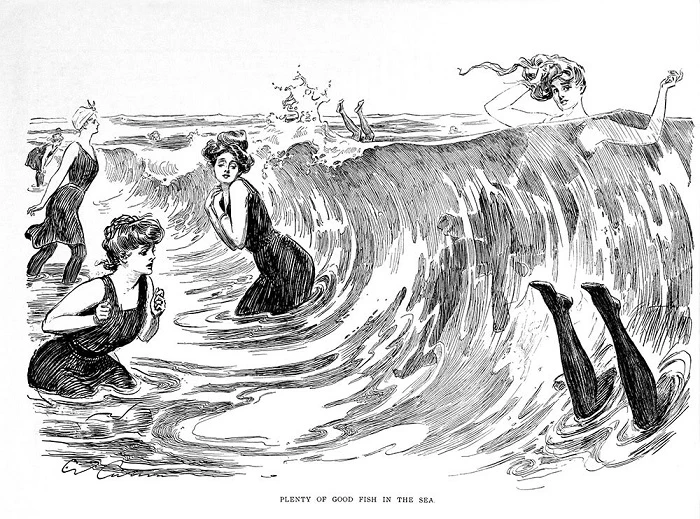
"Plenty of Good Sea Fish," 1902. Gibson's girl knew how to laugh at her suitors.
Real-Life Inspired Models: Who Hidden Behind the Image
Despite Gibson's insistence on a composite image, he had very specific inspirations. First and foremost is his wife, Irene Langhorne. She came from a Virginia family: her father, tobacco auctioneer and railroad magnate Chiswell Langhorne, rebuilt his fortune after the Civil War. Irene grew up a beauty with impeccable manners.
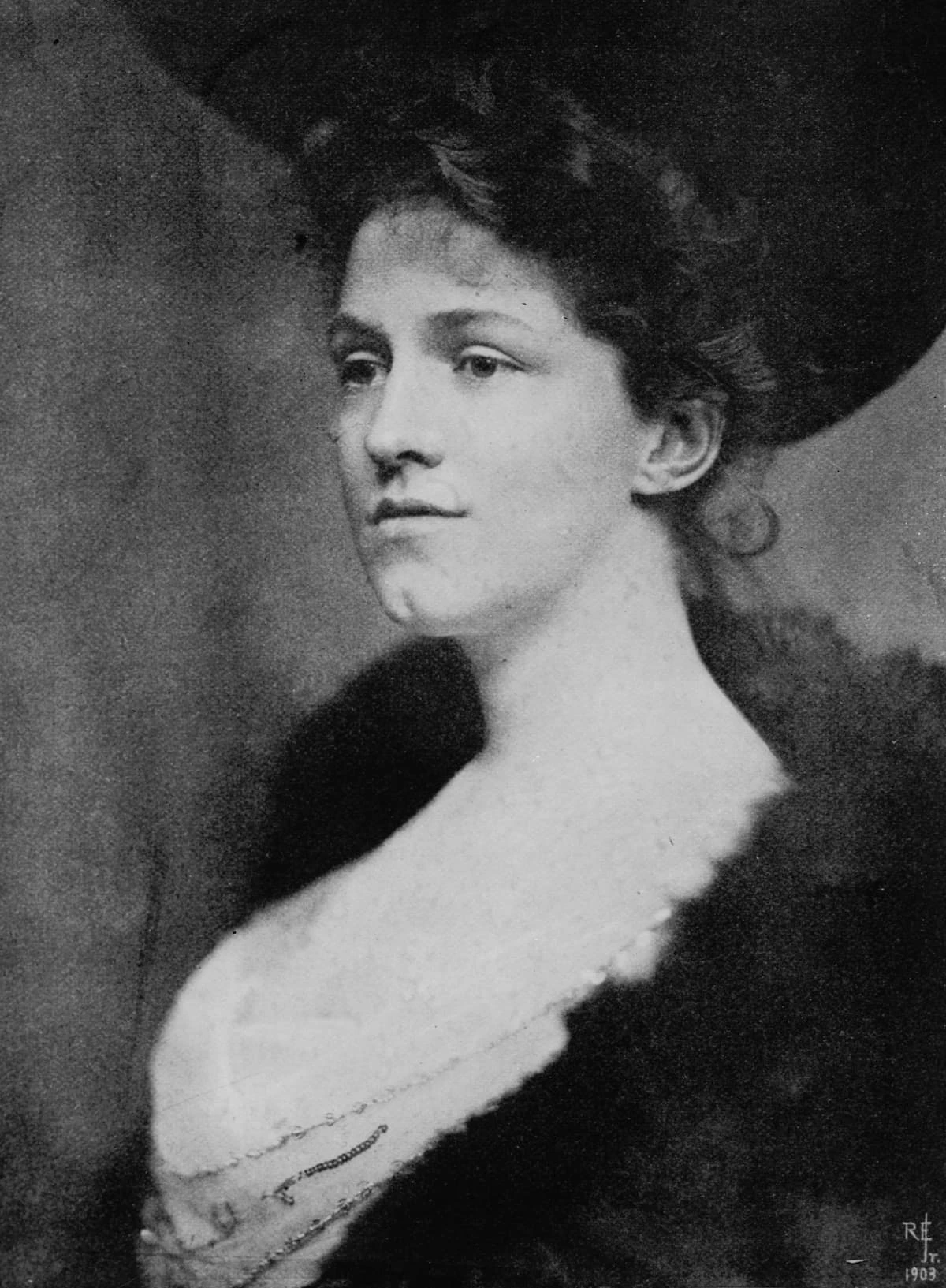
Irene Langhorne was the artist's muse, model, and wife. Gibson spent five years sketching her before meeting her.
In 1893, Irene was invited to lead the marching band at the Patriarchs' Ball at Delmonico's Restaurant in New York City, one of the most prestigious social events in the country. She became the first Southerner to receive this honor. A year later, in 1894, at a dinner in New York, she found herself seated next to Charles Gibson. The artist, already famous for his illustrations, saw before him a woman who looked exactly like the woman he had drawn. They married in 1895.
An important detail: the first "Gibson Girl" appeared five years before they met—Irene wasn't the prototype; she became the main model after their wedding.
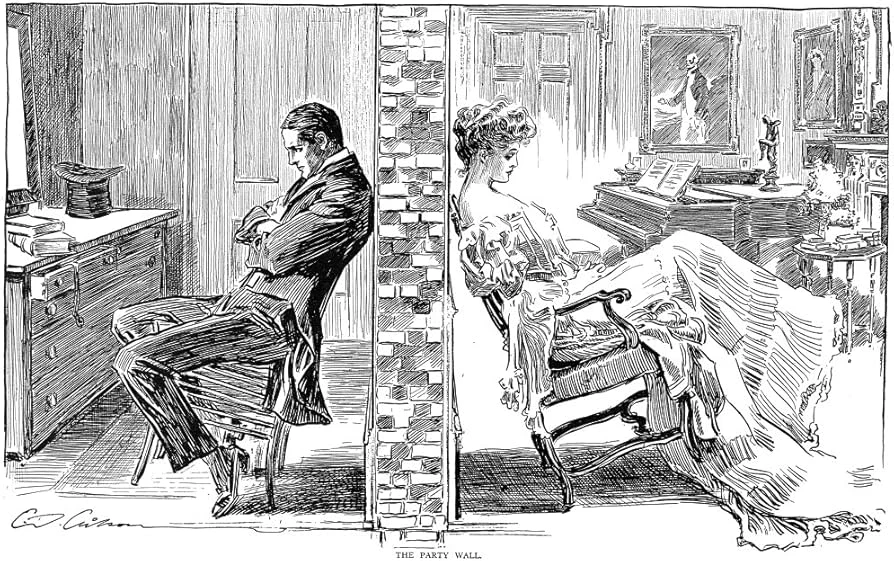
"The Common Wall," 1903. Gibson often portrayed women as more intelligent and observant than those around them.
The Langhorne sisters are also worth mentioning: one of them, Nancy, married Viscount Astor and became the first woman to serve in the British House of Commons.
Other inspirations include the Irish-born model Minnie Clark and actress Evelyn Nesbit. The most famous "living Gibson girl" was the Belgian-American actress Camille Clifford (1885–1971).
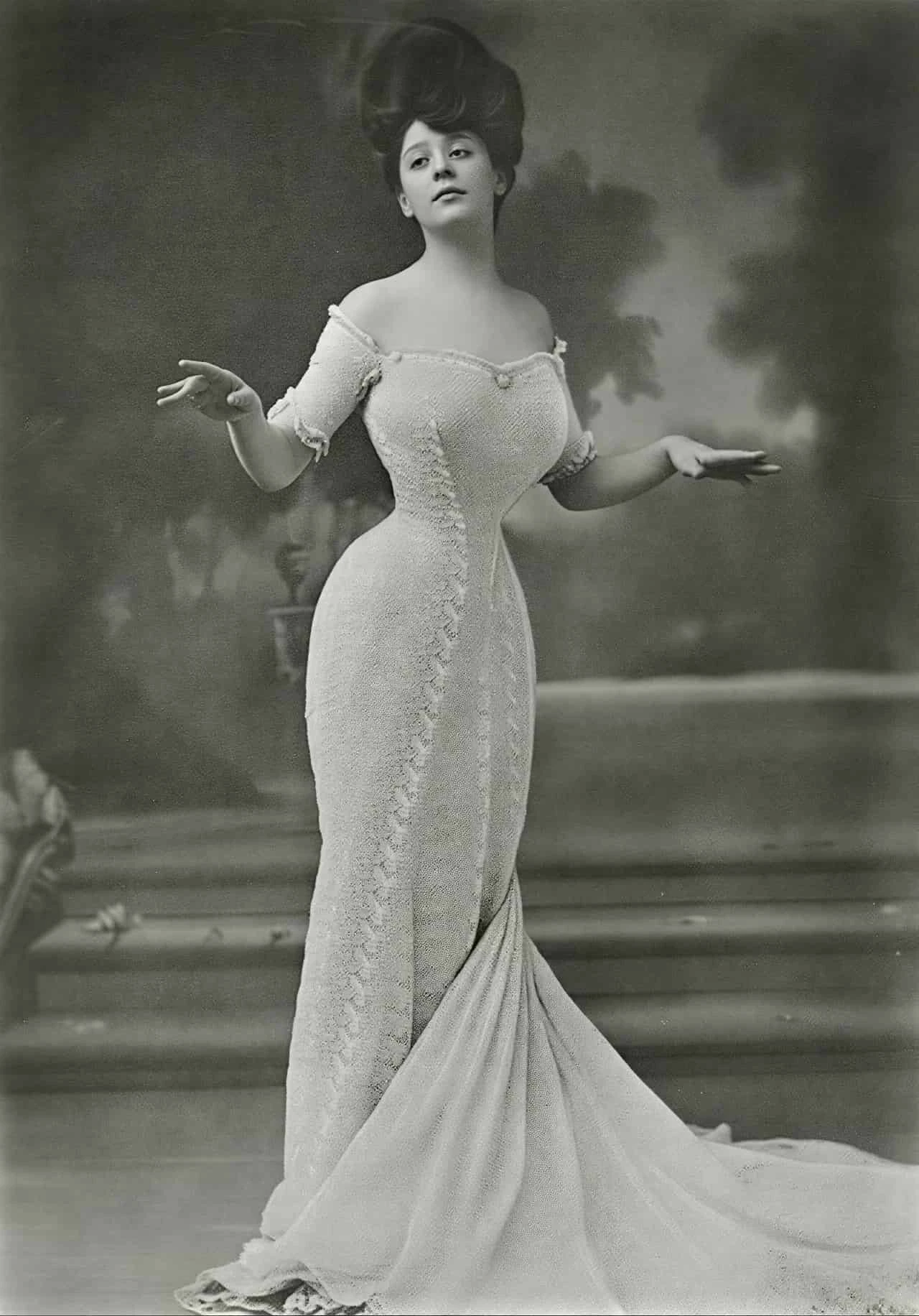
Camille Clifford is a Belgian actress who portrayed the Gibson Girl on the stage.
She didn't pose for the artist herself—she simply won a magazine contest for the "most representative New York girl modeled on Dan Gibson," received a $2,000 prize, and appeared on stage in the London musical The Prince of Pilsen in 1904 in that very role. Her corseted waist measured 18 inches (about 45 centimeters)—and this was her main selling point.
A Trademark of the Era
The image extended far beyond the pages of magazines. The Gibson Girl's face was printed on wallpaper, dinner services, parasols, pillowcases, ashtrays, flasks, and souvenir spoons. In terms of commercial reach, historians compare her to the characters in Star Wars several decades later.
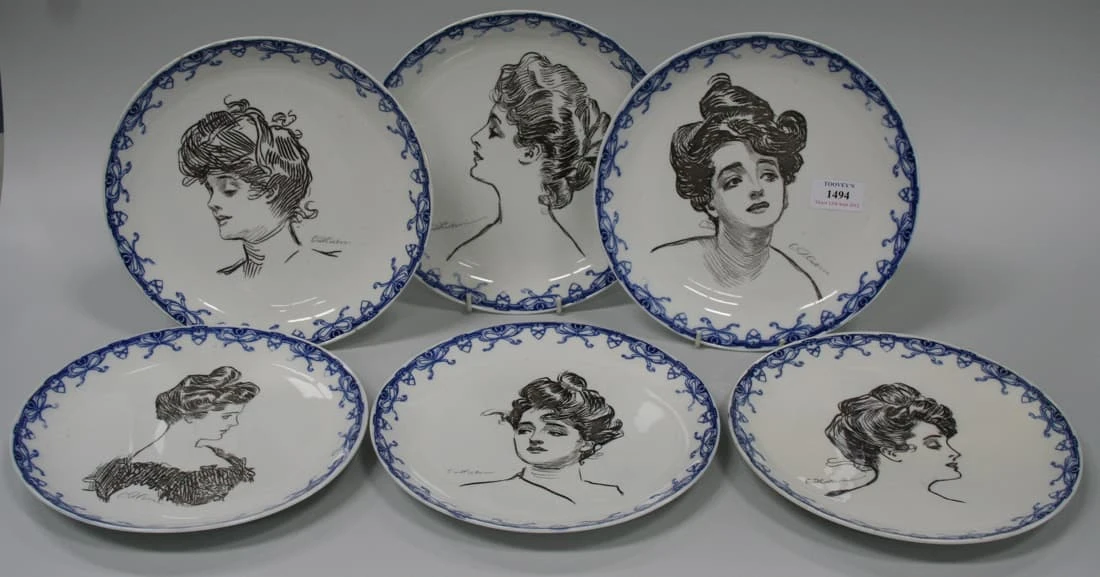
The Gibson Girl on mass-market products—tableware, wallpaper, souvenirs. The first-ever merchandising centered on a media image.
The era's infrastructure also helped spread the image. Since 1869, the first transcontinental railroad had connected the country into a single market. Circulation of national magazines grew to millions. Sears, Roebuck & Co. mail-order catalogs delivered fashionable patterns to rural areas. American women from any state could see what exemplary beauty looked like and try to emulate it.
Sunset: From Corsets to Flappers
World War I changed everything. Women worked in factories and hospitals—in conditions where corsets were not just uncomfortable, but dangerous. The world had become harsher, faster, and more practical. The majestic beauty of the Gilded Age no longer fit into the new reality.
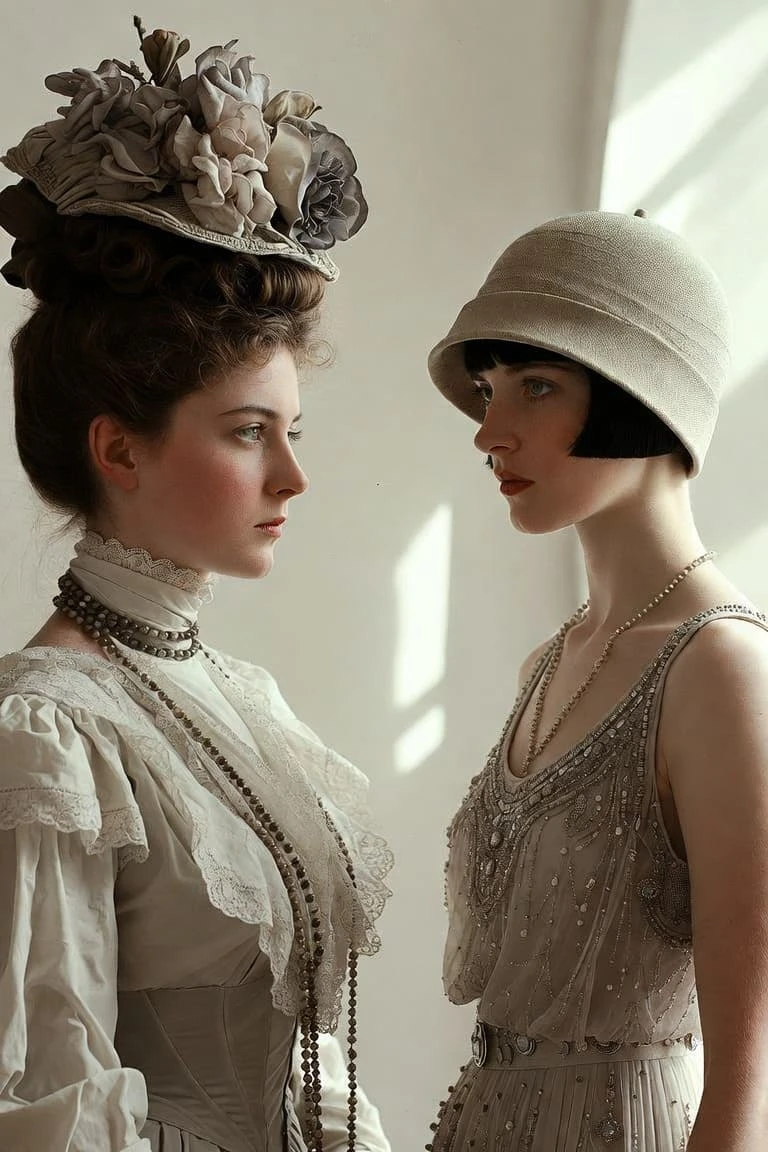
The Gibson Girl versus the Flapper: The corset and voluminous hairstyle gave way to the bob and loose dress—in just a decade.
The flapper took over—a girl with a short bob haircut and a straight, uncorseted dress. Her silhouette was almost boyish. She smoked, danced the Charleston, and openly demanded voting rights. Where the Gibson girl respected boundaries, the flapper broke them.
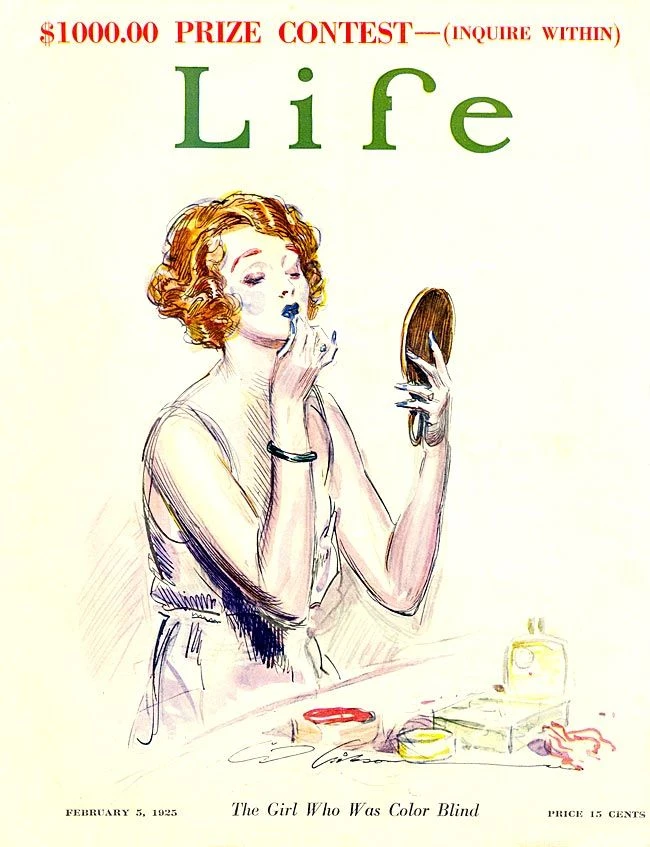
Life cover, 1925, by Gibson. The new heroine no longer has the Victorian stiffness, but has an aristocratic bearing.
Interestingly, Gibson continued to work. The Life cover of February 5, 1925, is his work: the heroine is already modern, but the posture of earlier years is visible in her. The artist sensed that the world was changing, but he was in no hurry to change his hand.
Life After Fame
In 1936, Gibson retired. By then, he was, according to contemporaries, "the most celebrated pen-and-ink artist of his time." He and his wife, Irene, bought the small island of Islesboro off the coast of Maine, where he spent his time painting with oils. He no longer needed ink for his magazine work.
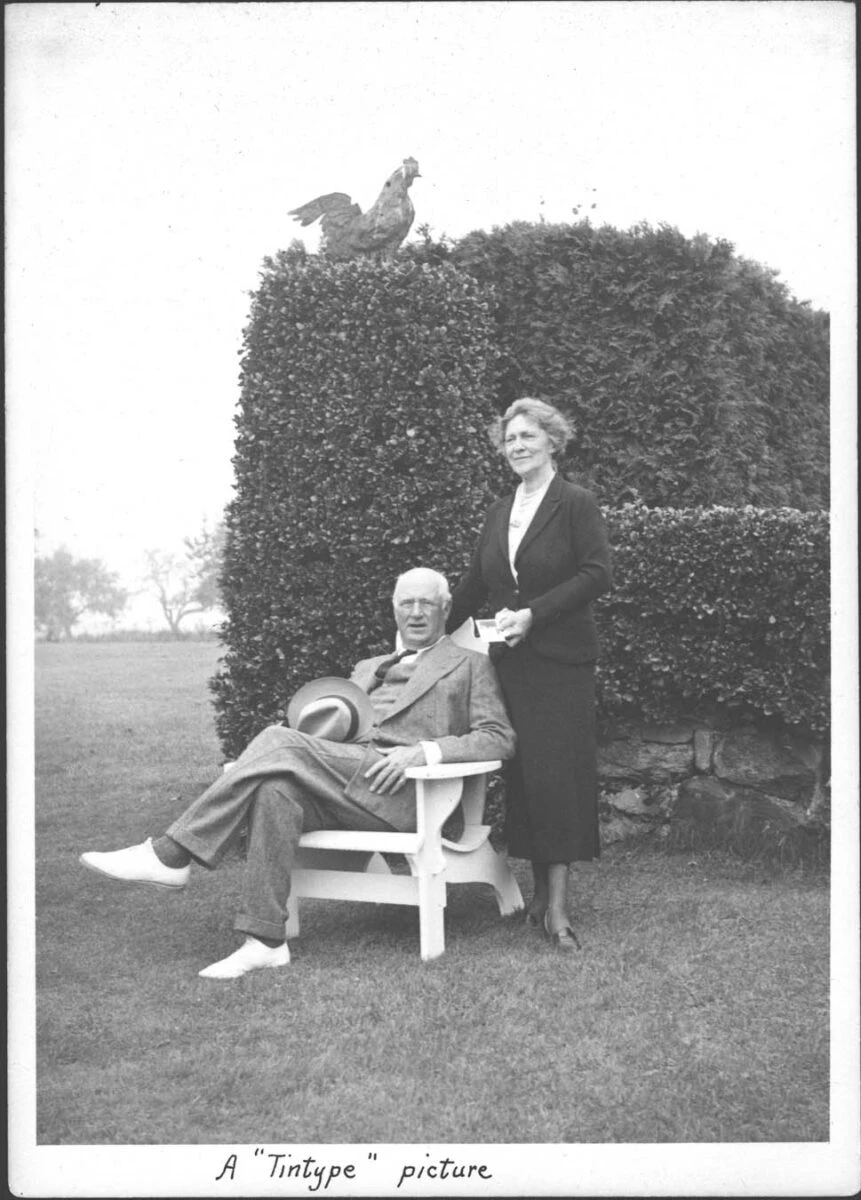
Charles and Irene Gibson on Islesboro Island, 1937. After decades of social life—silence and painting.
Gibson also has another, unexpected legacy. The artist invented the cocktail that bears his name: a gin martini garnished with a pickled onion instead of an olive. A simple substitution, it made the Gibson a bar classic. The artist died on December 23, 1944, in New York City. He was buried in Mount Auburn Cemetery in Cambridge, Massachusetts, a few miles from his birthplace.
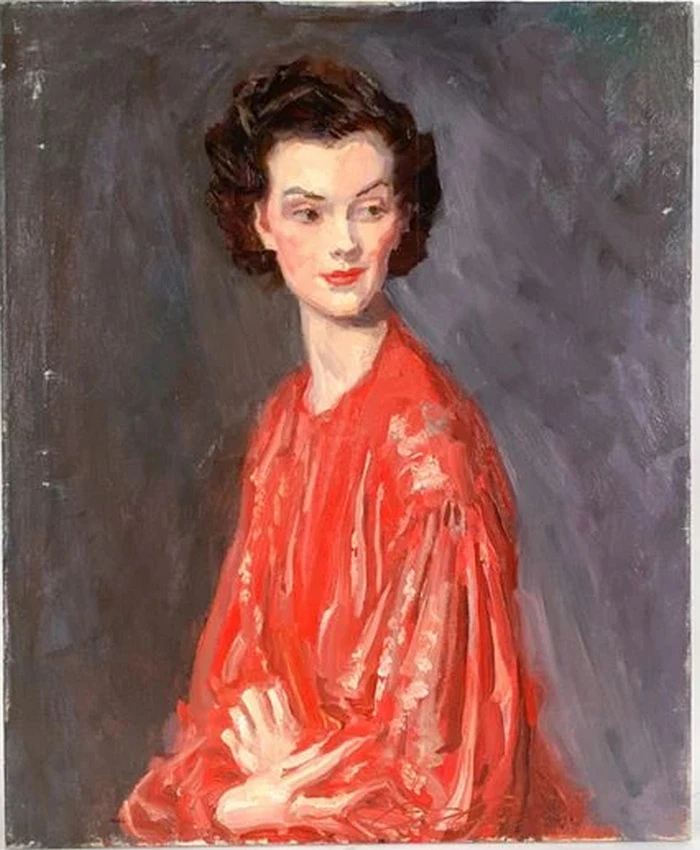
Oil portrait of a woman, 1930s. In retirement, Gibson painted—without commercial commissions or deadlines.
The story of the Gibson Girl is the story of how one hand with a pen can create a standard that millions will emulate. And about how quickly an era erases the most enduring images when life demands new heroes. Looking at these illustrations today, it's easy to see in them the beginning of an era where the visual image of women became the primary tool for influencing public consciousness—long before social media and algorithms.
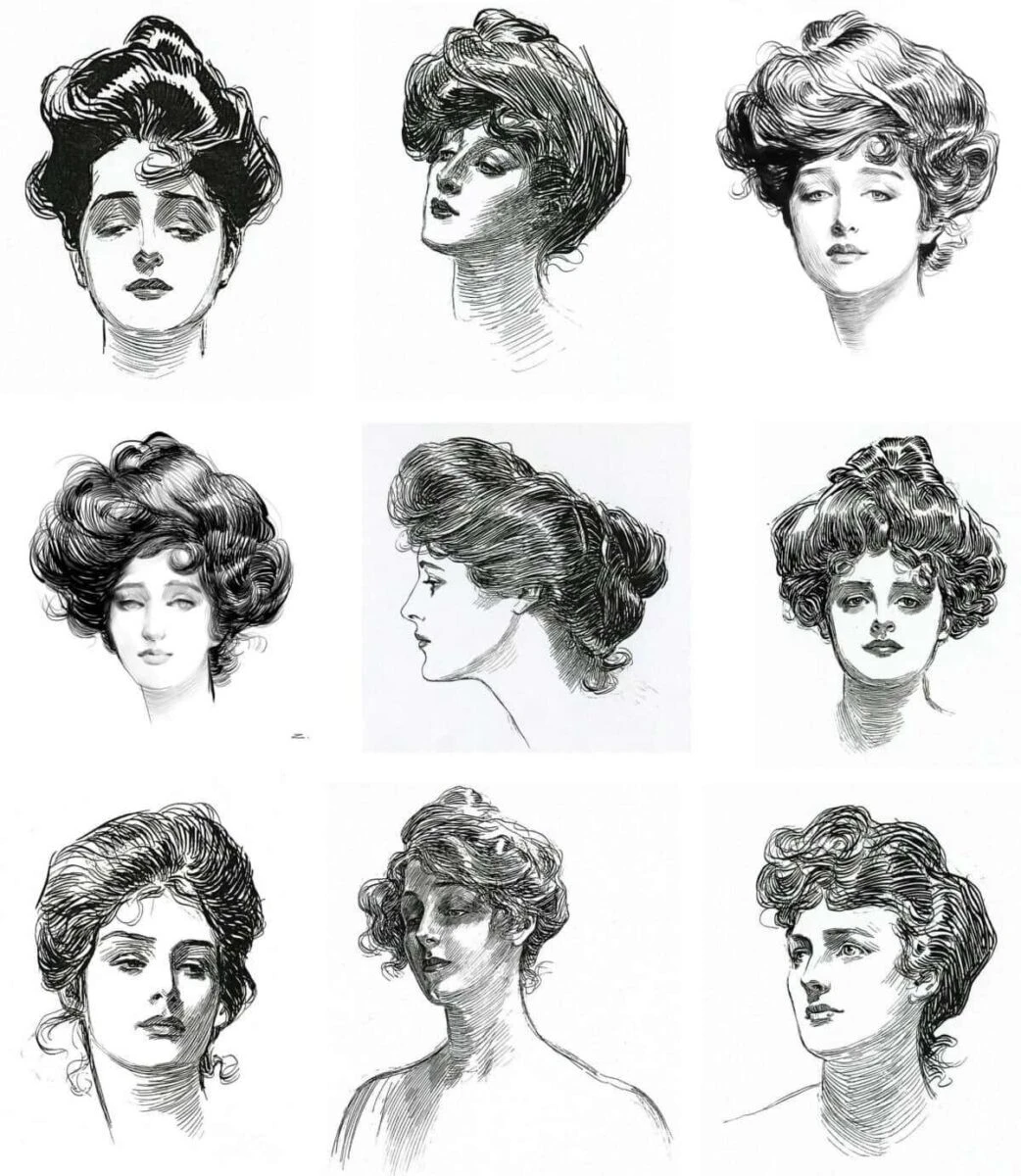
Gibson Girls in different looks. Each one—confident, elegant, slightly mysterious.
What do you think is the fundamental difference between modern Instagram "beauty ideals" and the Gibson Girl? Or is the mechanism the same—just the update rate has increased?

Download
Archive size 3.09 Mb, downloaded 14 times