From rockers to bikers: Petra Gall's photographs of Moscow in the late 80s
We present photographs from the "Mototour of a Lifetime" project. All photographs were taken by German journalist Petra Gall in the late 1980s and early 1990s, with comments from project curator Misha Buster. 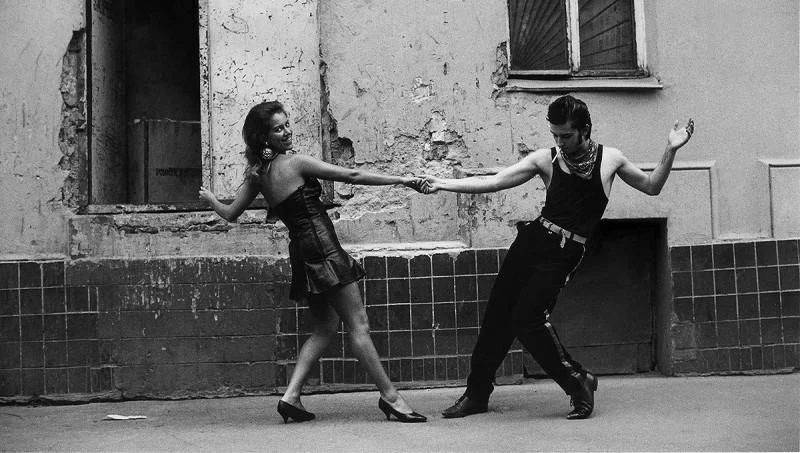
By the end of the 1980s, when the clashes between rockers and Lyubertsy (even the New York Times wrote about them) had died down, the streets of Arbat were awash with all sorts of people. 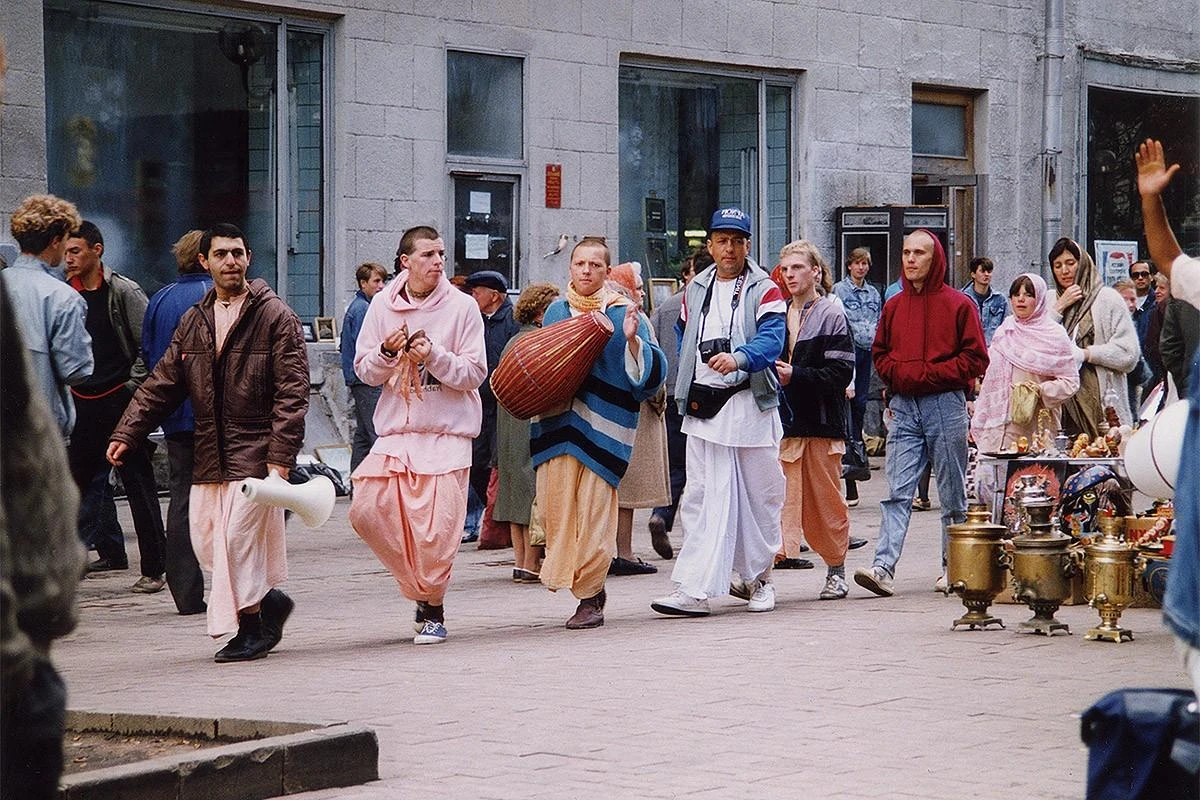
Hare Krishnas also appeared, their awkward appearance and droning annoying to those around them just as much as the motorcycle gangs. 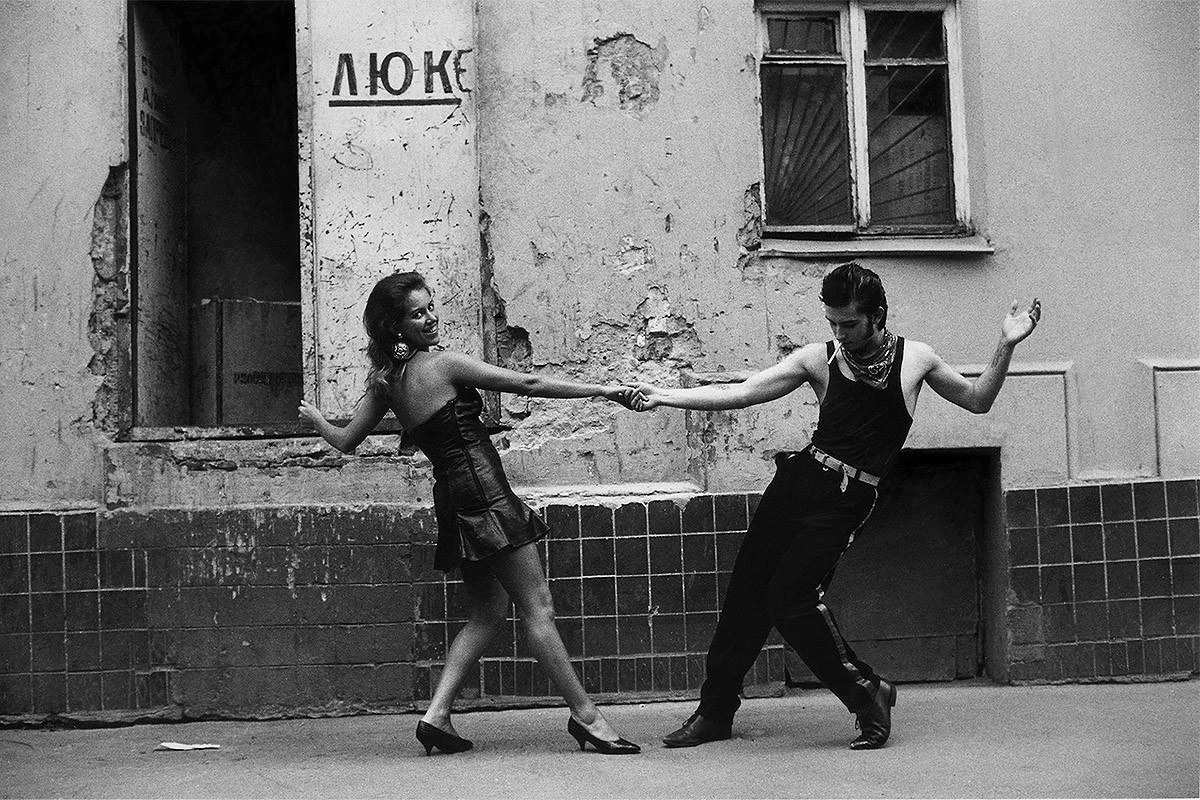

Как садят рис
Смотреть видеоDancing near the Margarita café on Patriarch's Ponds, which, strangely enough, is still open.
Patriki was already a pretty hip spot in the 1980s, but ever since Valera Lysenko (Hedgehog) from Mister Twister moved there, it's become associated with the rockabilly scene. Mavriky Slepnev, the grandson of Papanin and son of a ballerina who danced wildly at Mister Twister concerts, played a big role in this. Then he got hooked on motorcycles and started doing stunts while riding through the Pushkin Square underpass. We called it "the pipe."
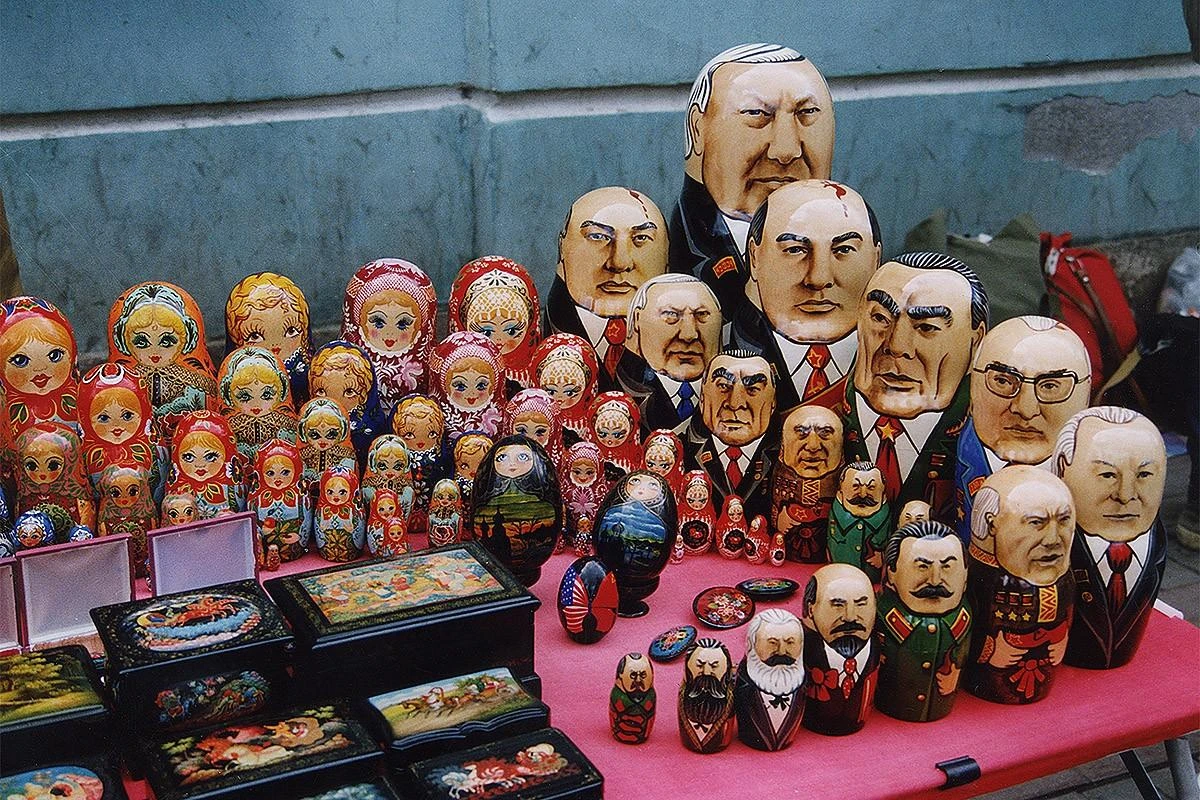
A typical Arbat scene from the perestroika era, still intact to this day. Tables like these, with their nesting dolls of leaders and other kitsch, had been nesting alongside crowds of street artists since the late 1980s. This served as a kind of façade, as there was also a brisk trade in hard-to-find items: foreign goods, magazines, and vinyl.
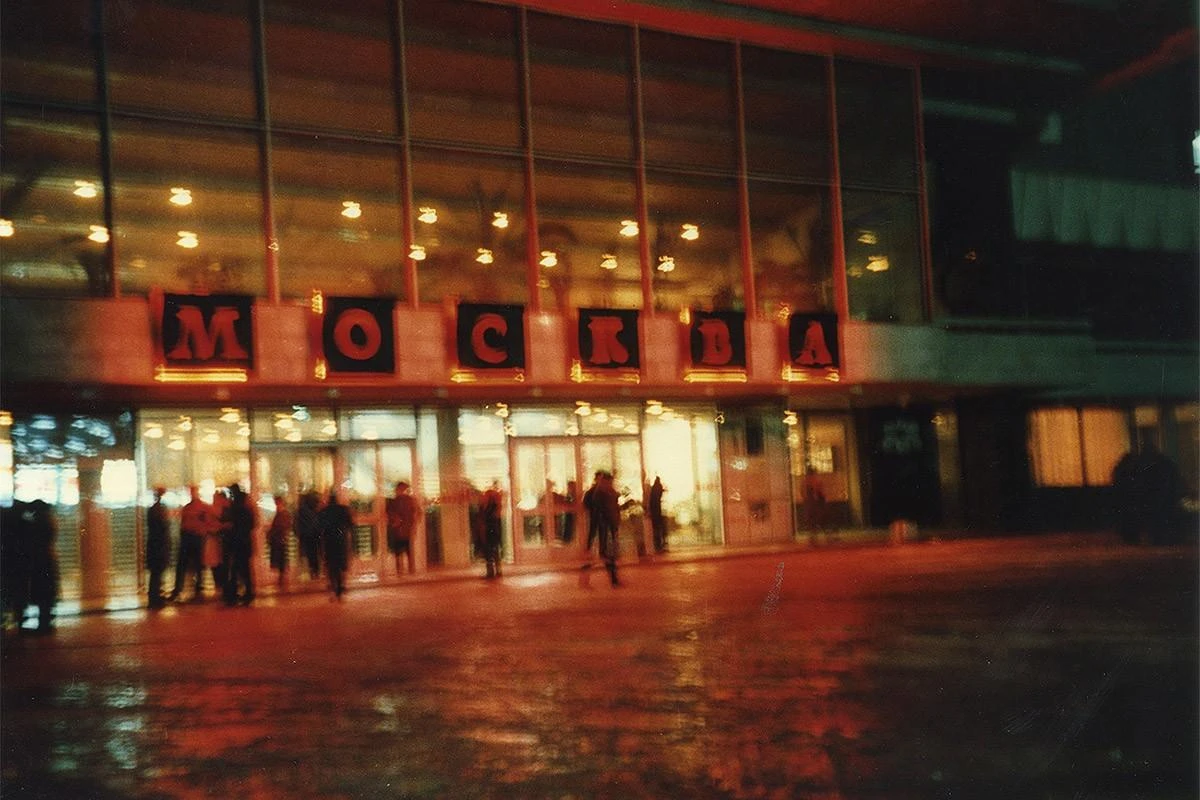
Sheremukha, also known as Sharik: Sheremetyevo-2 Airport was a traditional destination for nighttime pilgrimages by rockers, departing either from the Moscow Art Theater backyard or from Luzhniki. The purpose of these visits was both to show off and to scare foreigners. A visit to the café there was also a must.
The route to the airport often passed through the Badayevsky Brewery and ended in the early morning at the exit of the Moskva Hotel restaurant. There, after paying 1 ruble 50 kopecks, motorcyclists would carry helmets stuffed with food from the buffet.
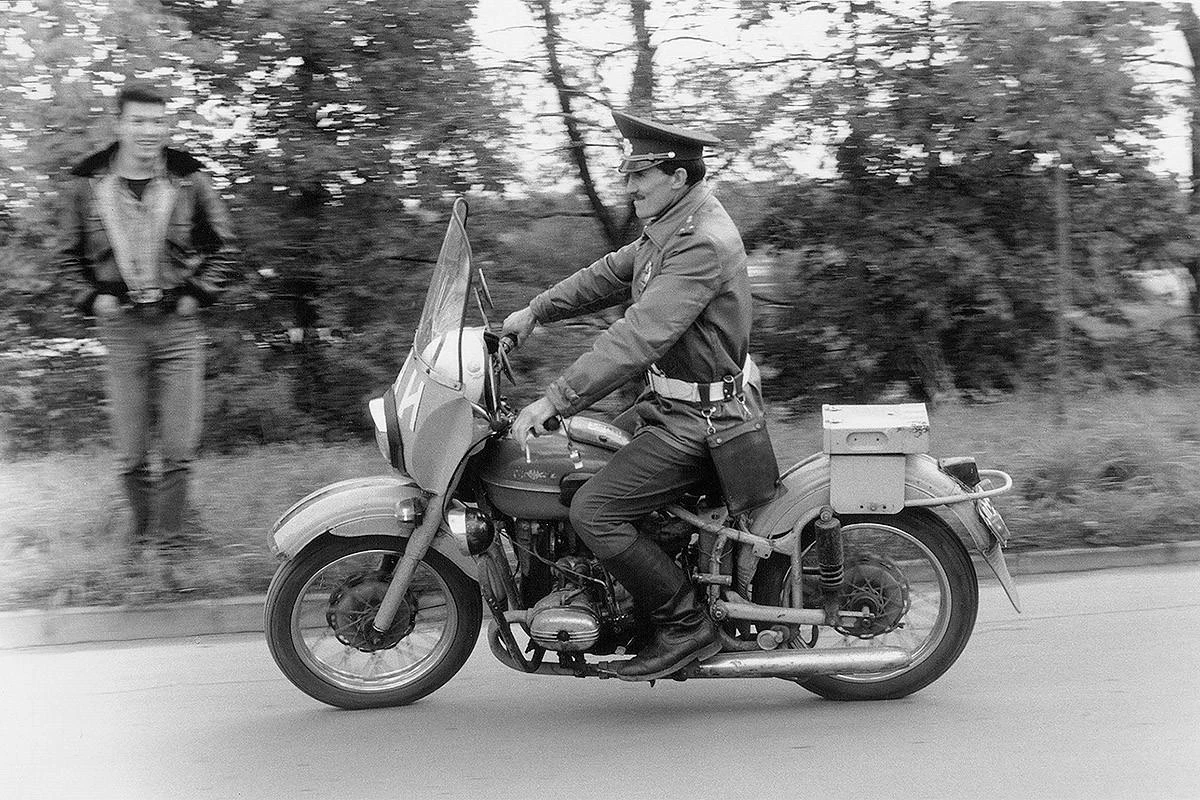
Before the advent of special units to catch rockers, traffic cops on motorcycles were the laughing stock of hooligans. They couldn't keep up with the bikers, rode awkwardly, and, let's say, looked far less fashionable than the helmeted and gauntleted motorcycle cops of the 1960s. Aesthetics were lacking on many fronts during those years.
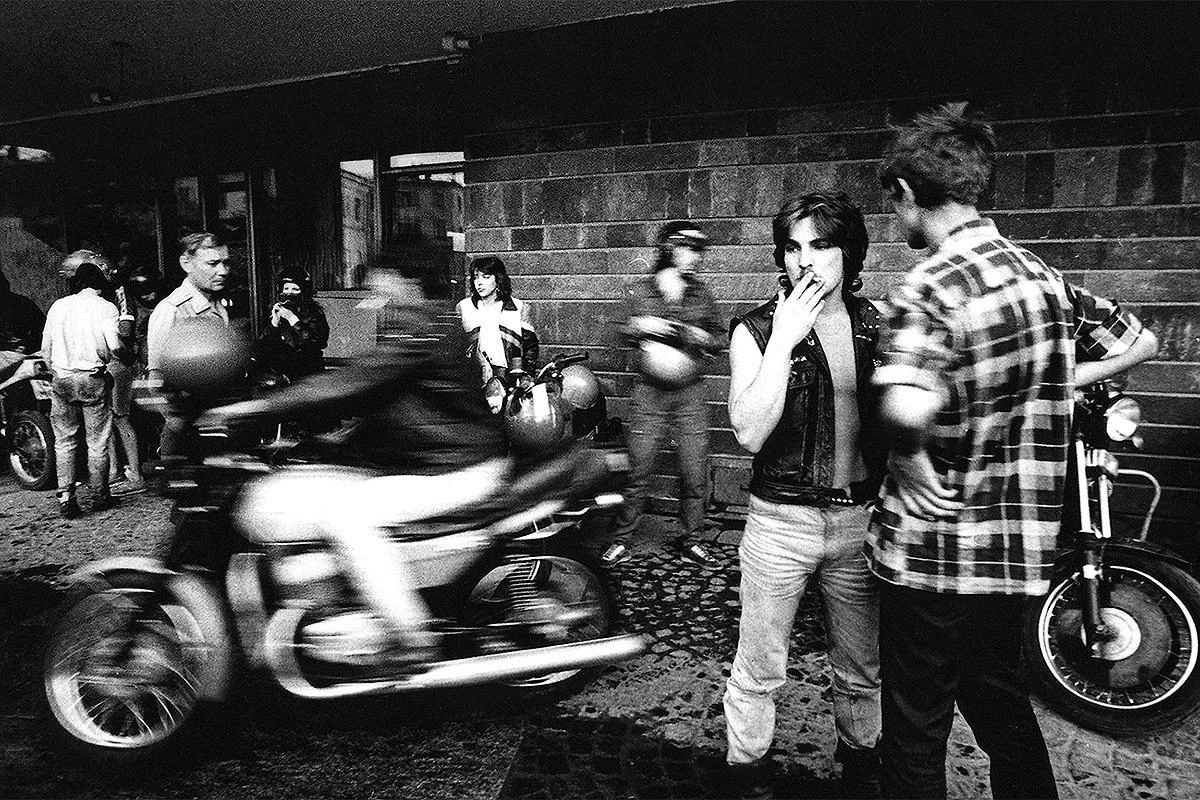
The Backyards of the Moscow Art Theater Gorky Street became popular in 1987, when local hipsters took to motorcycles and formed a distinct scene. Unlike the concert-rocking groups that cultivated heavy metal, this scene, as if in contrast, favored a rockabilly style and was inspired by the film "Streets of Fire."
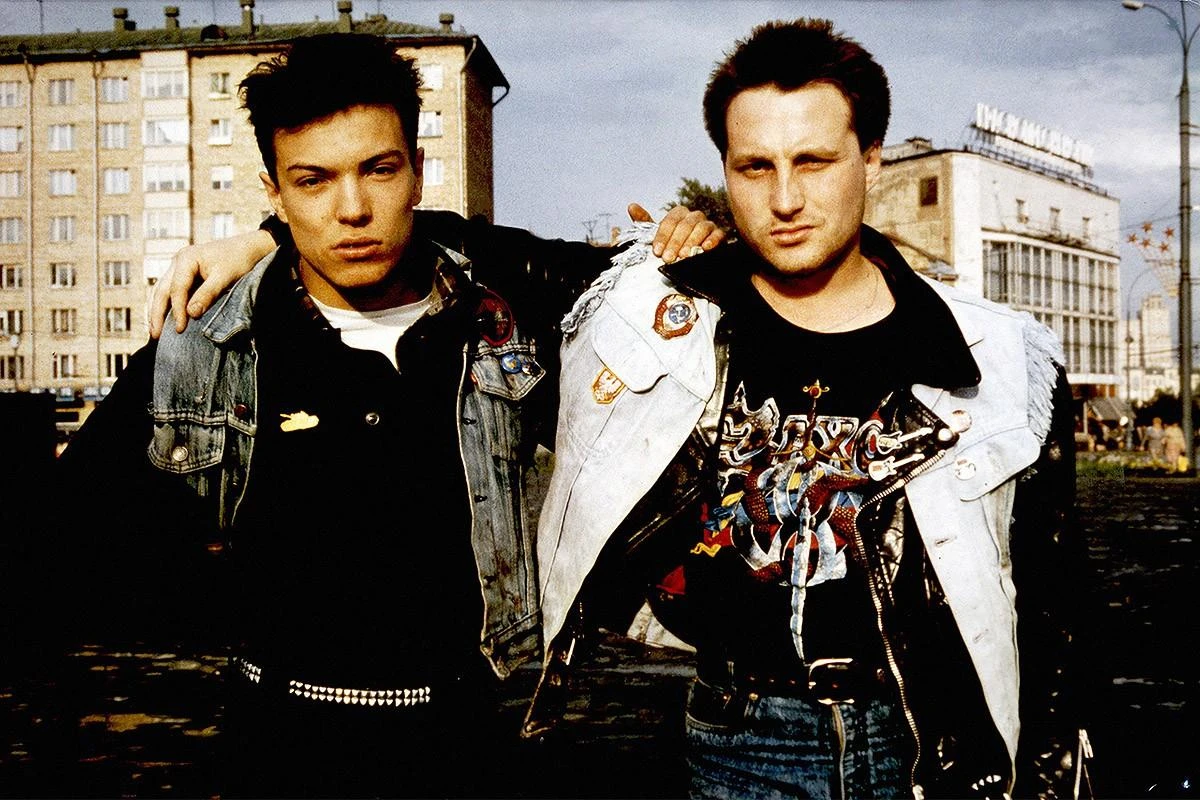
In 1987, Petra Gall met Surgeon (Alexander Zaldostanov, founder of the Night Wolves motorcycle club), Ed (Eduard Ratnikov, president of the T.C.I. booking agency, pictured left), Rus (Ruslan Tyurin, founder of the Black Aces motorcycle club, pictured), and Garik (Assa, Oleg Kolomiychuk, a figure in the Moscow underground who died in 2012) in Moscow. She immediately found herself at the epicenter of the rock movement.
This picture shows that Ed and Rus's outfits combine the aesthetics of 1960s London street racers with fragmented notions of 1950s American motorcycle gangs. The guys wanted to look cooler than everyone else, like in the movies and on the covers of foreign magazines.
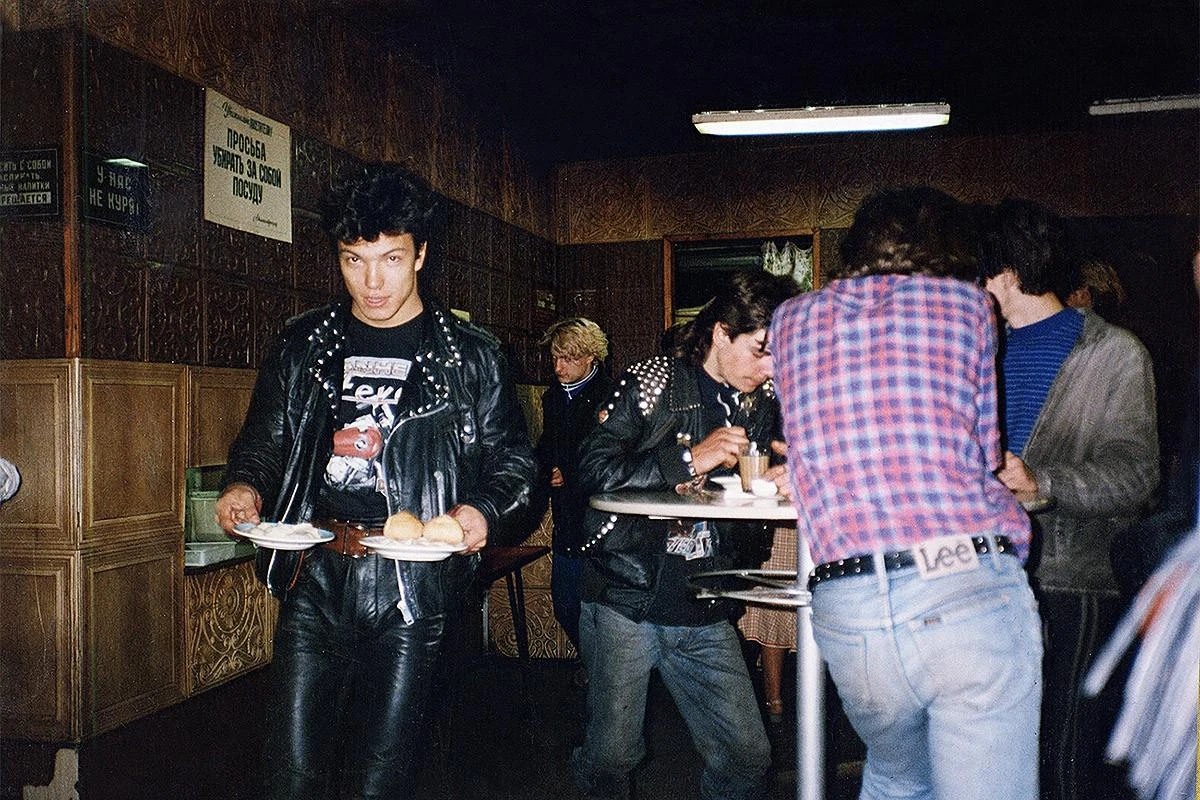
Ratnikov at a night dumpling shop. These unforgettable establishments, along with shashlik and sandwich shops, were collectively known as "stoyaks." Rockers and taxi drivers dined there at night, and office workers and visitors during the day.
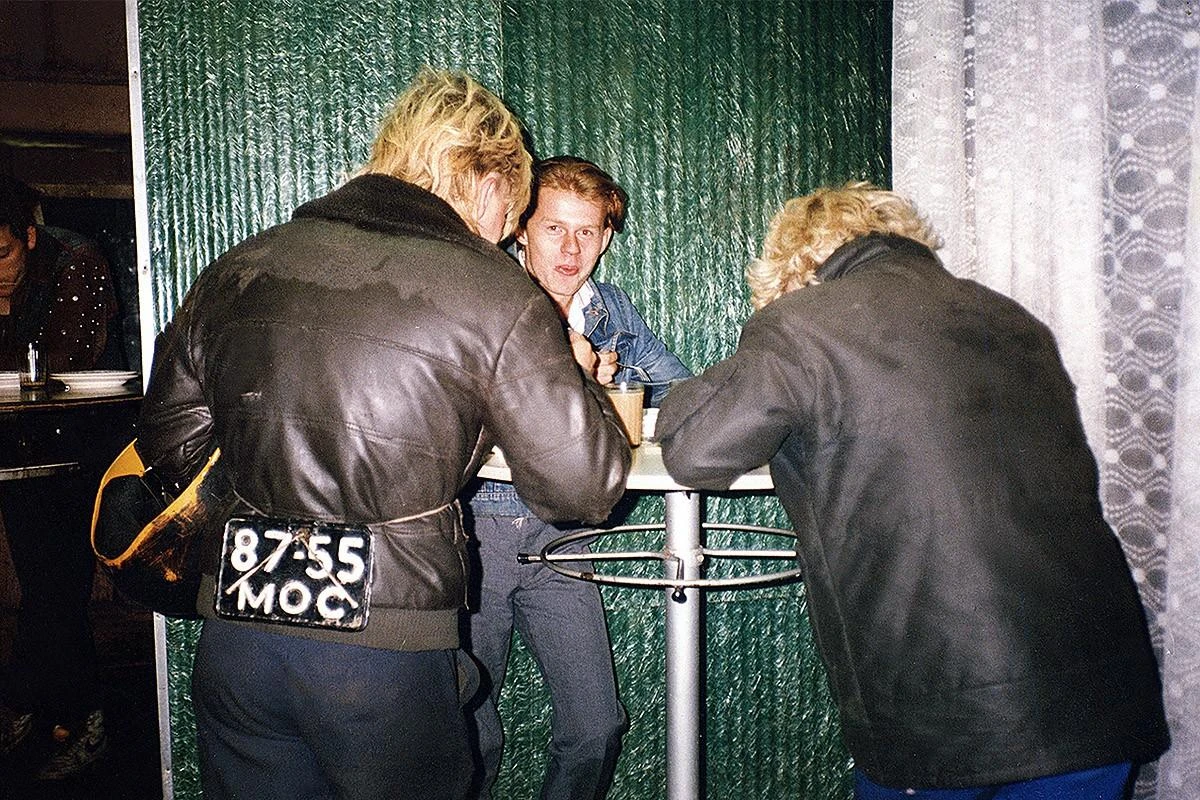
Another photo from a "stoyaks." At one of these, on Herzen Street, Arbat resident Shmel got an internship. He was looking for mythical fascists, but instead found us punks and fed us dumplings for free. After the collapse of the USSR, Shmel was renamed Pelmeni and, unable to find any fascists, became one himself, joining some Black Hundreds in the early 1990s.
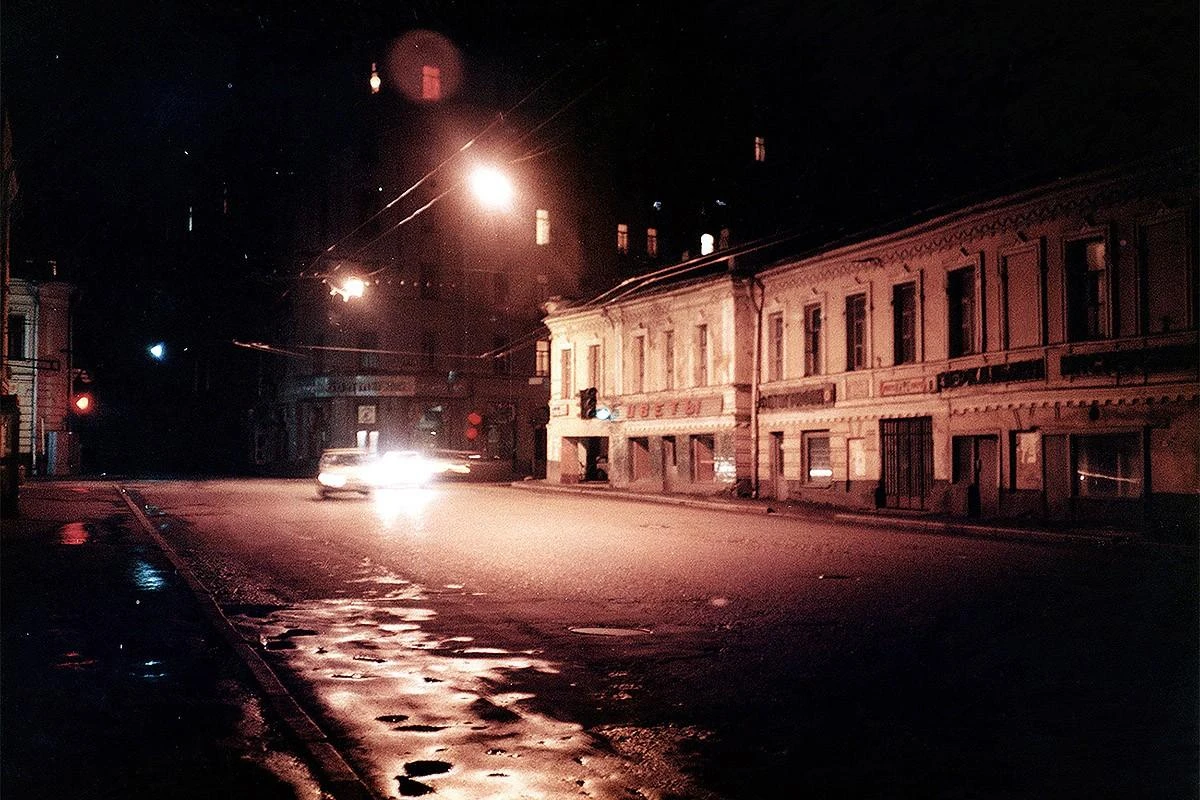
Moscow's downtown at night in the late 1980s, taken during some motorcycle tour with stops on Gorky Street to pick up some hot bread, fresh from the factory, at the Filippovskaya Bakery.
Today, this deserted, dark Moscow with its crooked streets has been preserved only in a very limited way. Along with the mixed smell of wet asphalt and boulevard poplars, and the strange passersby, since all the non-strange ones had passed out before their next labor feat, it could easily be called "Moscow that."
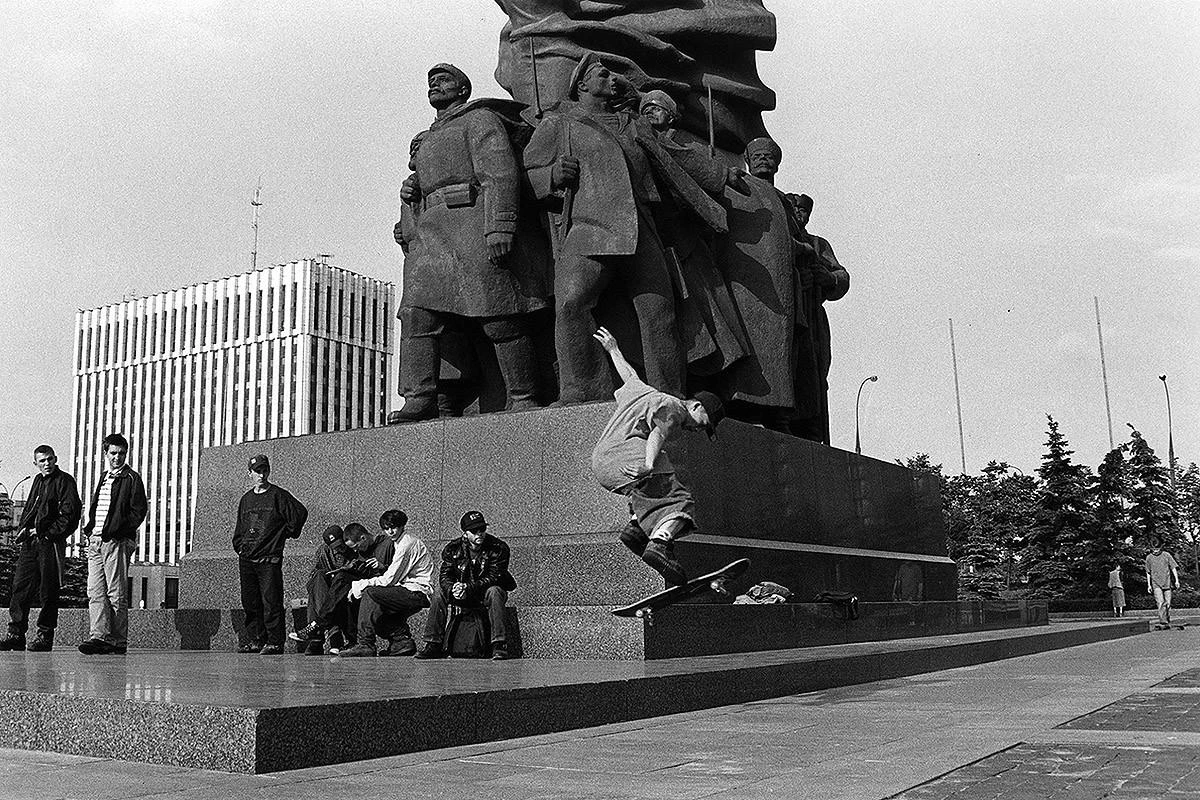
Skaters first appeared near this monument on Kaluga Square in the early 1980s, riding Riga "rollers" and Moscow-area boards. Ten years after the powerful rock wave of perestroika, the theme returned, but in a different fashion. Wide pants—pipe-shaped and pyramid-shaped, heavy boots and robes—showered past the same Soviet idols frozen in stone.
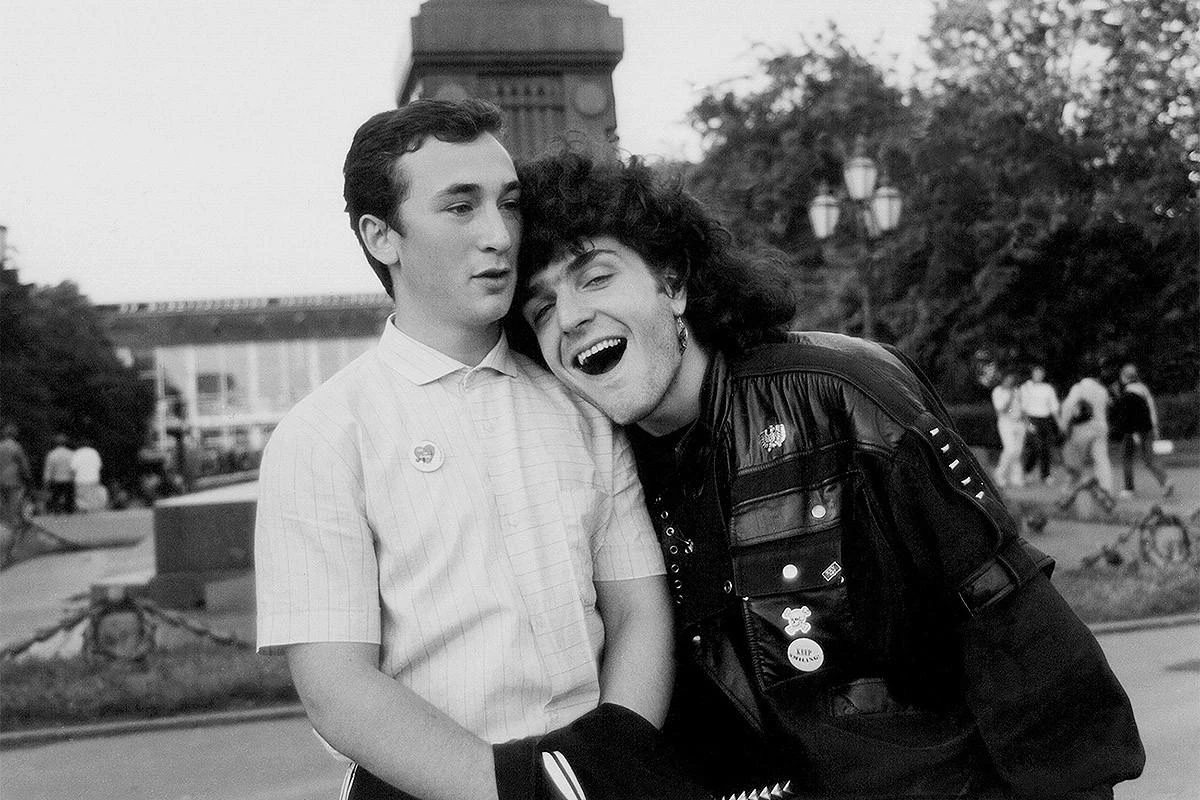
Sasha Surgeon morally humiliates a Lyuber he meets by chance on Pushka.
A turning point in the rock movement arrived, when the persecution of anything informal intensified sharply, and the Lyubers emerged. This was a collective movement under the auspices of the Lyubertsy bodybuilding scene in the Moscow region. Bodybuilders had traveled to Moscow before, but they didn't engage in overt social pressure. But those who posed as Lyubers engaged in petty muggings, for which they were reprimanded.
Sasha played a significant role in this process, but despite the fact that clashes between Lyubertsy and rockers have become legendary, such encounters more often ended in altercations and comical antics.
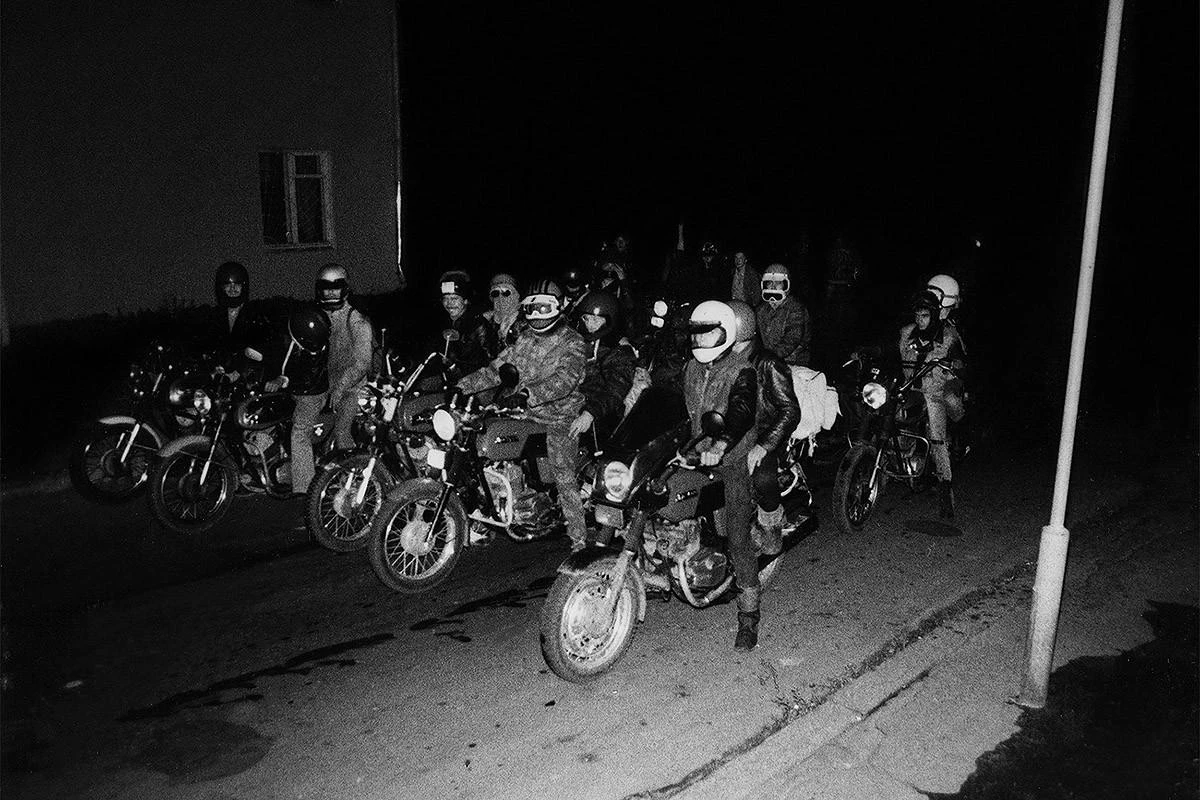
A nighttime outing of motorcycle hooligans in the spring of 1989. These gangs, in the spirit of "Mad Max," raced through the deserted city streets, having removed the mufflers from their Yavs, Cheztovs, and sometimes even Dneprs and Urals. For the most part, Moscow rockers were ordinary guys, whom the more advanced ones called "padded jackets." By 1988, the movement had become so widespread and noisy that the USSR began making horror films about them, like "Accident – the Daughter of a Cop."
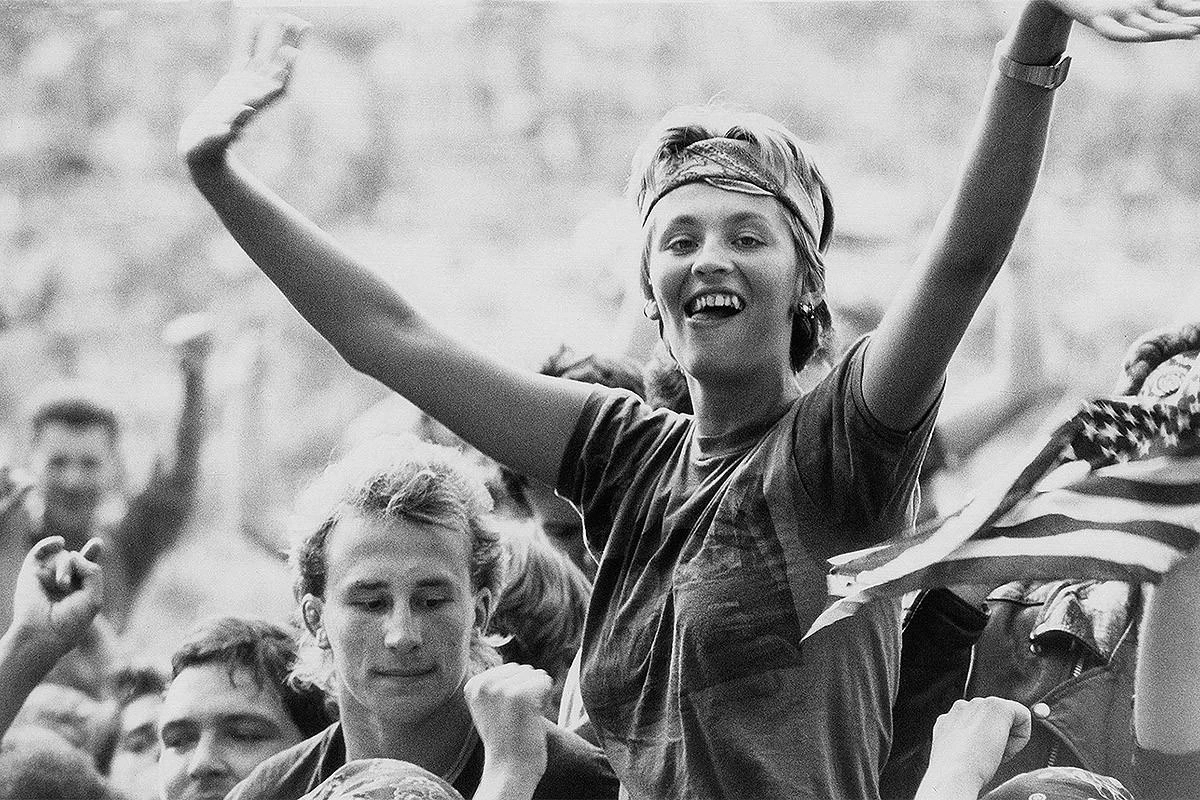
In contrast to the previous gothic climax: here's the exaltation at Luzhniki Stadium in 1989—the Peace Festival. Despite the subsequent, larger-scale "Monsters of Rock" festival in 1991, the Peace Festival is remembered as the peak of the 1980s. Even the first local concerts of Uriah Heep and Pink Floyd didn't have such an atmosphere. They brought top stars to Moscow, including Ozzy Osbourne, and for some reason put Moscow new wavers from Stas Namin's band on stage with them.
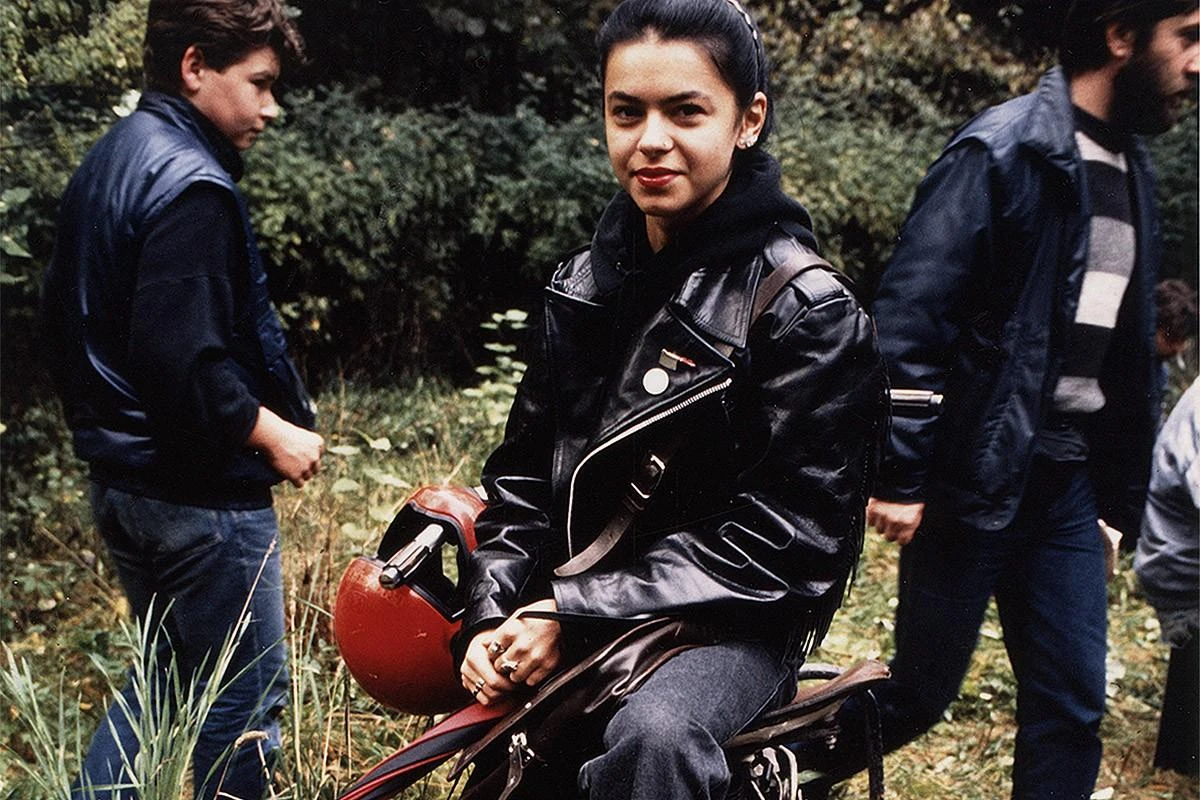
This is probably 1992. It's difficult to determine, as in the 1990s, the rocker scene finally gave way to a biker scene, with heavy motorcycles, long forks, and the first bike clubs. The photo shows Tanya (Eremeeva – Ed.), the girlfriend of Oleg, aka Kim Il-sung (Oleg Goch – Ed.), the founder of one of the first motorcycle groups, "Cossacs." In the early 1990s, he managed to travel abroad and bring back some more or less modern Harleys.
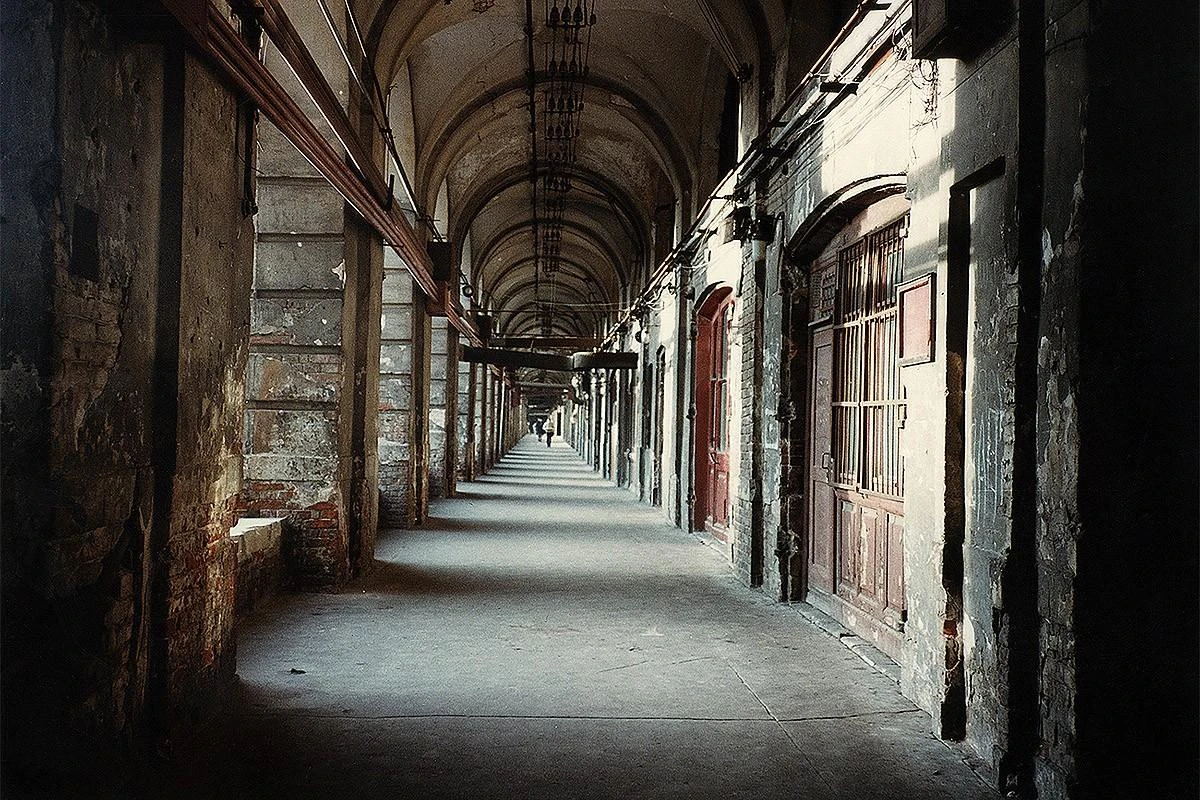
Late 1980s, the Gallery—as the hipsters who hung out there called Gostiny Dvor. A shabby, graffiti-covered, gothic-decadent piece of Moscow Empire style, filled with legends of KGB basements. In those years, it was a completely deserted corner of Moscow, where the ominous silence was broken only by the dull rhythmic sound of a machine operating in the Gostiny Dvor courtyard.
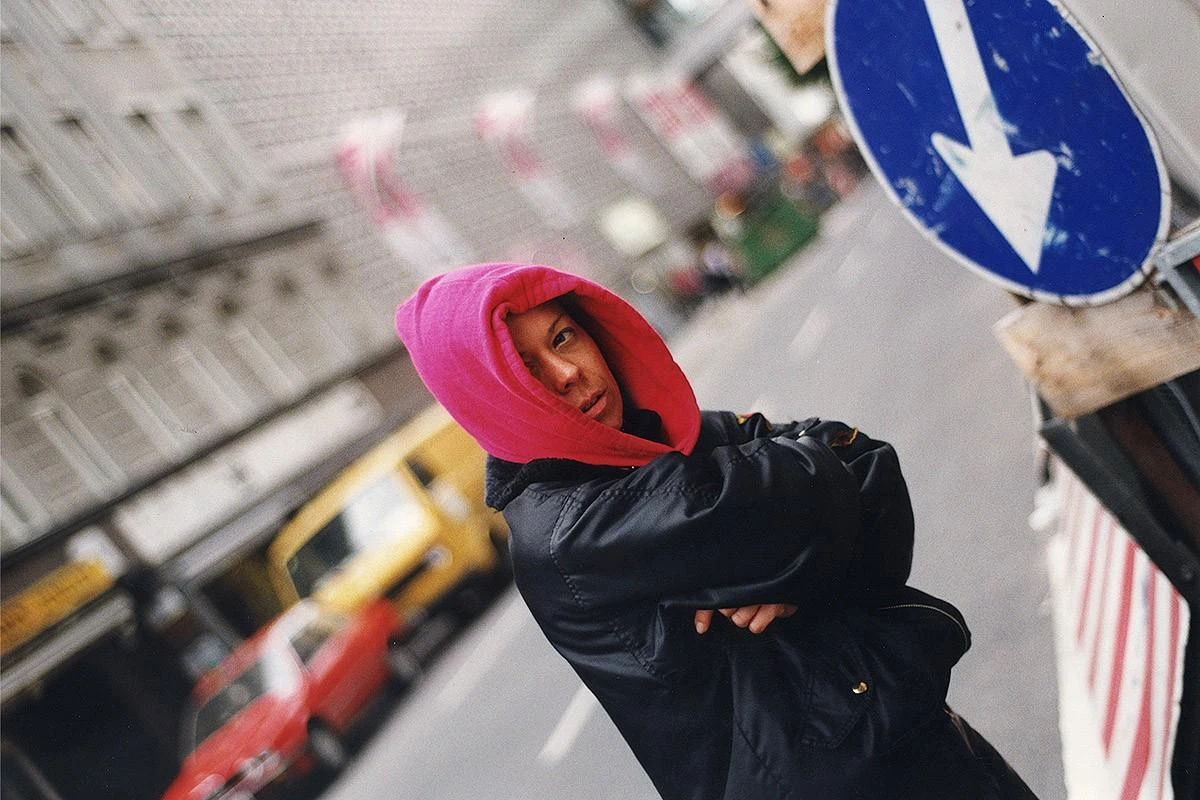
Petra Gall, the author of these photographs, is a correspondent for the Zebra agency and a motorcycle photographer who was active in the feminist movement of the early 1990s in Germany. Her album is being published by Fotopro Premium.

Download
Archive size 3.2 Mb, downloaded 47 times