Unconventional beauty: 22 portraits by photographer Brock Elbank (23 photos)
London-based photographer Brock Elbank photographs people traditionally overlooked by popular culture. Albinism, vitiligo, birthmarks, scars, and freckles—in his images, they're not flaws, but rather what makes a person unique. Over the course of ten years, he's shot over 600 portraits, and many of his subjects say it was after this shoot that they first began to love themselves. 
From Nike commercials to portraits of people with special needs
Born in Warwickshire, Brock Elbank began his career as a commercial photographer, shooting ads for Nike, Coca-Cola, Toyota, and Dove. In 2004, he won an industry award for his Snickers campaign. He spent nearly ten years in Sydney, where he gradually switched from professional models to real, authentic people.
In Australia, Elbank met activist Jimmy Niggels, who promoted regular skin cancer screenings. This meeting set off a chain of events that would change his entire future work. Returning to London in 2013, the photographer began his "Beard" series—portraits of bearded men taken in support of cancer charities. 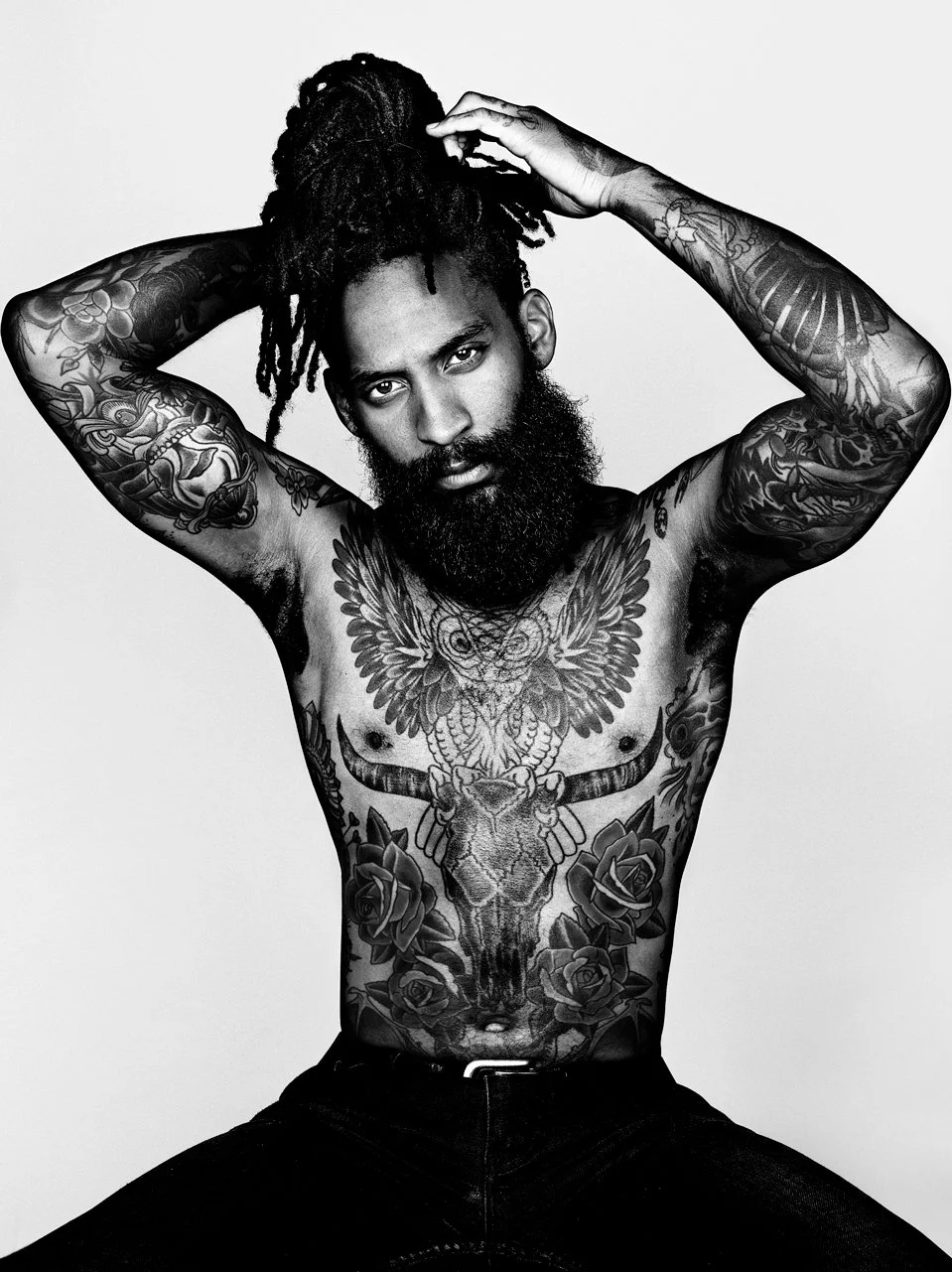
The "Beard" series was Elbank's first major work on unconventional appearances. The exhibition at Somerset House in 2015 attracted over 35,000 visitors.
In March 2015, the Beard exhibition opened at Somerset House in London. More than 35,000 people attended, generating media coverage of over £1.5 million. The photographer realized that such projects have both artistic and social power. 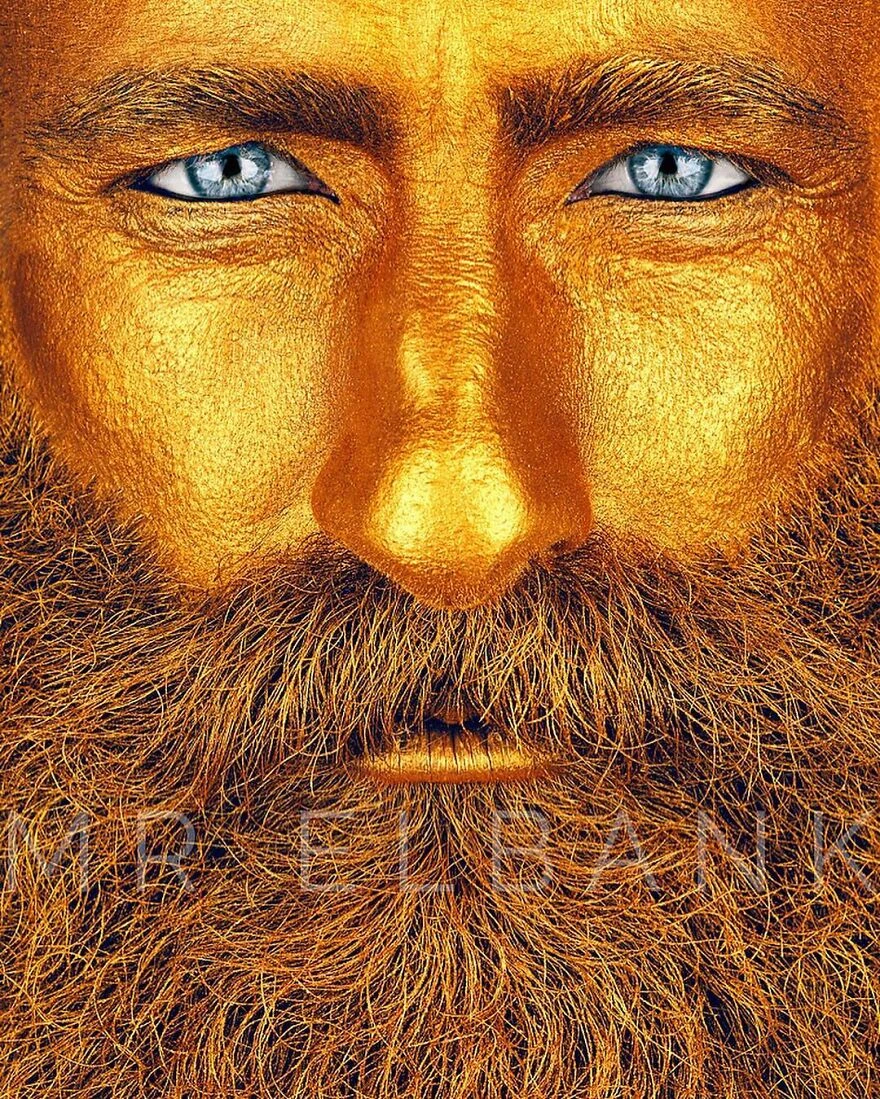

Some participants came to the shoot wearing body art. Elbank did not restrict their self-expression.
Freckles, Vitiligo, and Congenital Nevi
The next series followed one after another. Freckles—portraits of people with dense freckles—garnered over 1,500 submissions from around the world. Vitiligo (2017–2019) lasted two years: 60 subjects from six continents, over 2,000 people wanted to participate. The photo shoot requirements were both simple and strict—no makeup, no coverings, face-to-face with the camera.
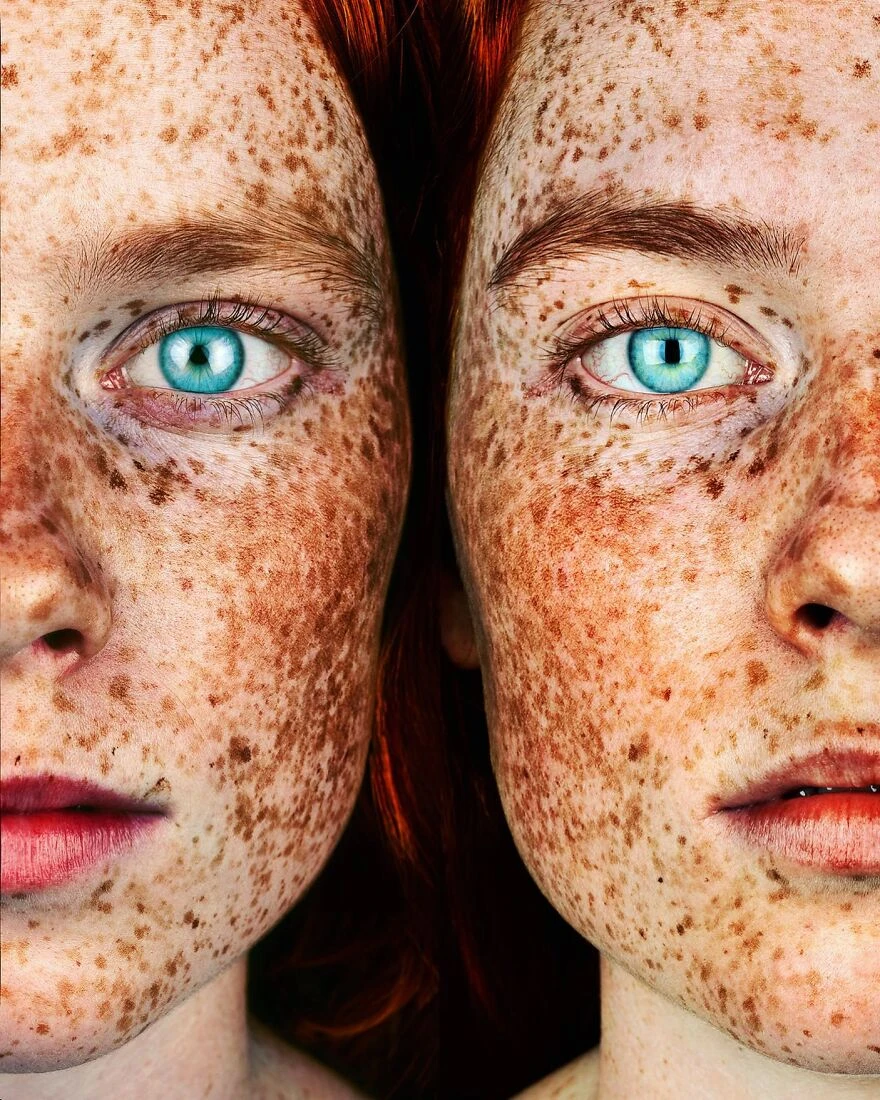
Over 1,500 people from around the world responded to the Freckles series. Some traveled to London just for the shoot.
A Series on Congenital Nevi: One in 20,000
The "How Do You C Me Now?" series is dedicated to people with congenital melanocytic nevus (CMN)—birthmarks that can cover up to 80% of the body. This rare condition occurs in one in 20,000 newborns. The nevus is caused by a random gene mutation during fetal development and grows as the person grows.
Elbank filmed this series from 2016 to 2019 in partnership with the UK charity Caring Matters Now. Thirty subjects came to his London studio from 14 countries—Australia, Brazil, the US, Sweden, Poland, China, and elsewhere. For many, it was the first time they had allowed someone to photograph them without clothing covering their skin.
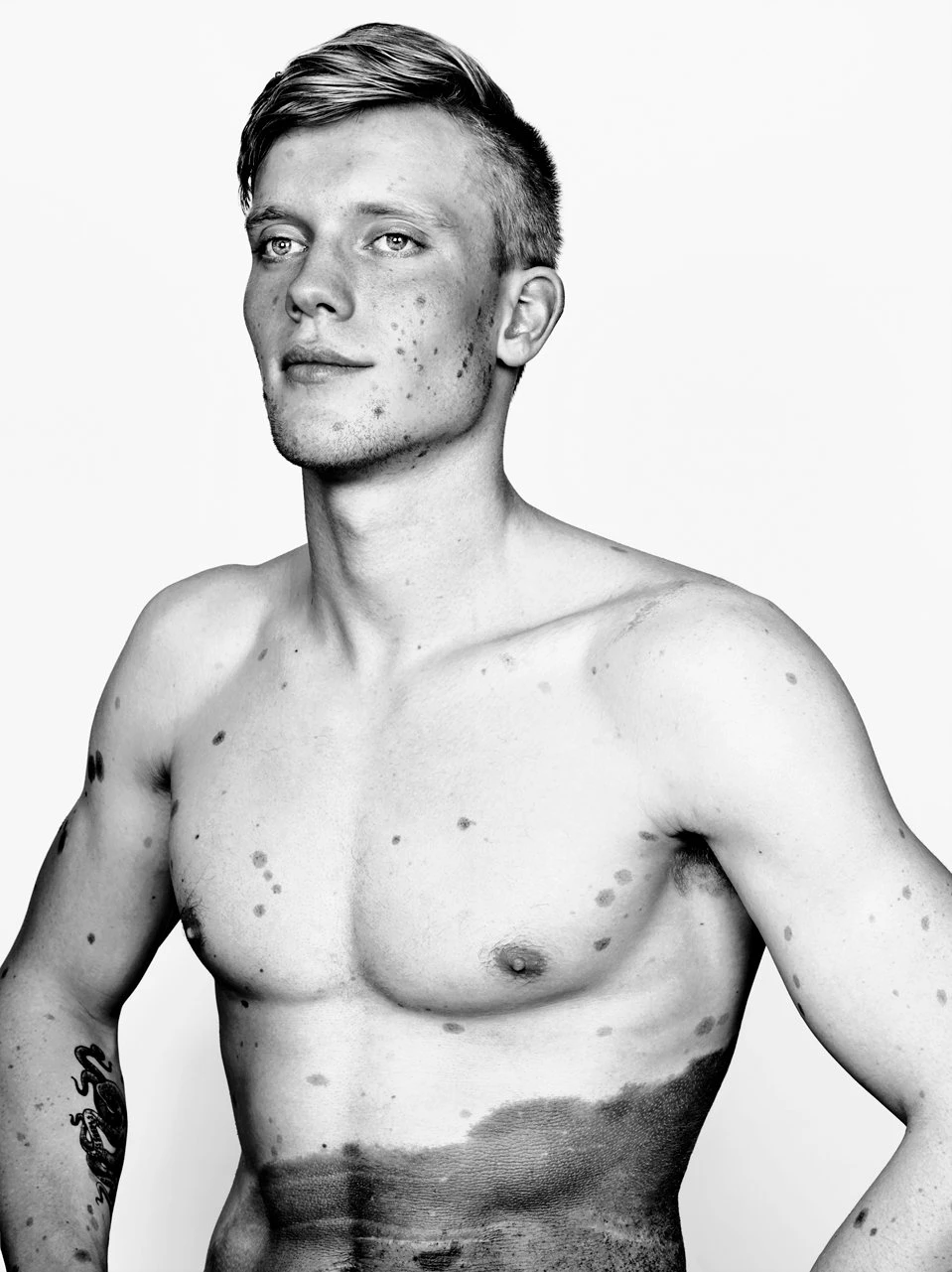
Congenital melanocytic nevus grows with a person and is not treatable. The photographer captured each subject without embellishment.
The exhibition was held at the OXO Wharf gallery in London. 8,500 people visited it over 12 days. According to a post-exhibition survey, 93% of viewers now consider people with visible differences beautiful, and 91% felt more understanding towards them.
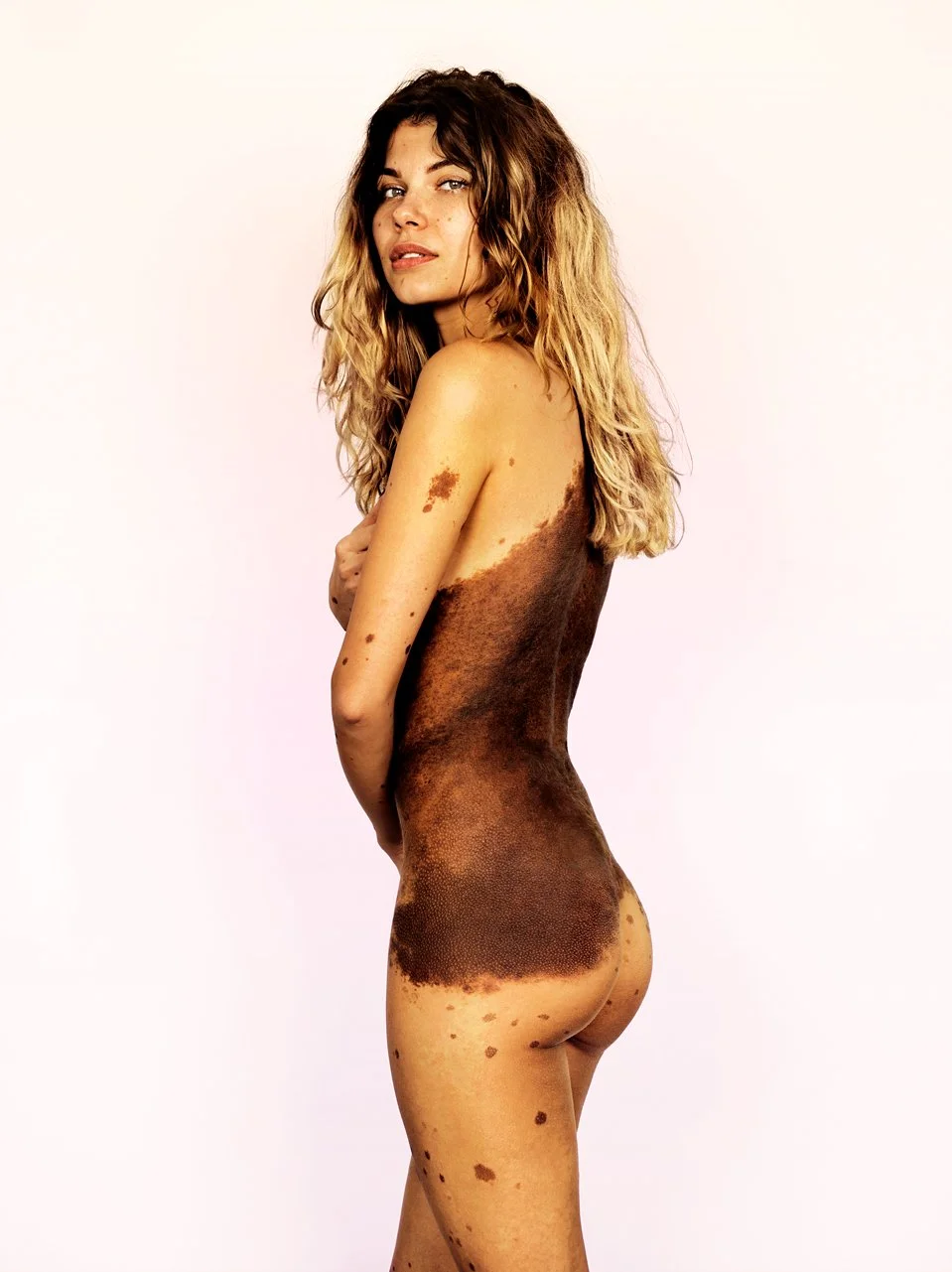
Yulianna Youssef is one of the subjects in a series about congenital nevi. Before participating in the project, she hid her body even in summer.
Scars, Beards, and a Bearded Woman
The Scars series began in 2019. Elbank captures scars from burns, surgeries, accidents, and self-harm—all the things people hide under clothing for years. He shoots with a Hasselblad camera, which captures every detail of the skin with medical precision. One of the subjects in the series flew in from Sydney specifically for the series, and his photos later appeared in Vogue.
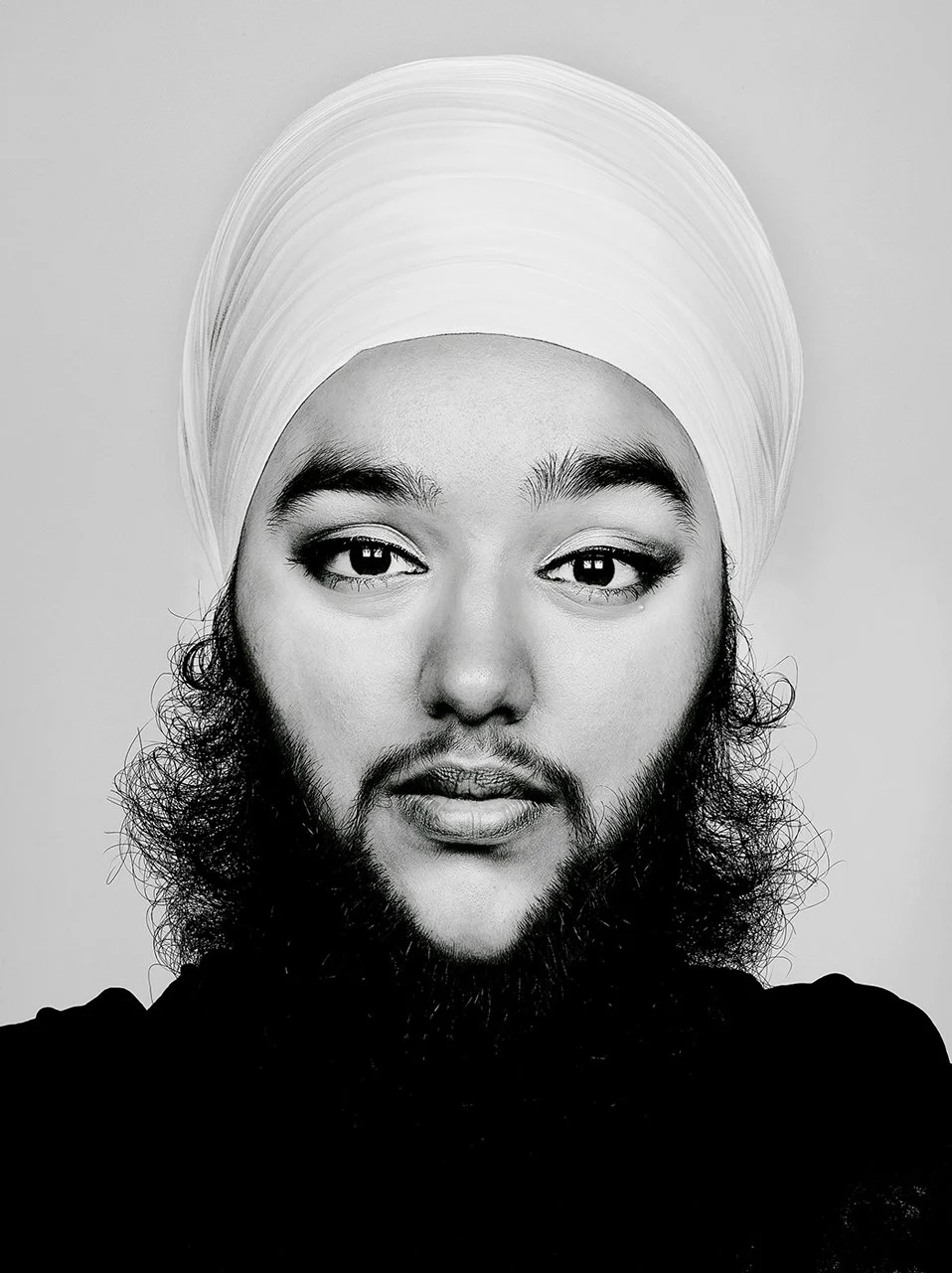
Harnaam Kaur is a British activist with polycystic ovary syndrome. She has become one of the recognizable heroines of the Beard series.
Among the participants in the Beard series is Harnaam Kaur, a bearded woman from Britain who lives with polycystic ovary syndrome. Her thick beard is the result of a hormonal imbalance. She wears it openly and speaks out against the standards that dictate what a woman should look like.
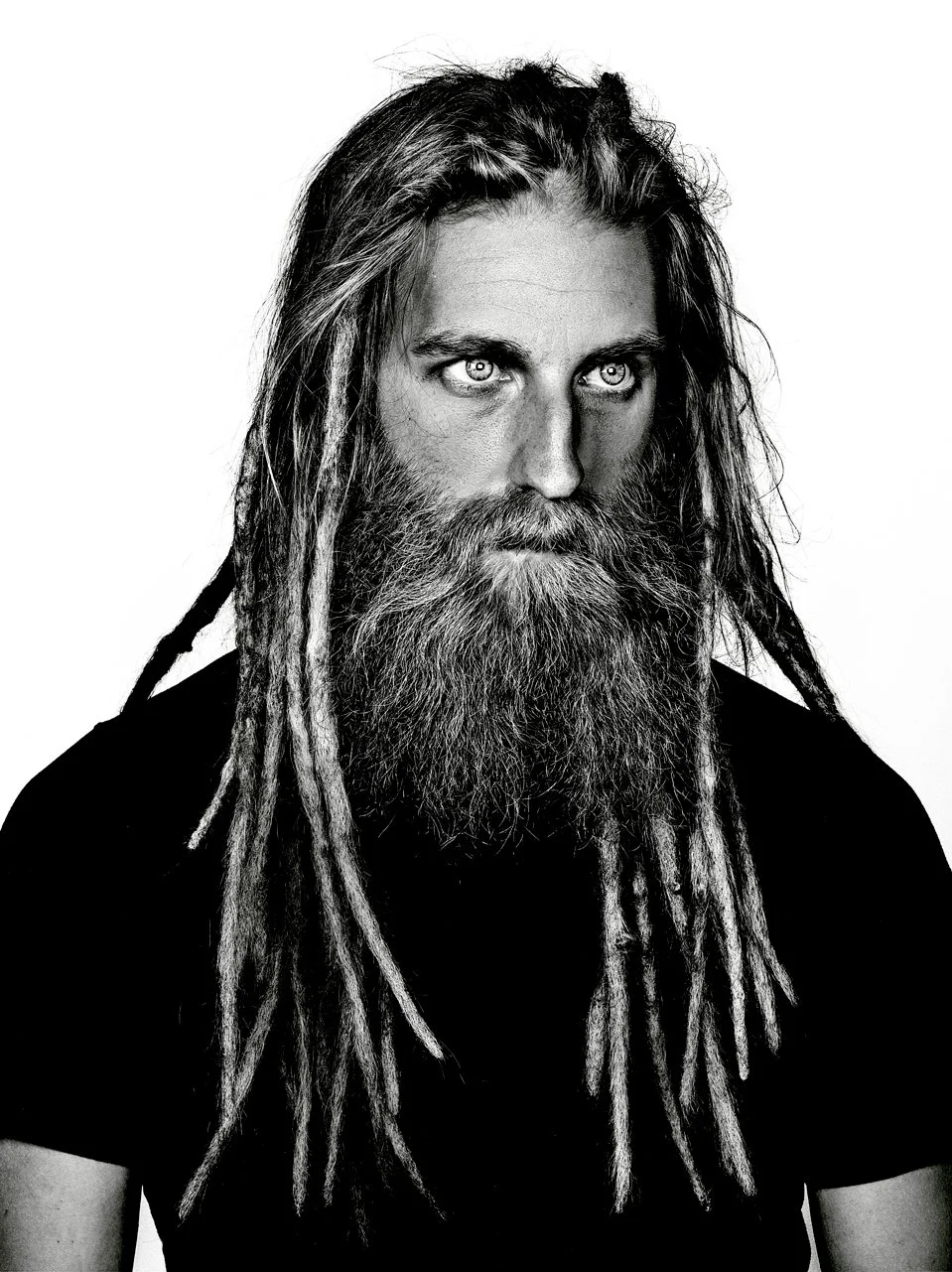
The Beard series attracted over 1,500 submissions—people traveled to the studio from North and South America, Europe, and Australia.
The Forest Hill Studio and Five Series Over Ten Years
Elbank works from home in London's Forest Hill neighborhood. His studio is a small space where he meets each subject personally. First, a long conversation, then the shoot. Many participants say it was this conversation that was more important than the footage.
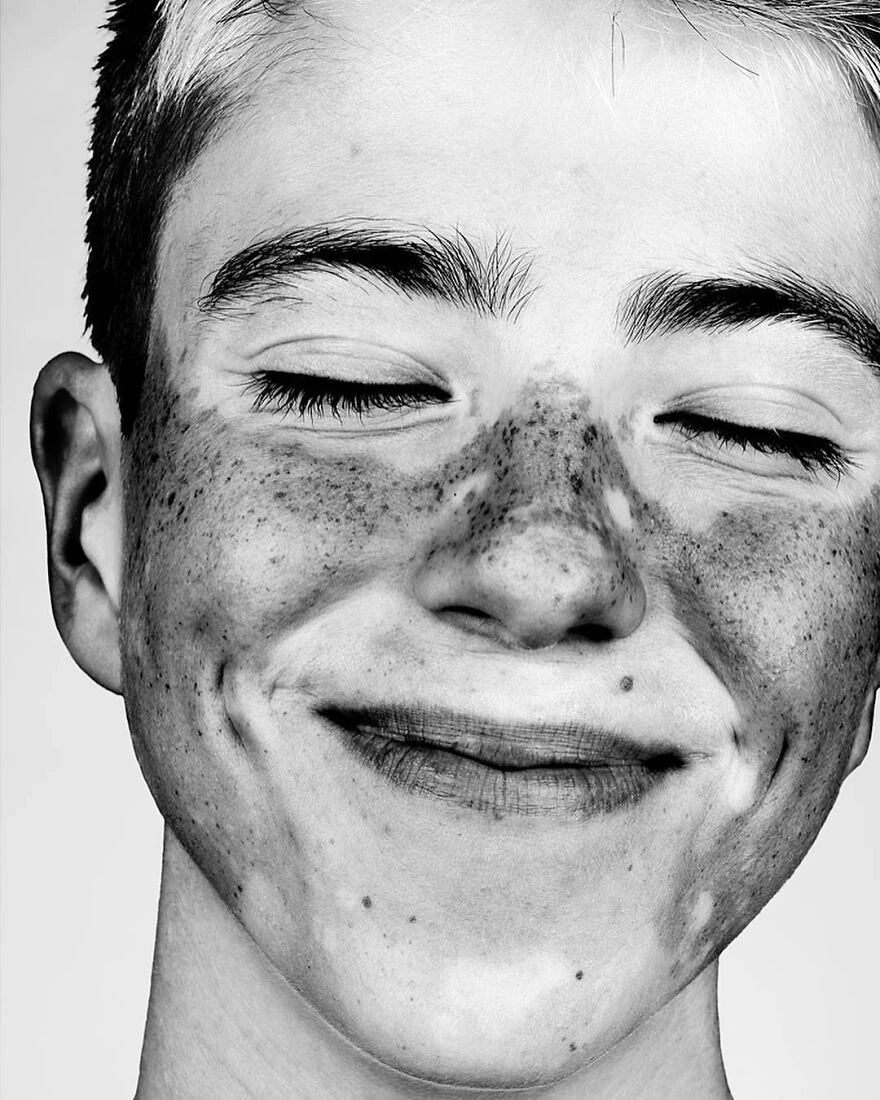
Many participants in Elbank's projects allowed themselves to be photographed without makeup or clothing covering their skin for the first time.
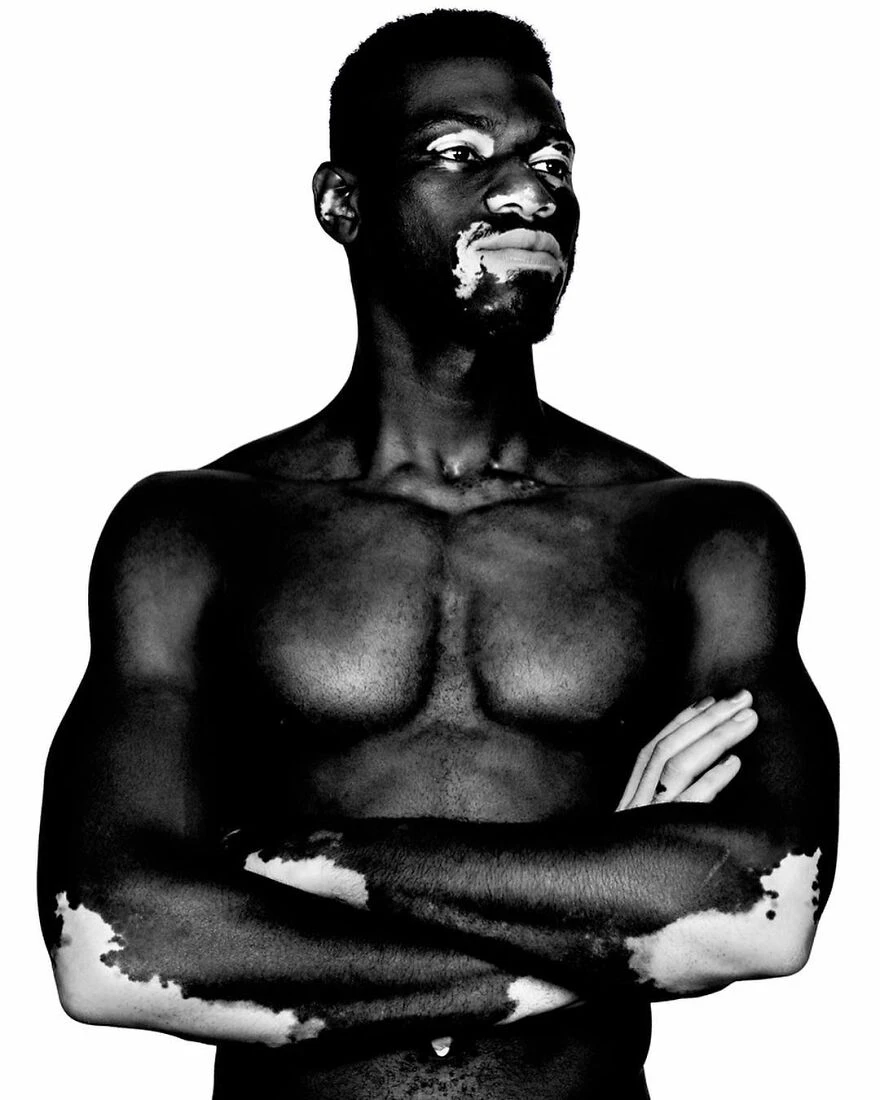
Over 2,000 submissions were received for the Vitiligo series. Ultimately, Elbank photographed 60 people from six continents over two years.
Over ten years, Elbank photographed five series and over 600 people from over fifty countries. All of them came to him voluntarily. No one received a fee—only a portrait and an experience that many describe as transformative.
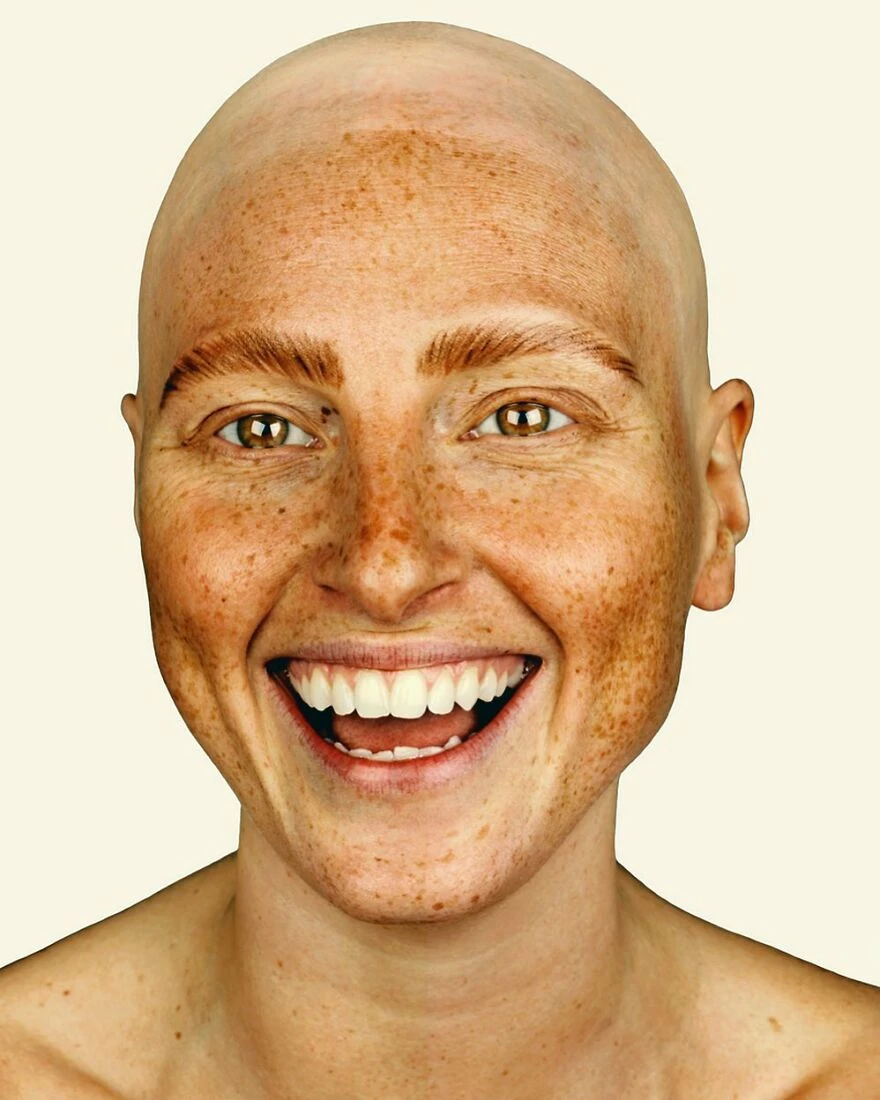
Alopecia is an autoimmune disease in which the body's immune system attacks the hair follicles. Hair may not grow at all.
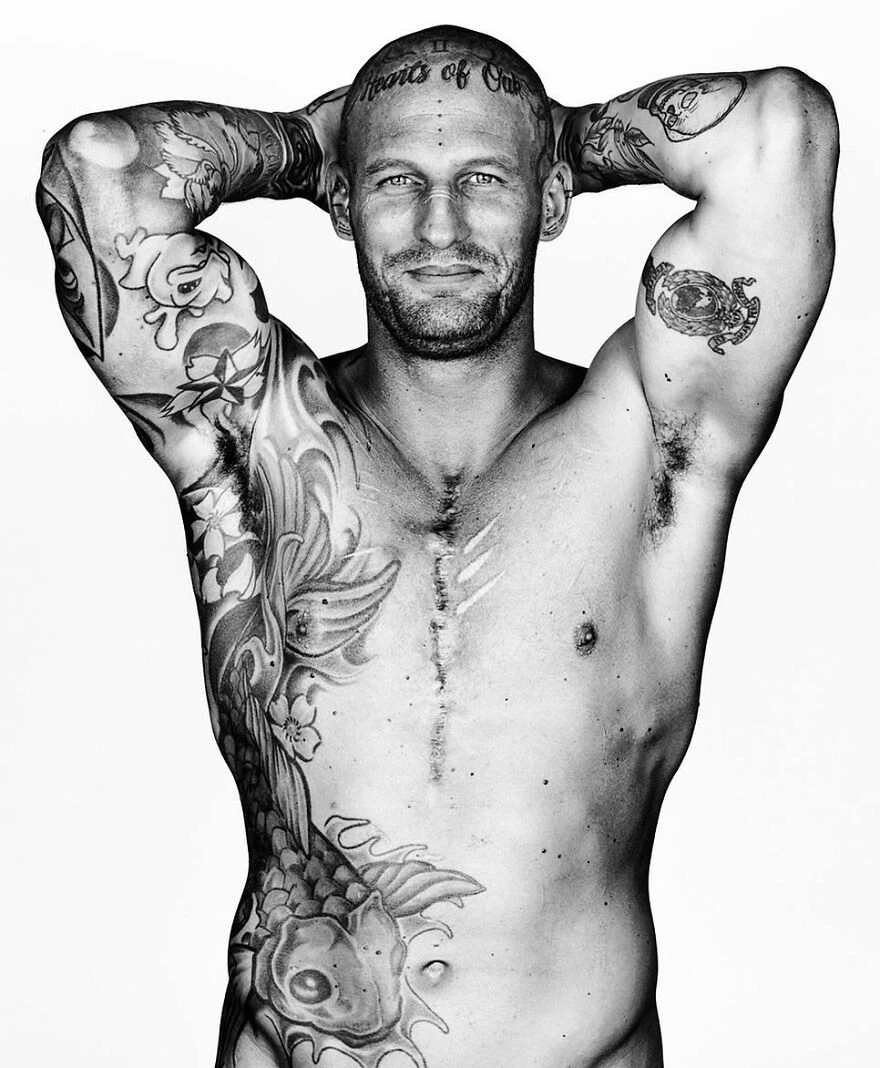
The Scars series began in 2019. Elbank removes scars from burns, surgeries, and accidents—things that people hide for years.
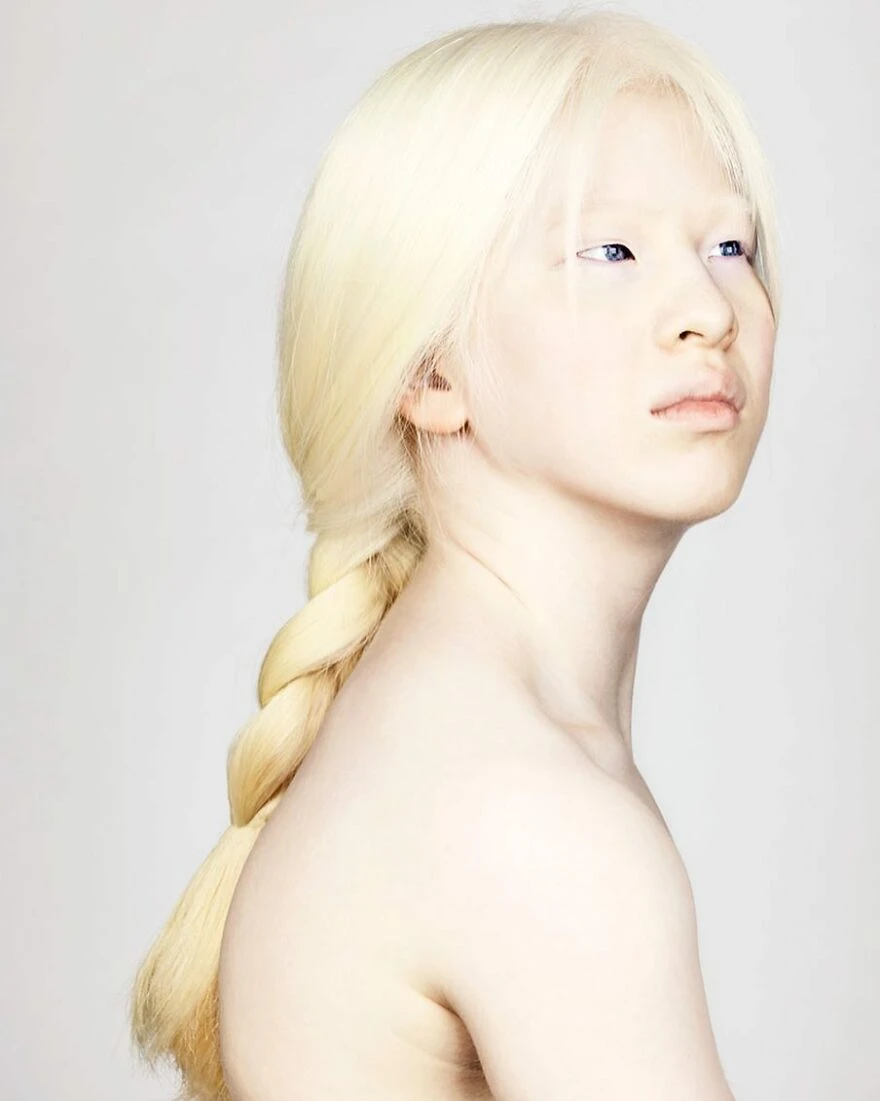
Albinism occurs in people of all ethnicities—approximately one in 17,000 people worldwide.
Vitiligo, Birthmarks, and Looking Directly into the Camera
Vitiligo is an autoimmune disease in which the cells that produce melanin are destroyed. White, pigment-free spots appear on the skin. The disease is not life-threatening or contagious, but it is noticeable—which is why people with vitiligo often face tactless questions and stares.
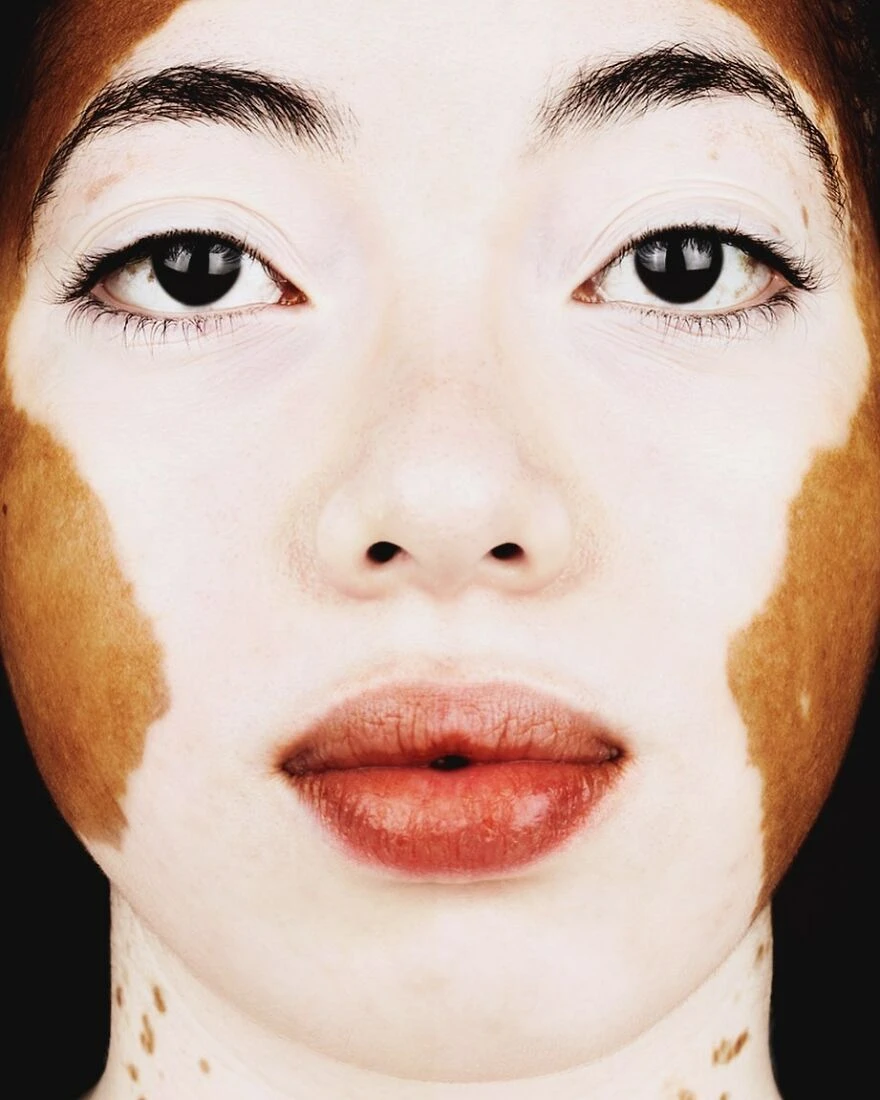
Vitiligo affects approximately 1–2% of the world's population. It is caused by an autoimmune reaction in which the body destroys its own pigment cells.
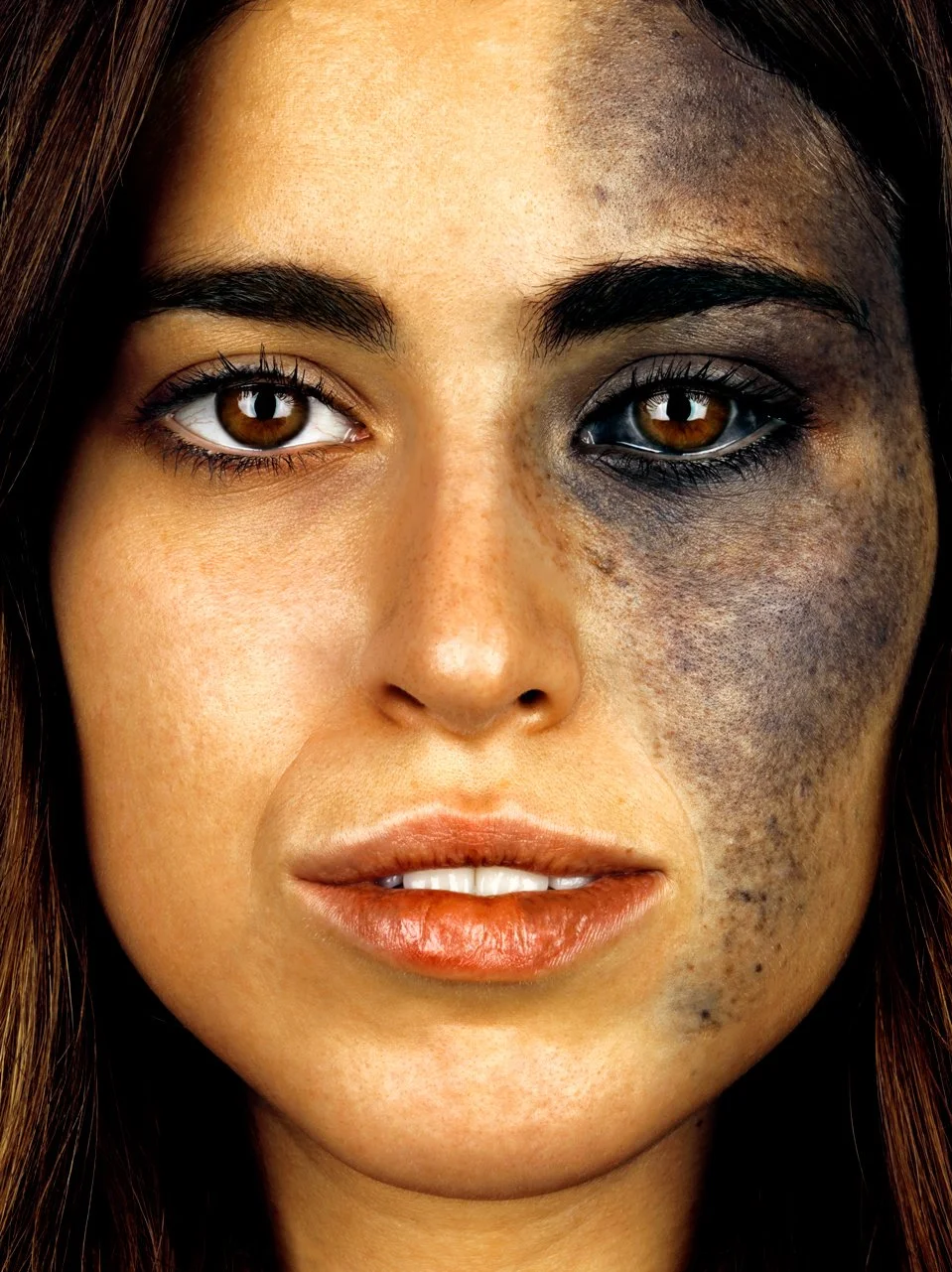
Carlotta Bertotti with a port-wine stain on her face. These stains are vascular malformations and do not disappear on their own.
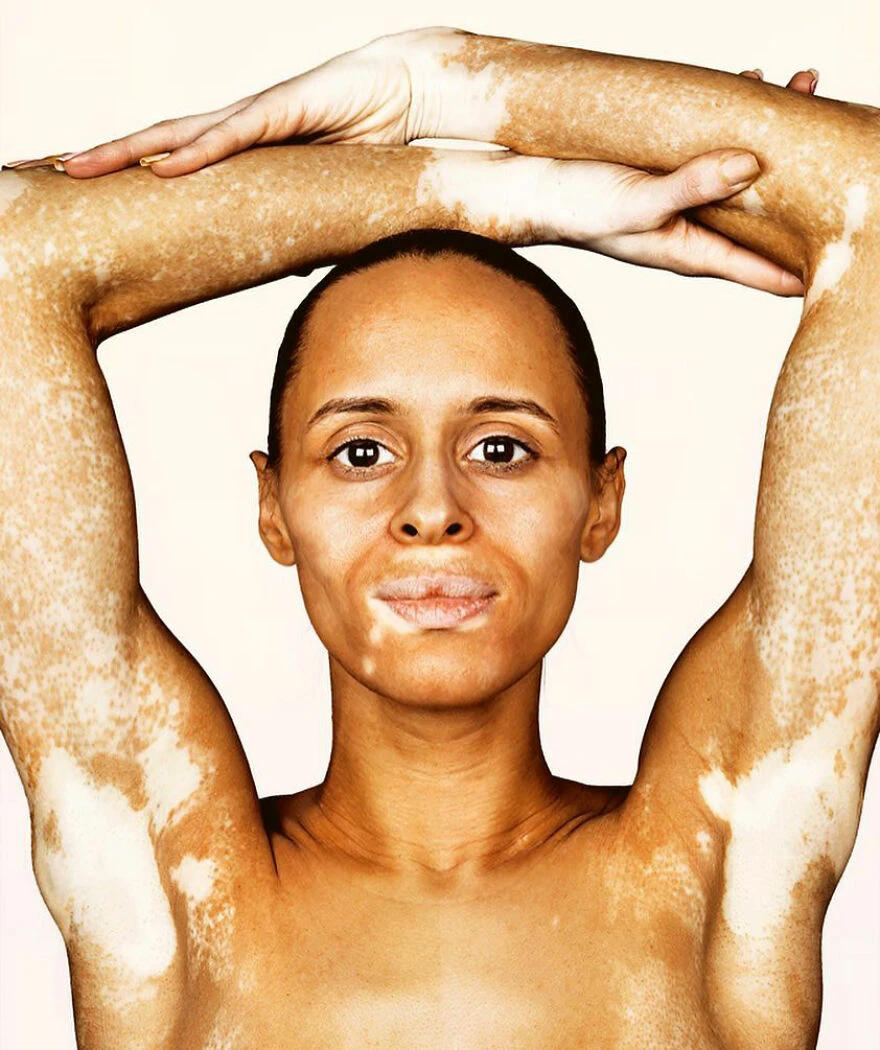
With vitiligo, spots can cover most of the body. Ultraviolet light is dangerous for depigmented areas—they burn easily.
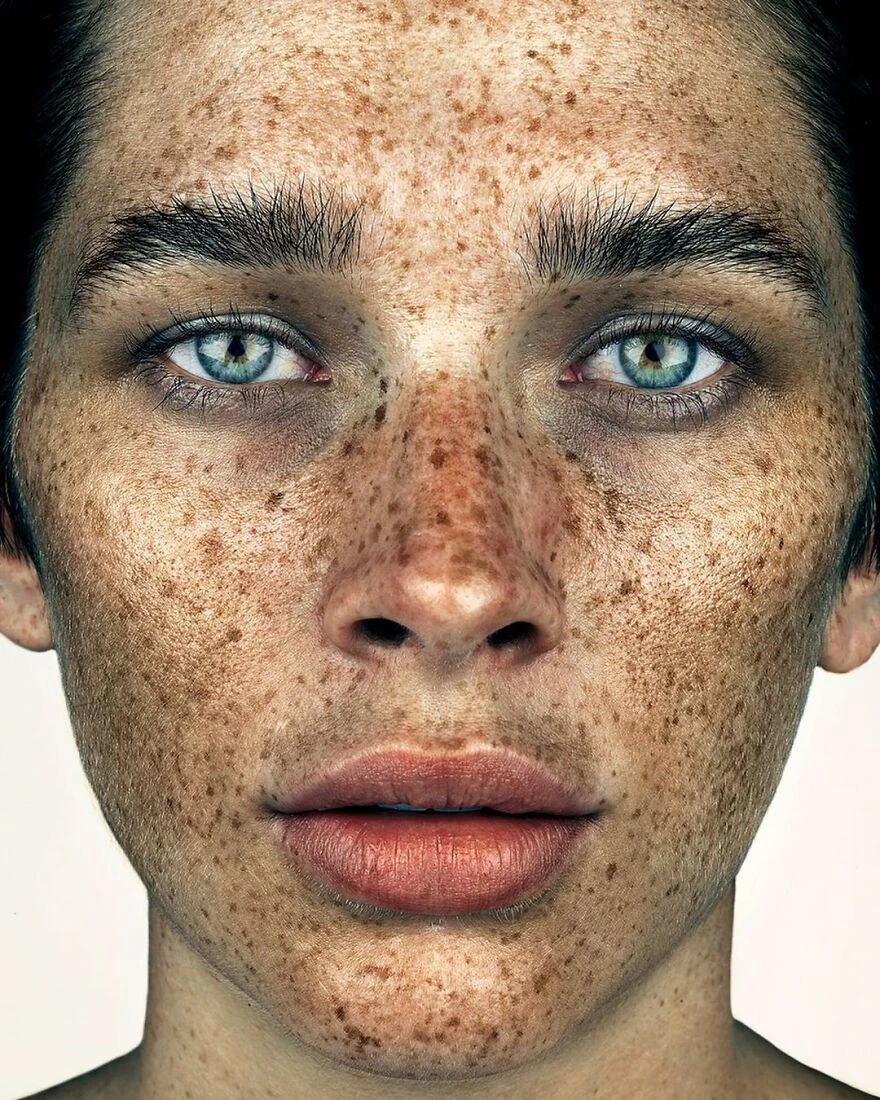
Dense freckles are the result of uneven distribution of melanin. They do not fade with age and become more noticeable in the sun.
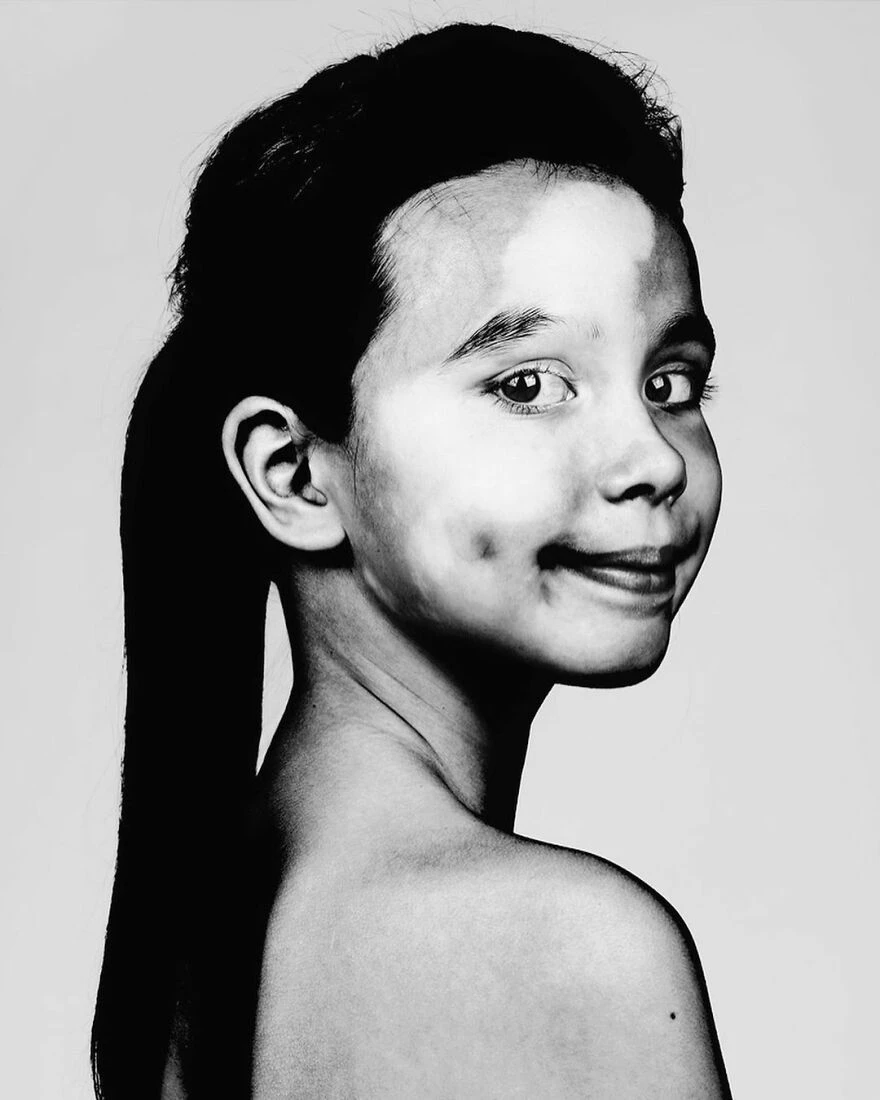
Vitiligo can appear at any age. In children, it often becomes a source of ridicule from peers.
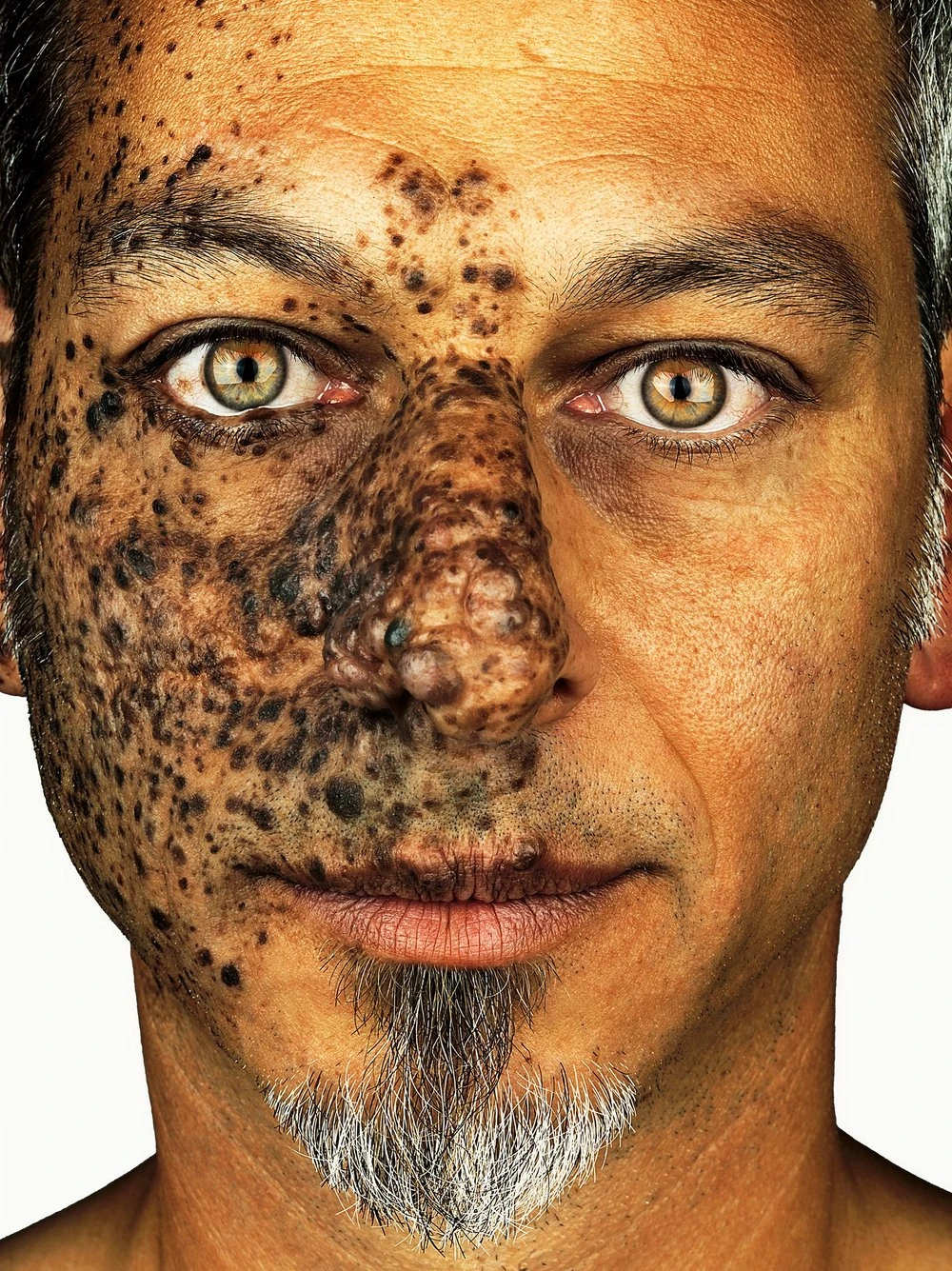
Each participant in the series traveled to Elbank's studio from anywhere in the world. For many, this was an act that changed their perception of themselves.
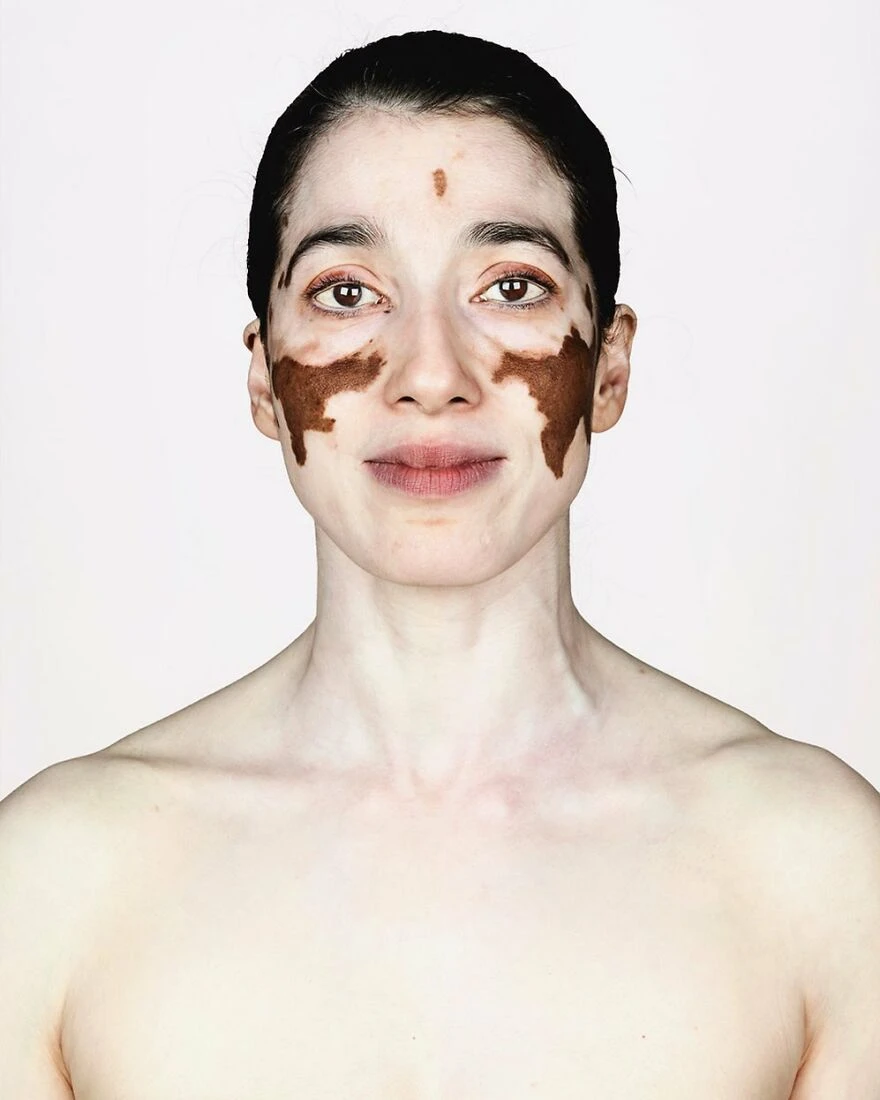
Elbank photographs each subject in the same conditions—a neutral background, natural light, no makeup, and no retouching.
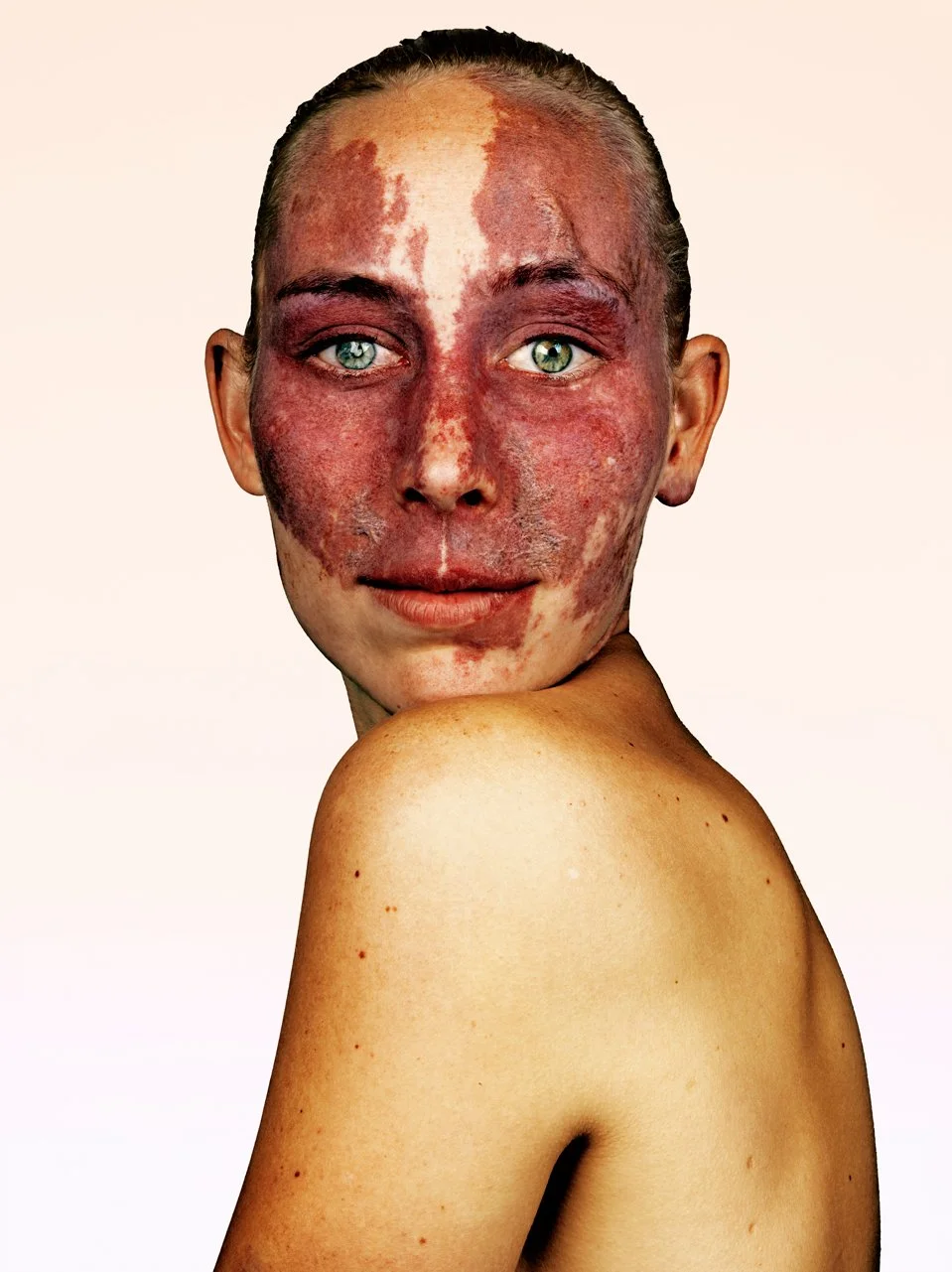
Tessa Schiethart with port-wine stains on her face. These vascular lesions are present from birth and remain for life.
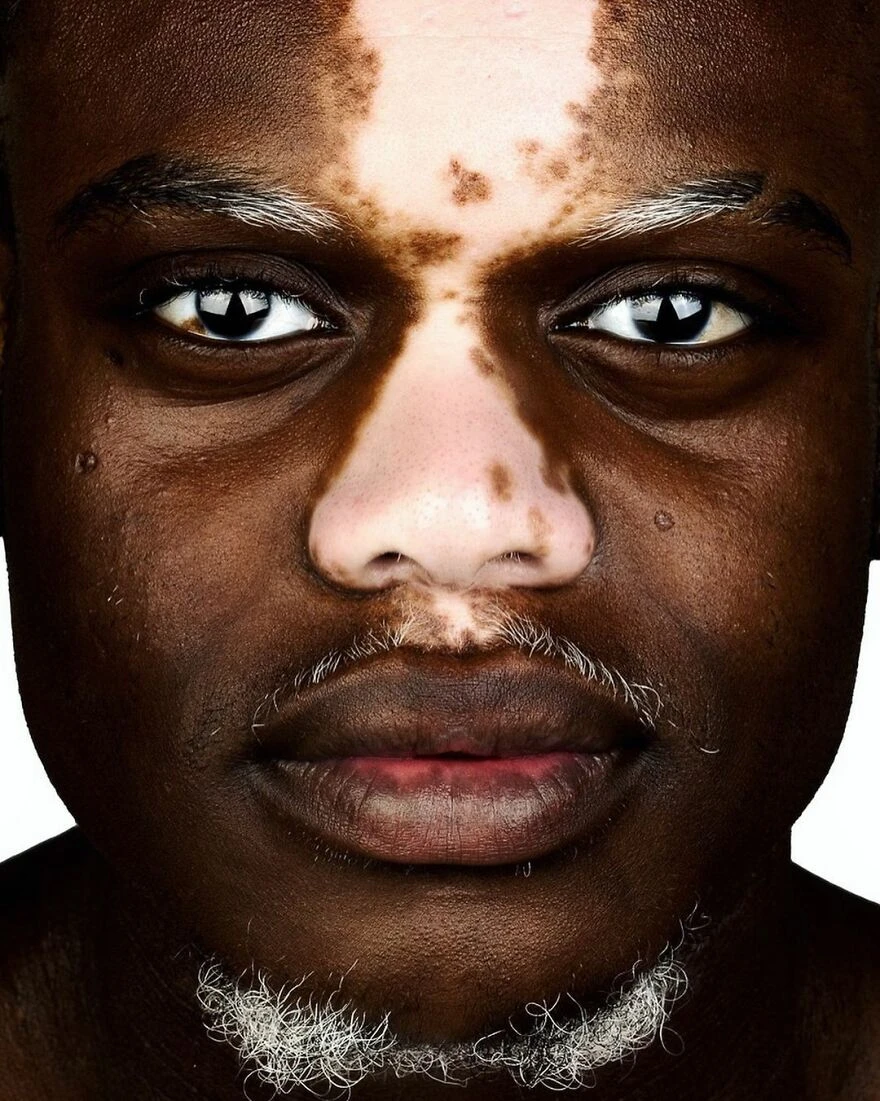
Vitiligo looks especially striking against dark skin. This is why people with dark skin tones are more likely to face stigma.
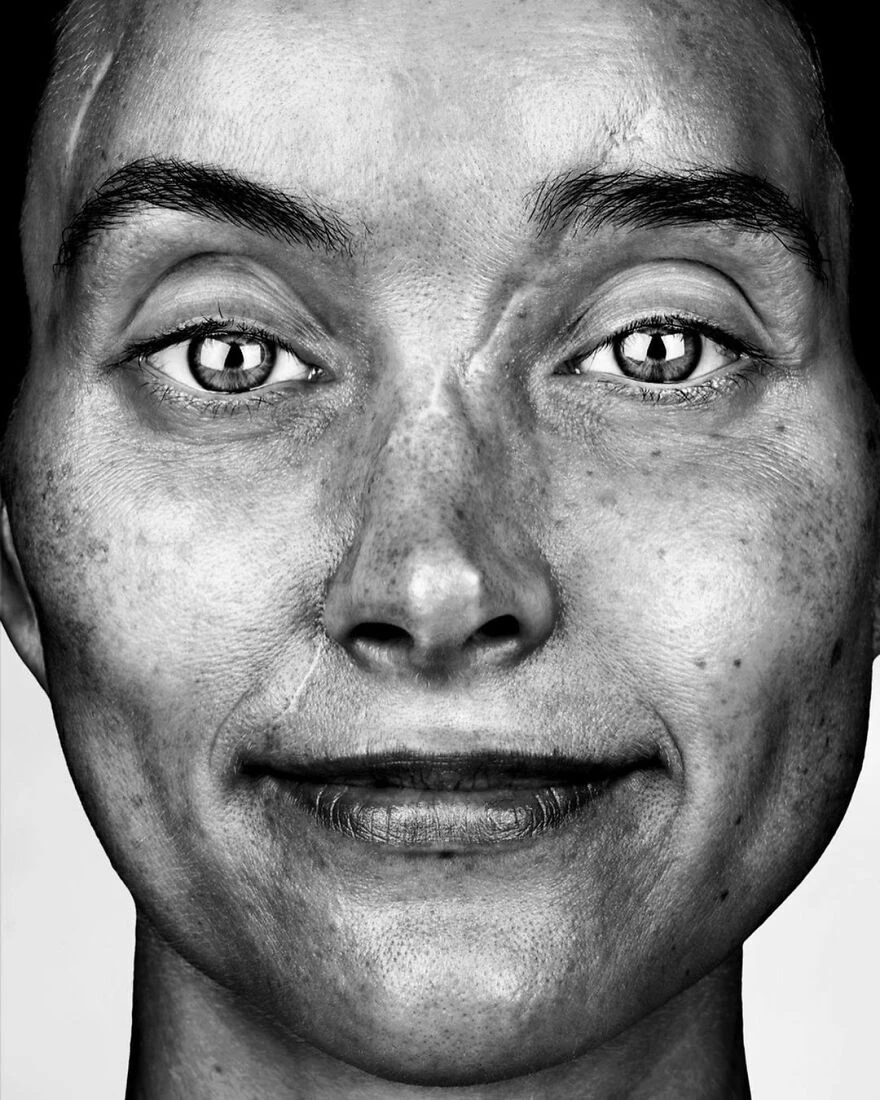
A scar across the face—and yet a direct, open gaze. These are the portraits Elbank calls his signature work.
The Brock Elbank Foundation is a nonprofit organization the photographer founded to systematize this work. Her goal is to raise awareness about mental health and body positivity among people with visible differences in appearance.
Do you think photography can change the way a person perceives themselves? And what surprised you most about what you saw in this series?

Download
Archive size 3.83 Mb, downloaded 4 times