Style Icons of the 1960s: Helmut Newton's Best Work for Vogue
Helmut Newton was born in Berlin in 1920, fled the Nazis at 18, and rose from a war photographer in Singapore to a leading name in global fashion photography. In 1961, he settled in Paris, signed a contract with French Vogue, and over the course of a decade, shot hundreds of images that became style textbooks. We've collected his work from the 1960s: Christian Dior fur coats, shoots with kangaroos at Ayers Rock, and the first portraits of a woman who knows her worth. 
Escape from Berlin
In 1920, a boy was born to Berlin entrepreneur Max Neustädter. At 12, he bought his first camera. At 16, he apprenticed with the Berlin theater photographer Iva. At 18, he fled Nazi Germany after Kristallnacht. His route to Australia lay via Singapore, where Helmut Newton first photographed for the local press.
After the war, he opened a studio in Flinders Lane, Melbourne. He photographed weddings, industrial sites, and theater actors. In January 1956, his name appeared in the pages of Vogue – the Australian supplement to the British edition became its first international publication. An invitation to London soon arrived, followed by a return to Melbourne. Australian Vogue offered stability, but Newton had his sights set on Europe. 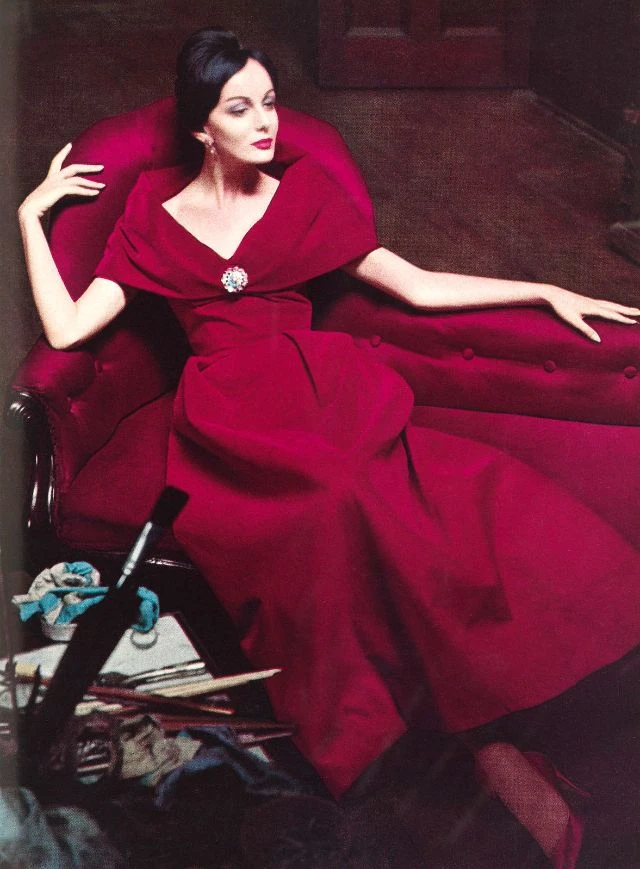
A model in a red evening gown photographed for Vogue in 1960. 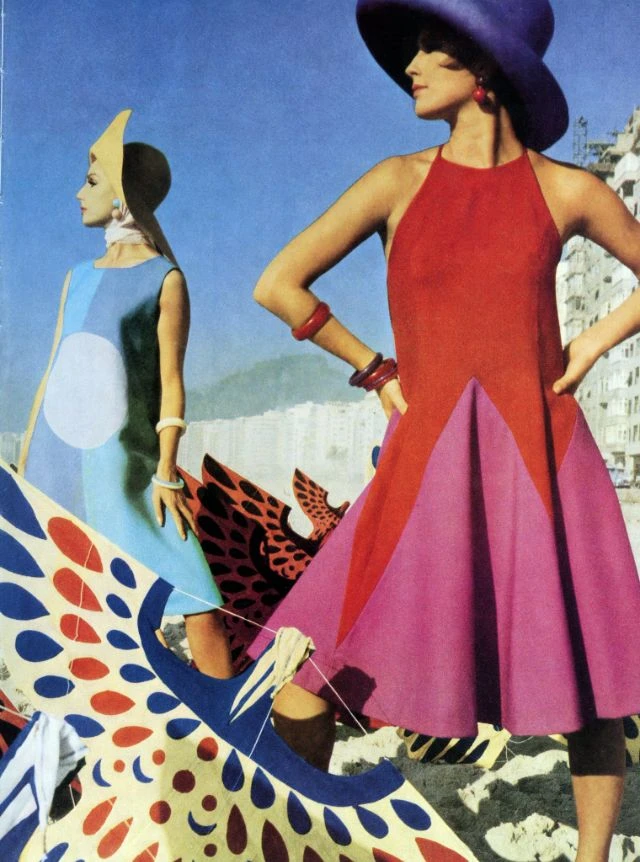

Shoot for French Vogue, May 1962 – Copacabana promenade in Rio de Janeiro.
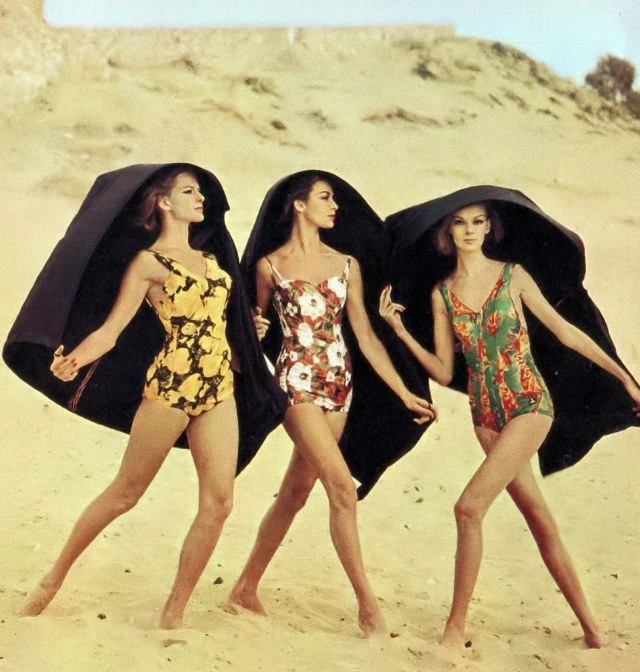
Heinzelmann, Bleyle-Vetrix, and Triumph swimsuits in a shoot for Constanze Mode, Spring/Summer 1962.
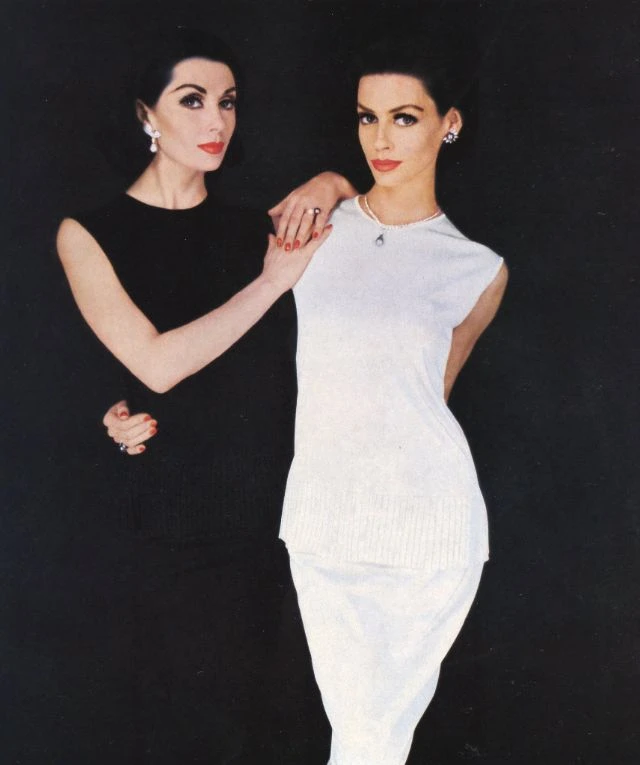
Black and white knit suits in a shoot for French Vogue, May 1962.
London was a disappointment. British Vogue seemed too prim, and Newton left before his contract ended, working for French and German magazines before returning to Melbourne. But in 1961, he finally settled in Paris with his wife, June. French Vogue offered him a contract—and that was it. He would call the next twenty-three years the most productive of his career.
The Paris Contract
"As soon as I arrived in Paris, I knew: this is it," Newton said. Life was in full swing on the streets, in cafes, and restaurants. Beautiful women were everywhere. It was in Paris that he formulated his visual language: a strong woman, precise lighting, no studio sterility.
In the 1960s, he wasn't yet the troublemaker the world would come to know in the next decade. But his signature was already evident. Newton led models from the studio onto the street, the beach, and a restaurant. Clothes ceased to be window dressing and became part of history.
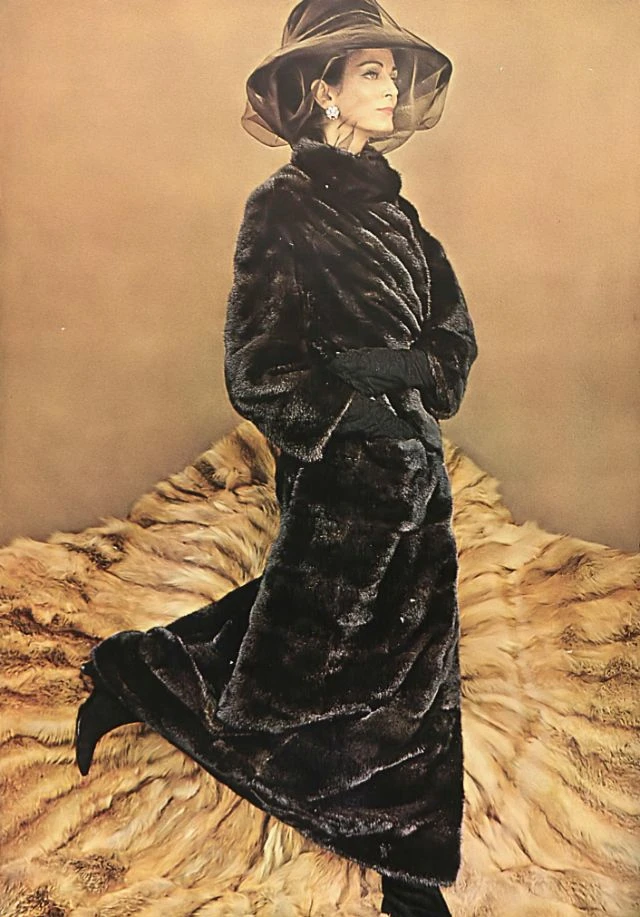
Carmen Dell'Orefice in a Christian Dior-New York mink coat and an Emme velvet hat, Vogue, October 1963.
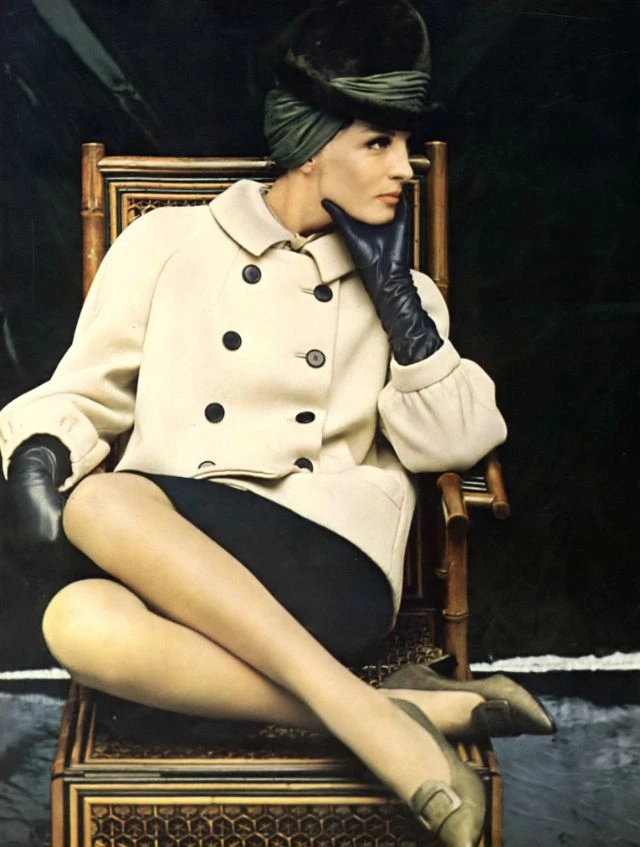
Mirella Petteni in a Seymour Fox coat, an Emme hat, and I. Miller shoes — Vogue, September 1963.
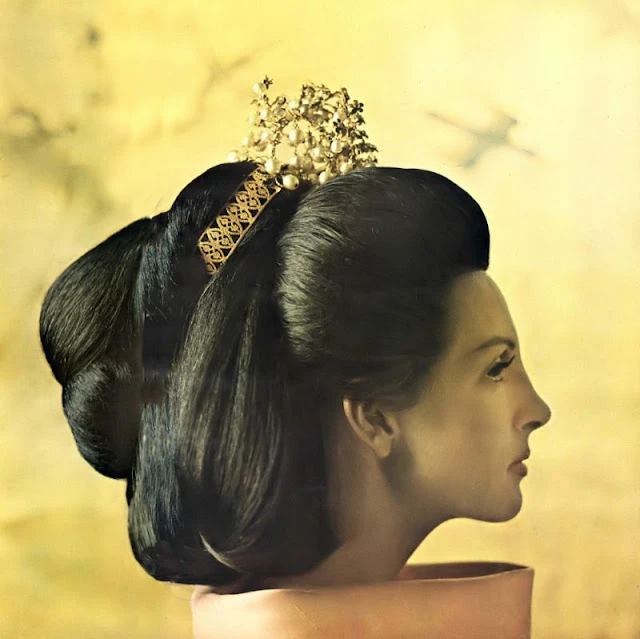
Mirella Petteni in a Japanese-style hairstyle by Kenneth and a Miriam Haskell tiara, Vogue, September 1963.
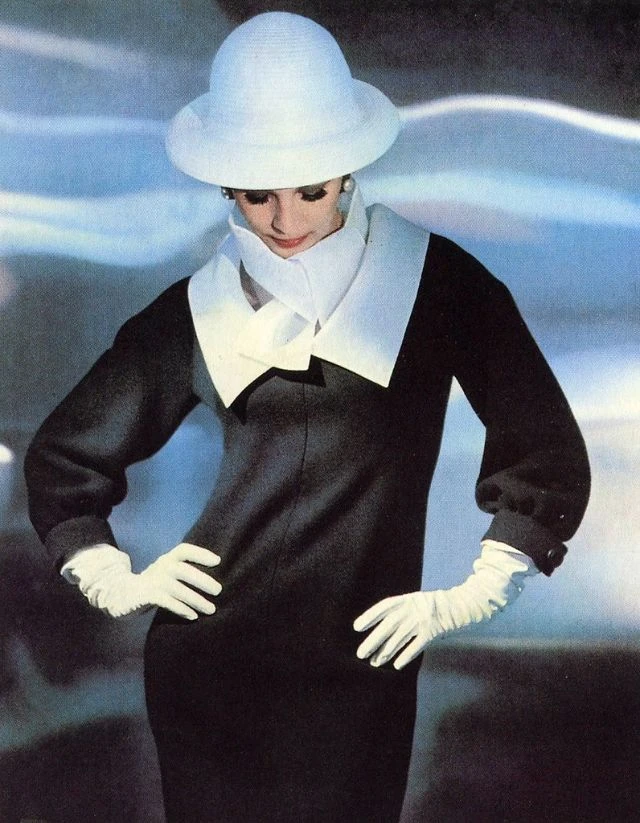
Blue wool dress with a white organza collar — Yves Saint Laurent collection, Spring/Summer 1963.
In October 1963, two long articles appeared in American Vogue featuring Carmen Dell'Orefice and Mirella Petteni. Dell'Orefice wore a mink coat and a hat with a veil. Petteni – a formal coat, lizard shoes. Both photos were taken in New York. Newton worked with the American editorial team in parallel with the French one: the publications had different styles, but the photographer's name already spoke for itself.
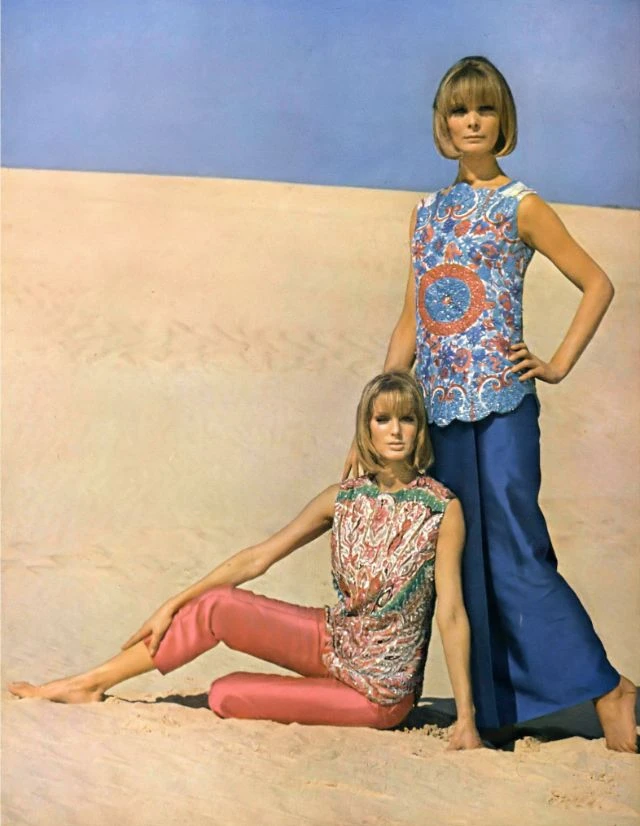
Deborah Dixon and other models in Emilio Pucci sequin-embroidered tunics, Vogue, May 1963.
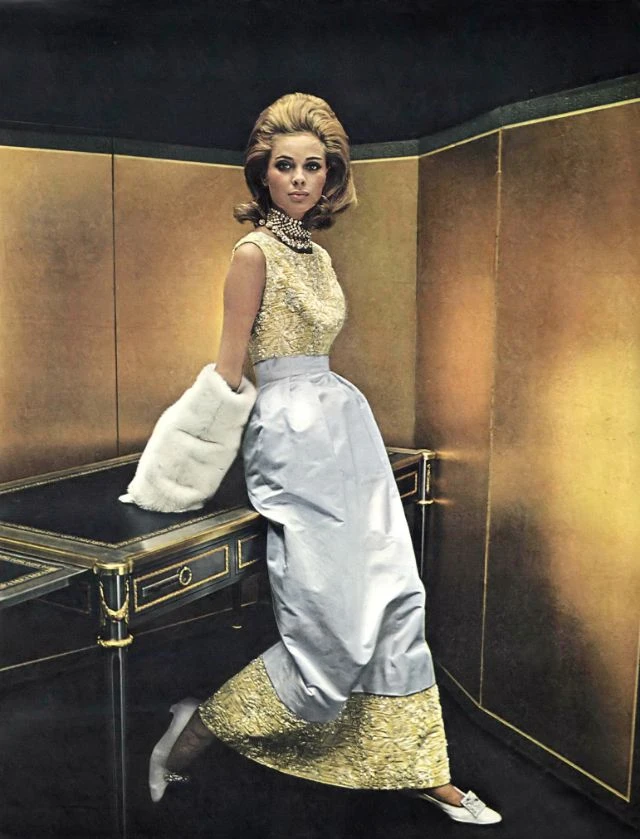
Camilla Sparv in a white satin and yellow velvet dress by Sophie of Saks Fifth Avenue, Vogue, October 1964.
Australian Adventurer
In 1964, Newton traveled to Australia with model Camilla Sparv and an assignment from American Vogue. The editors wanted exotica. He brought it without the tourist postcards.
Camilla Sparv was photographed on Ayers Rock, on Wanda Beach in Sydney, among yachts, and in the open air. One shot became almost a joke: a Cabana swimsuit, Wanda Beach, and nearby, a kangaroo named Ethel. The May 1964 issue of Vogue featured an entire Australian section. It was a fashion magazine, shot with the spirit of adventurous reportage.
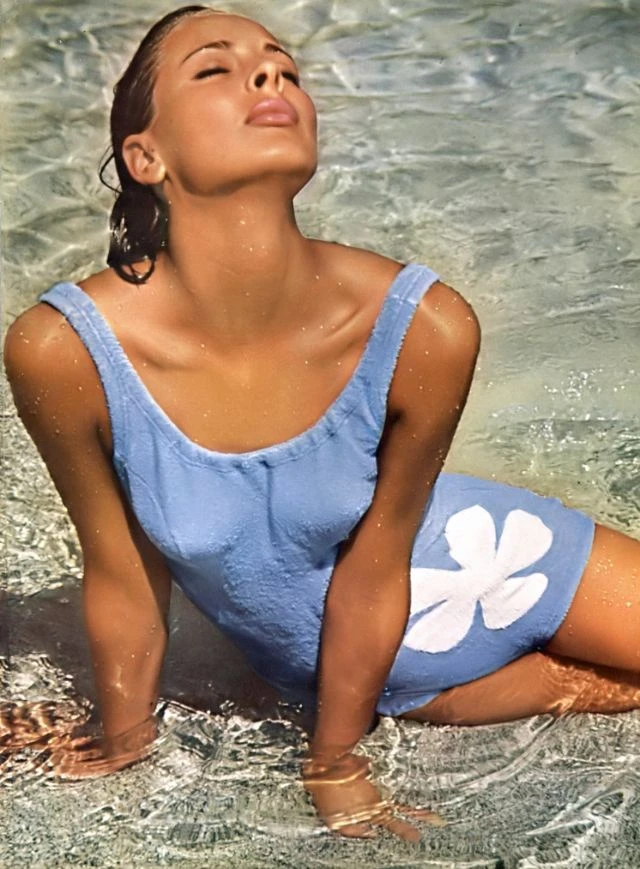
Camilla Sparv in a blue Emo nylon swimsuit at Wanda Beach in Australia, Vogue, June 1964.
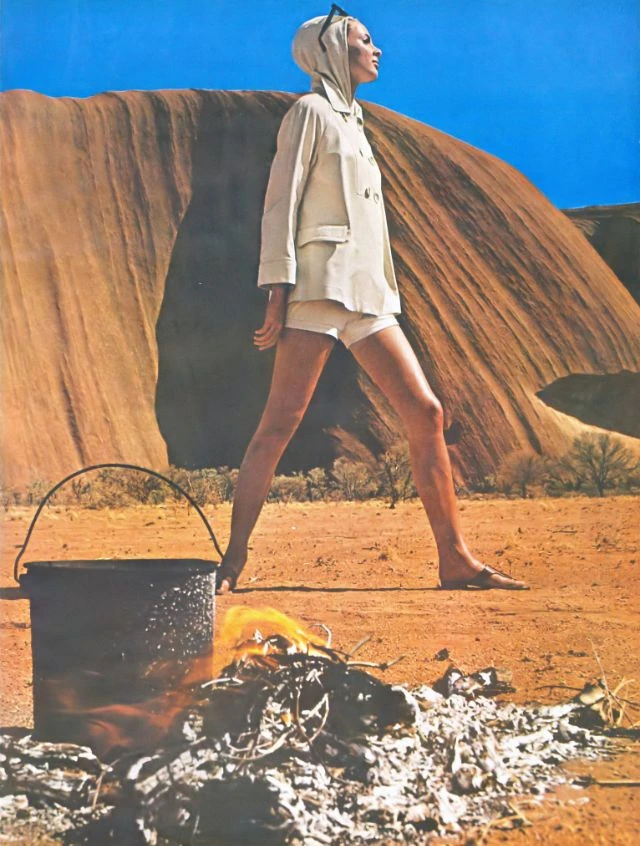
Camilla Sparv in a Bonnie Cashin lambskin coat for Phillip Sills with Ayers Rock in the background, Vogue, May 1964.
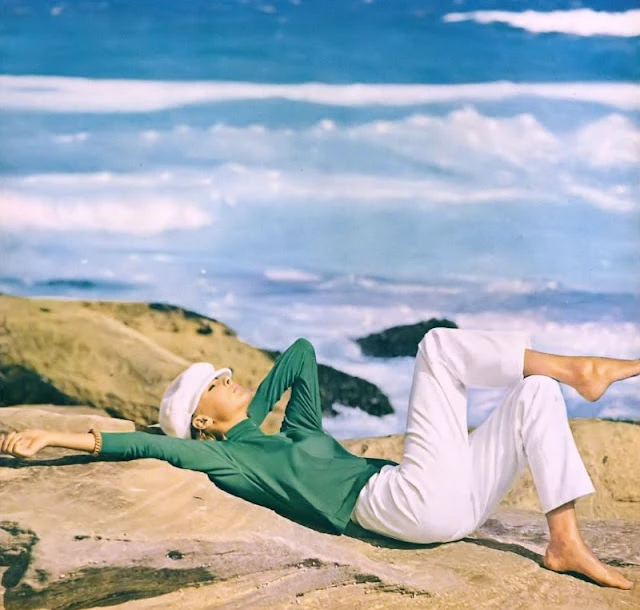
Camilla Sparv in an Avagolf silk jersey top and white Sarff-Zumpano trousers, Australia, Vogue, May 1964.
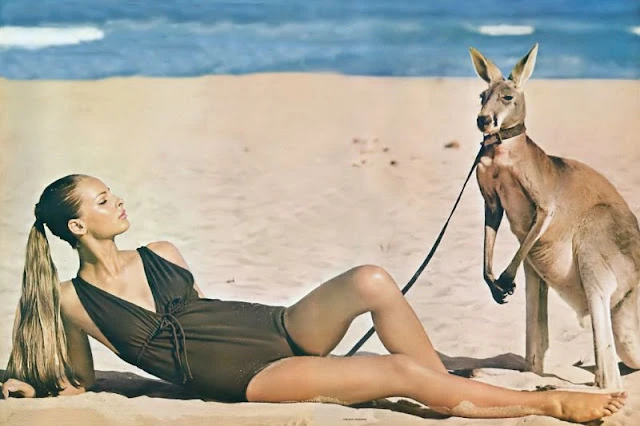
Camilla Sparv in a brown Cabana one-piece swimsuit next to a kangaroo named Ethel, Wanda Beach, Vogue, May 1964.
Camilla Sparv was a Swedish model who became one of the main faces of Newton's American shoots in the mid-1960s. In the October 1964 issue of Vogue, she appeared in several looks: a brocade evening gown with ermine trim, an Apex necklace, and a Jacques of Joyce Christopher hairstyle. Newton knew how to construct a series of publications into something akin to a seasonal chronicle—not just a fashion show, but a portrait of a woman.
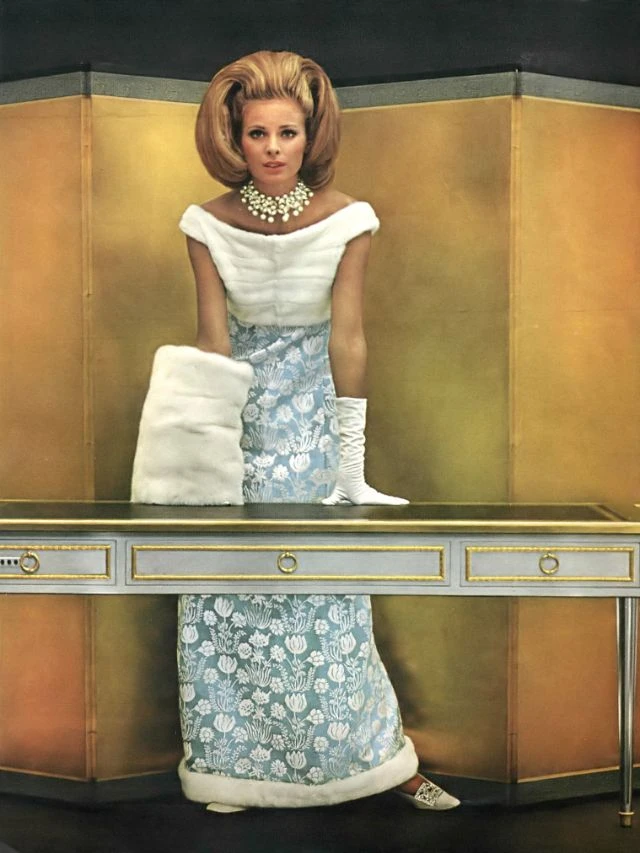
Camilla Sparv in a blue and white brocade dress with ermine trim by Leslie Morris, Vogue, 1964.
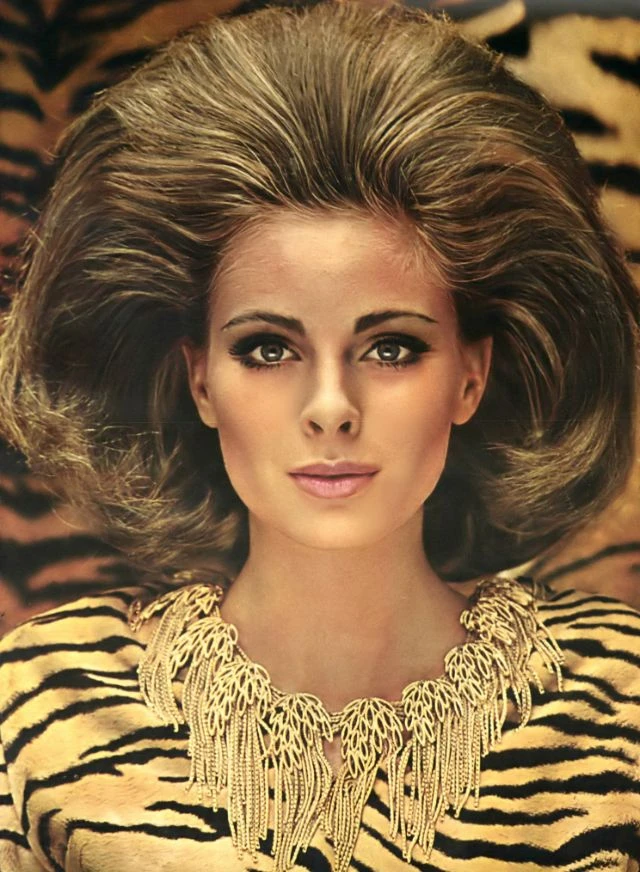
Camilla Sparv in a gold leaf and tassel necklace by Monet, Vogue, October 1964.
New faces, new seasons
1965 brought new names. Astrid Heeren, Astrid Schiller, Betina Laur – Newton photographed them for the fall issues of American Vogue. Fur jackets, beaded evening dresses, berets, jewelry. The fashion of that era was literally woven from details, and he recorded every detail—the brand of fabric, the name of the hat designer, the name of the jewelry.
In Hawaii that same year, Newton photographed Dolores Wettach in a zigzag silk dress by Junior Sophisticates. Hawaii offered a different light—soft, almost watercolor-like. Newton knew how to incorporate it into his precise, almost graphic style.
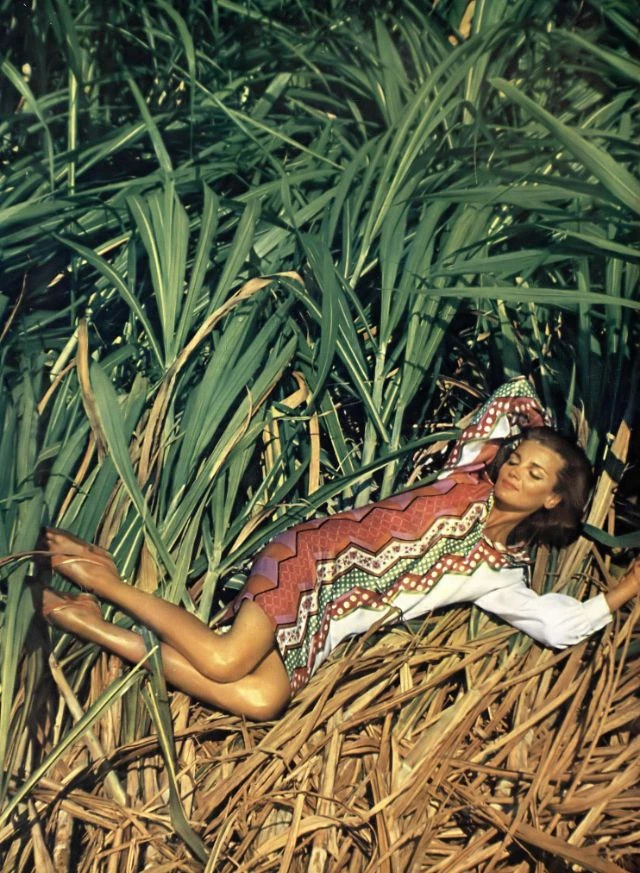
Dolores Wettach in a zigzag silk dress by Junior Sophisticates, shot in Hawaii, Vogue, June 1964.
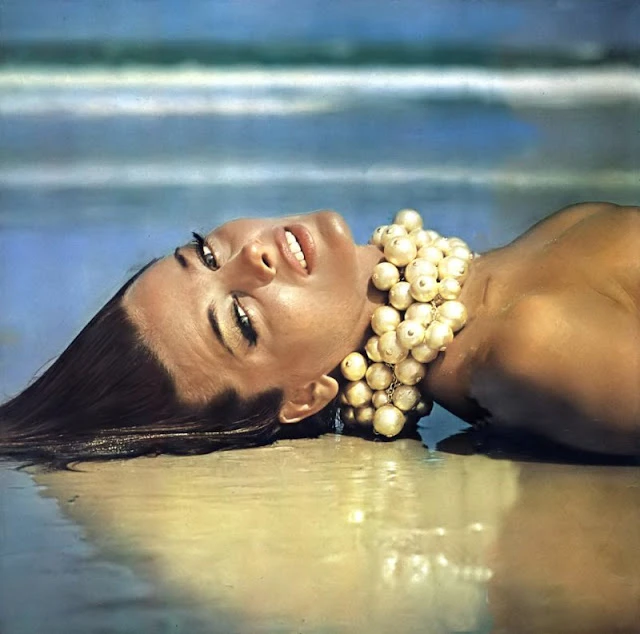
Dolores Wettach wearing Cadoro pearl necklaces at Wanda Beach, Australia, Vogue, June 1964.
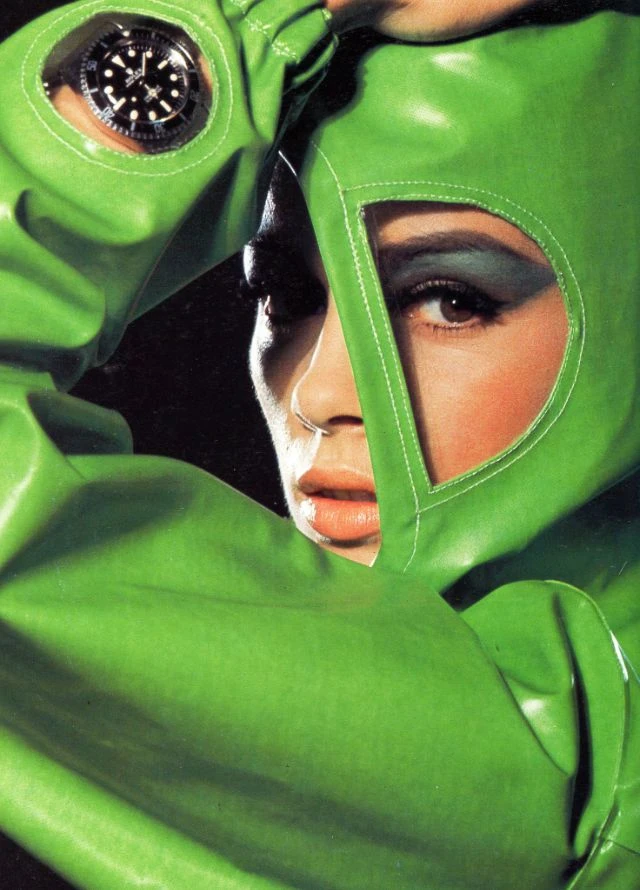
Astrid Heeren photographed by Helmut Newton, 1965.
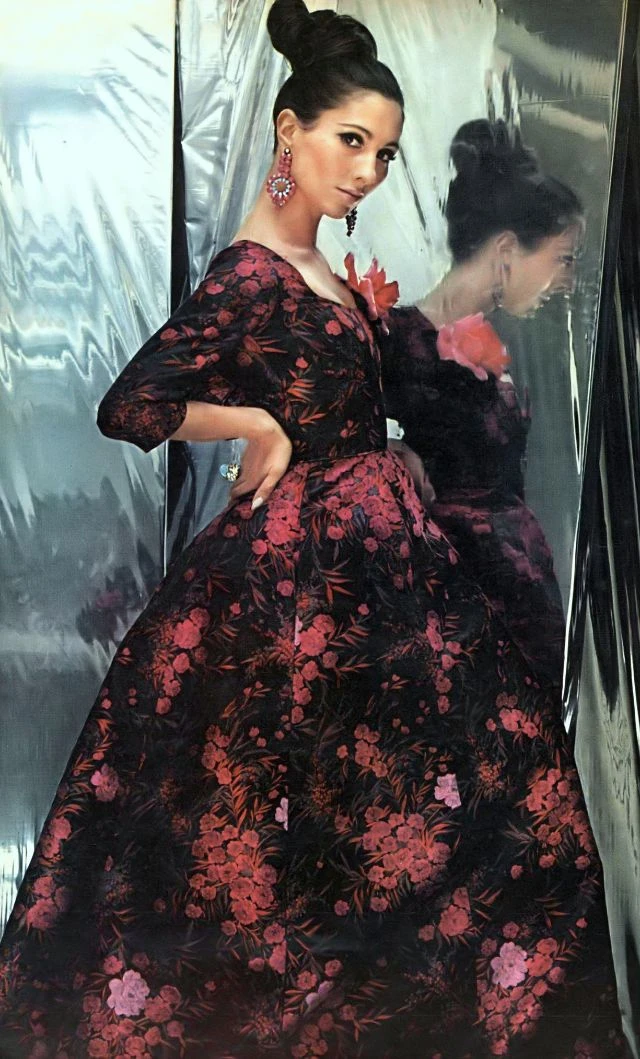
Astrid Schiller in a cherry brocade dress with a floral pattern by Sophie of Saks Fifth Avenue, Vogue, October 1965.
By the mid-1960s, Newton was working at a hectic pace: alongside American Vogue, he was shooting for French Vogue, and between 1964 and 1966, for Elle and the revamped French Vogue under the new editor-in-chief, Francine Cressan. Shooting took place all over the world: Australia, the United States, France. He never stayed in one place.
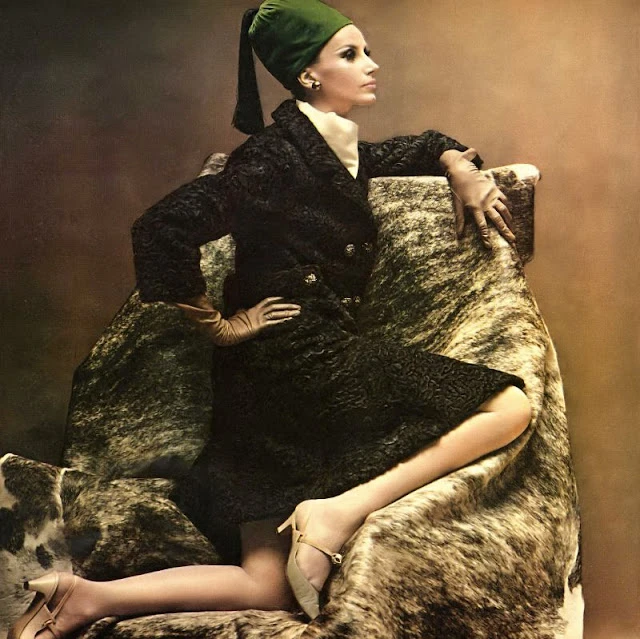
Betina Laur in a Swakara coat by Ben Kahn and a velvet Adolfo fez, Vogue, October 1965.
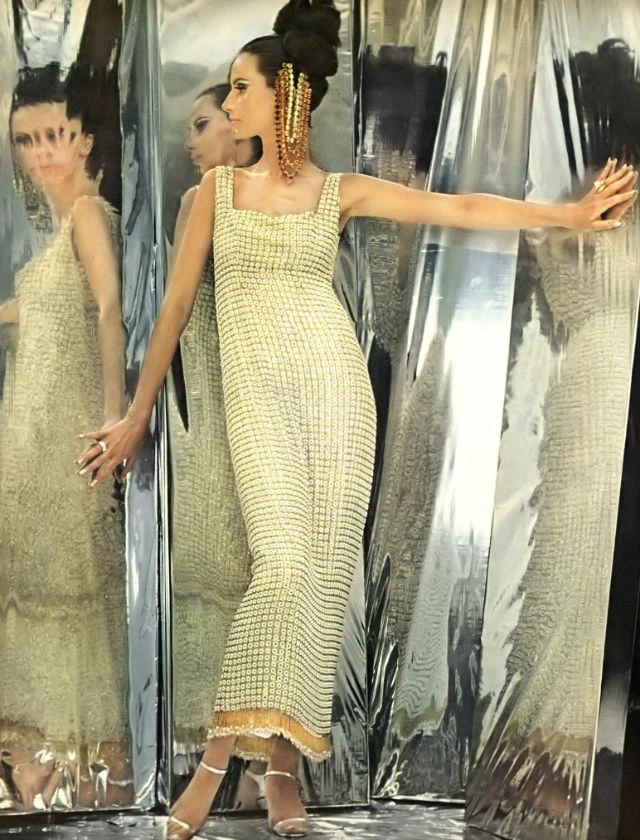
Betina Laur in a gold-embroidered evening gown by Sophie of Saks Fifth Avenue, Vogue, October 1965.
On the brink of provocation
By 1966, his images were beginning to reflect the lightness of a new generation. African cotton prints by MicMac with Paco Rabanne earrings for the July Vogue issue. A year later, Emilio Pucci nightgowns for the April issue. Newton photographed lingerie with the same seriousness as fur coats: the same gaze, the same precision.
In 1968, Susie Kendall and Princess Ira von Furstenberg appeared. A Christian Dior Furs chinchilla jacket, a beaded vinyl vest—Newton increasingly confidently worked with textures and contrasts. The next decade would revolutionize fashion photography—and he was ready for it.
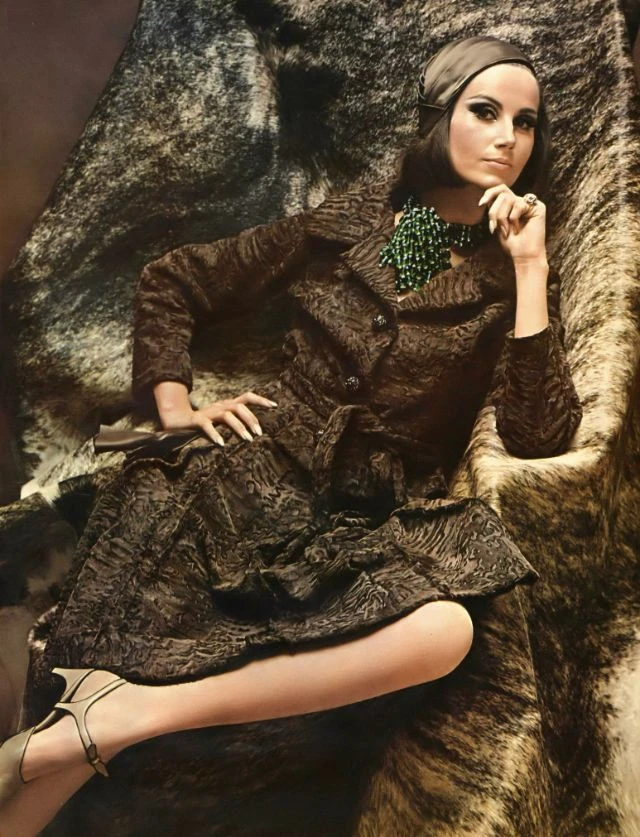
Betina Laur in a Donald Brooks for Coopchik-Forrest broadtail suit and a Mr. John beret, Vogue, October 1965.
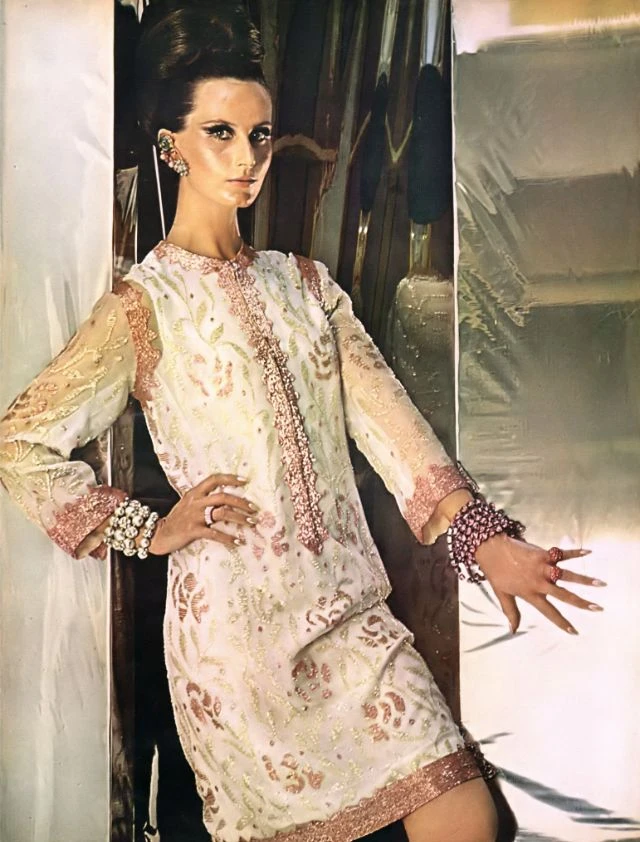
Betina Laur in a shift dress of pale beads on white chiffon with pink flowers by Leslie Morris, Vogue, October 1965.
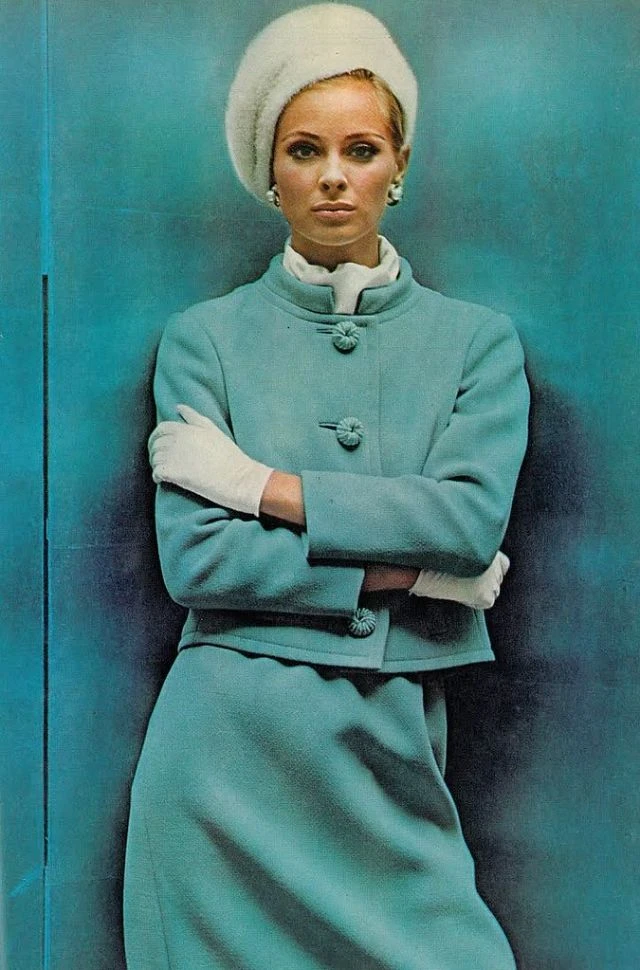
Camilla Sparv in a blue wool suit with a mandarin collar by Seymour Fox, Vogue, 1965.
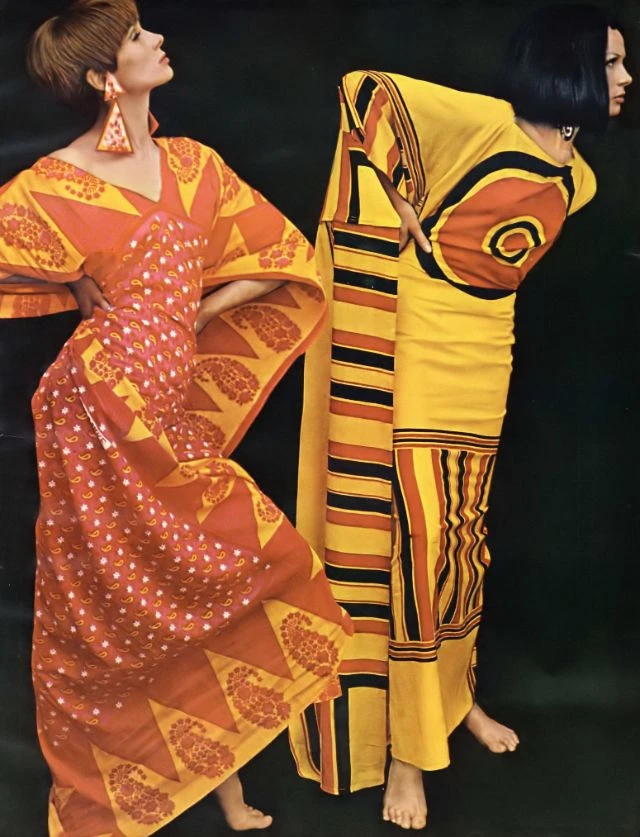
Models wearing Kenyan cotton MicMac print ghanduras and Paco Rabanne earrings, Vogue, July 1966.
Condé Nast International chairman Jonathan Newhouse said after Newton's death: "He became the starting point for Vogue's modern visual imagery." Designer Tom Ford added more precisely: "His world of glamorous, slightly perverse sexual imagery was simultaneously shocking and captivating." But in the 1960s, there was no shock. There was mastery—quiet, precise, and already utterly recognizable.
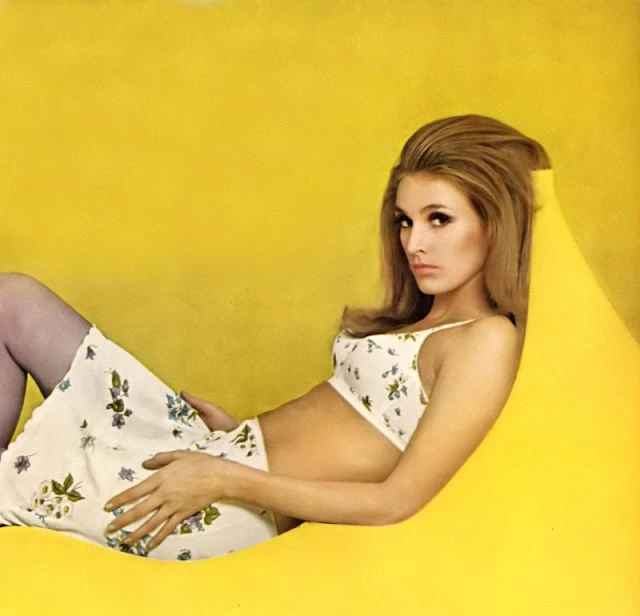
Marika Green in a Hollywood Vassarette bustier and petticoat, Vogue, March 1967.
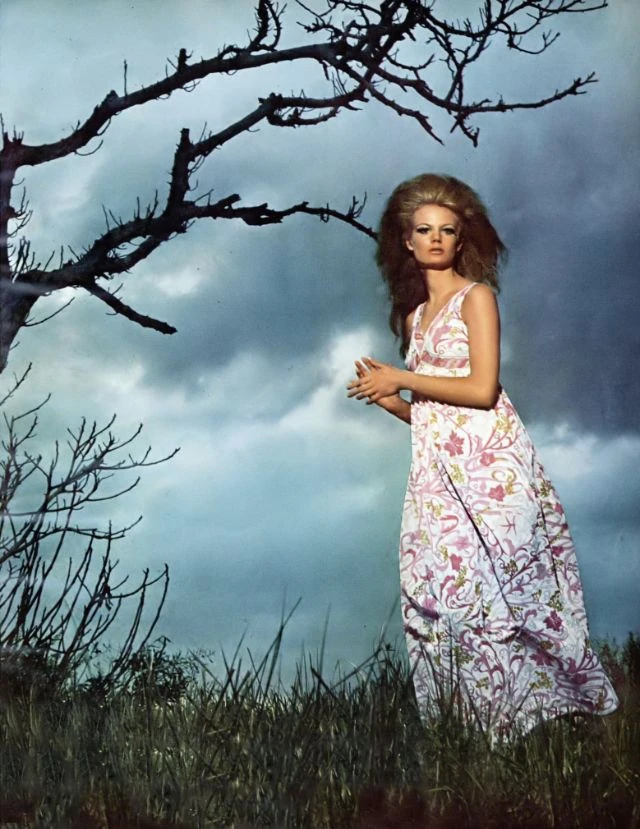
Floral print sundress by Emilio Pucci for Formfit Rogers, Vogue, April 1967.
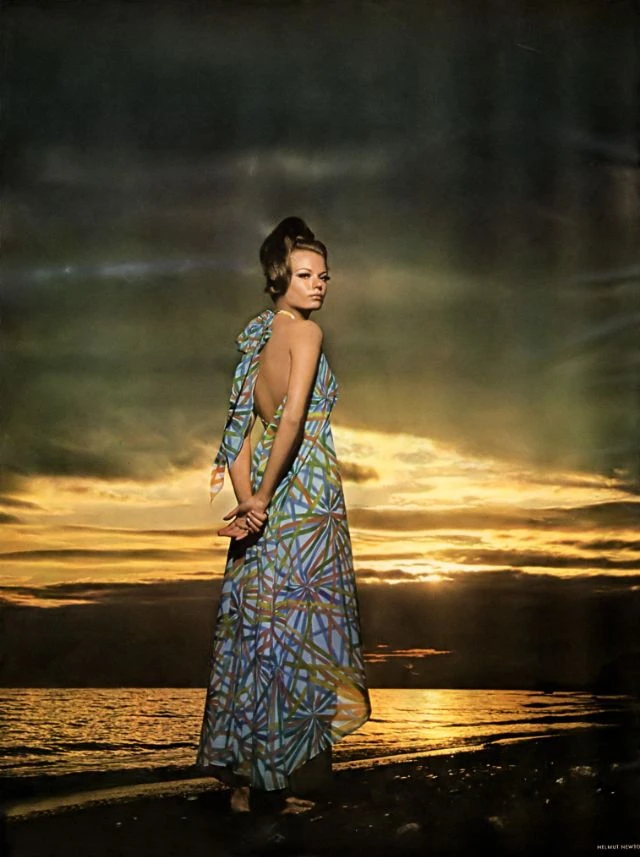
Viscose crepe sundress with flame stripes by Van Raalte, Vogue, April 1967.
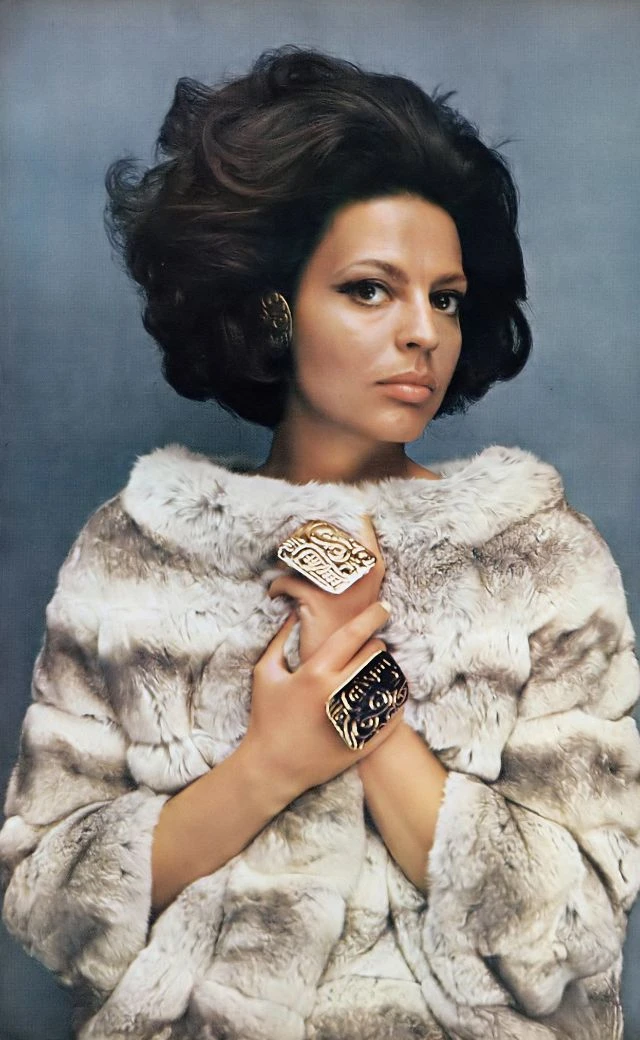
Princess Ira von Furstenberg in a Christian Dior Furs chinchilla jacket, hair by Carita, Vogue, November 1968.
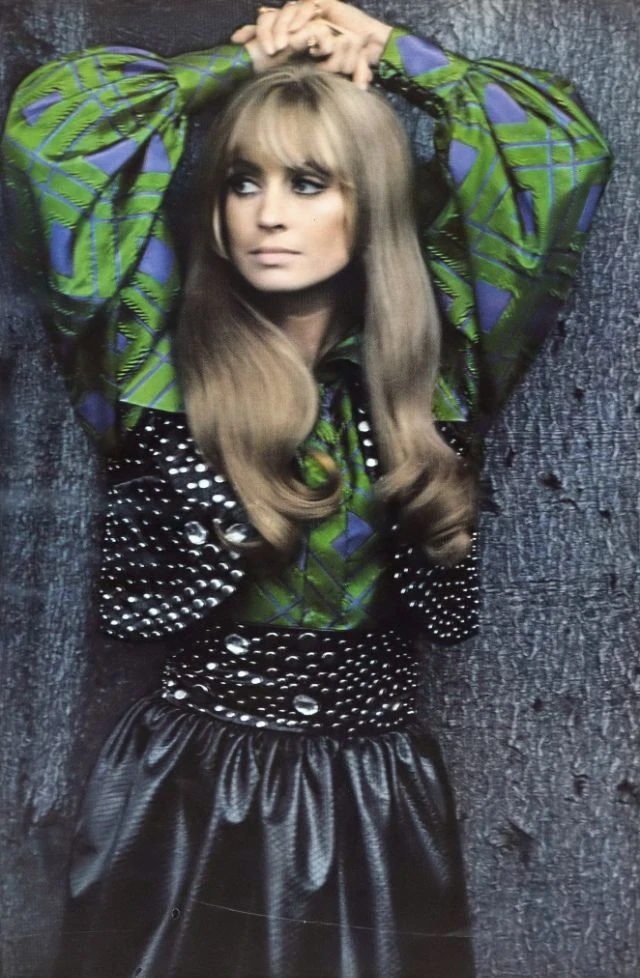
Susie Kendall in a faux snakeskin vest and studded skirt by Edie Gladstone, Vogue, September 1968.
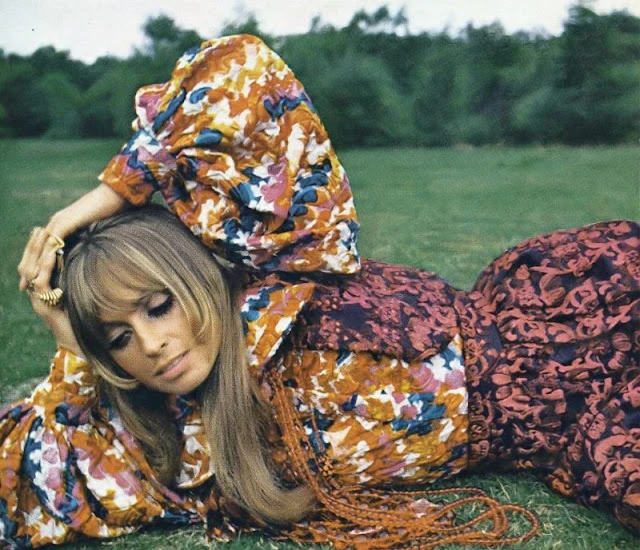
Susie Kendall in a black vinyl cobra-print vest and skirt with red Edie Gladstone embroidery, Vogue, September 1968.
In 2004, Helmut Newton died in a car accident in Los Angeles. He was 83 years old. His photo "Sie kommen" sold at Sotheby's in 2016 for $670,000. And the book "Sumo" is one of the most expensive photo albums in auction history: a rare copy sold for $430,000. Which image from this series do you consider the most accurate portrait of the era?

Download
Archive size 2.98 Mb, downloaded 25 times