Mesmerizing shots of fading hope for environmental restoration
Visually depicting climate change and global environmental change is a challenging task. But for photographer Daniel Beltra, documenting human impact on our planet has become a lifelong passion. He has photographed the polar regions, the Amazon, Iceland, Greenland, and even the BP oil spill. 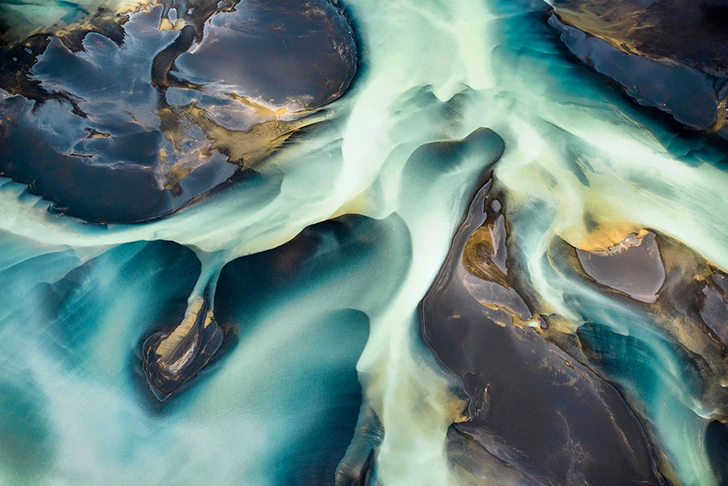
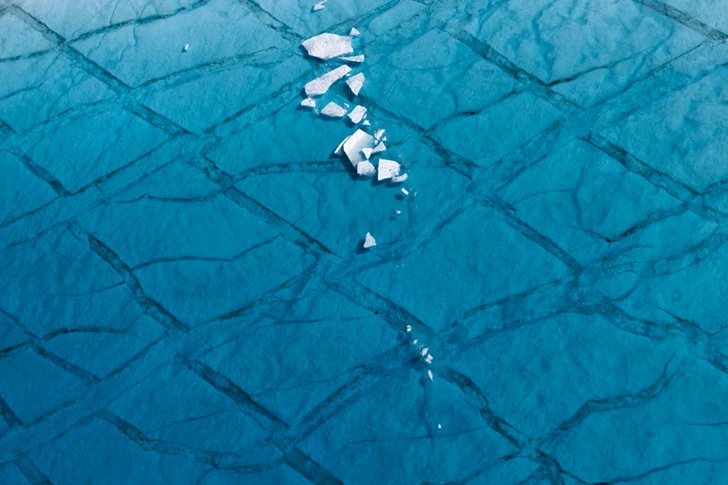
Ice chunks float on the surface of a shallow lake on the Greenland ice sheet east of Ilulissat.
From a young age, Beltrá loved the outdoors, but when he picked up a camera, he realized how photography could change people's perceptions. "Photography became a tool for showing what's happening to the planet and all the aggression we inflict on nature, even though we are perhaps the most intelligent creatures in the world," the photographer explains. 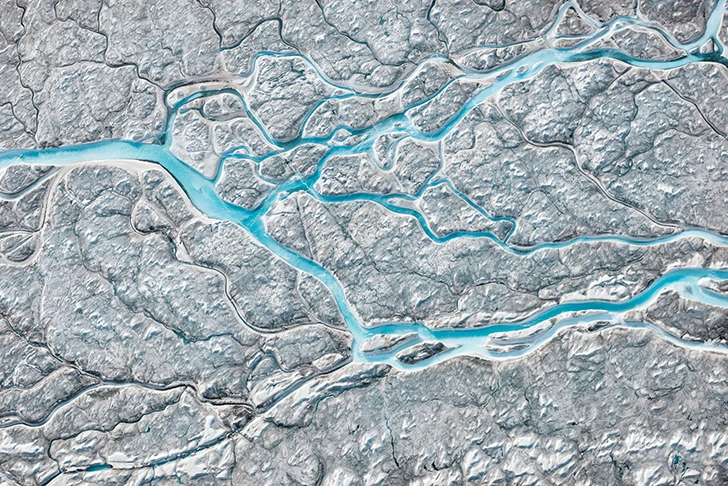

Meltwater flows over the Greenland ice sheet, stained with cryoconite, a mixture of ash and soot, southeast of Ilulissat. According to the photographer, cryoconite on the ice sheet's surface accelerates ice melt by three times.
Over the course of his career, Beltrá has discovered a surprisingly effective way to convey his message: abstract aerial photographs, which he believes have a greater impact than traditional storytelling. "These photographs are painterly, abstract, beautiful, and terrifying—depending on what they depict," he explains. "It helps us abstract away from the big issues—deforestation, global warming, climate change, and so on. I believe that being above it all and getting a little distance helps us understand the problem better."
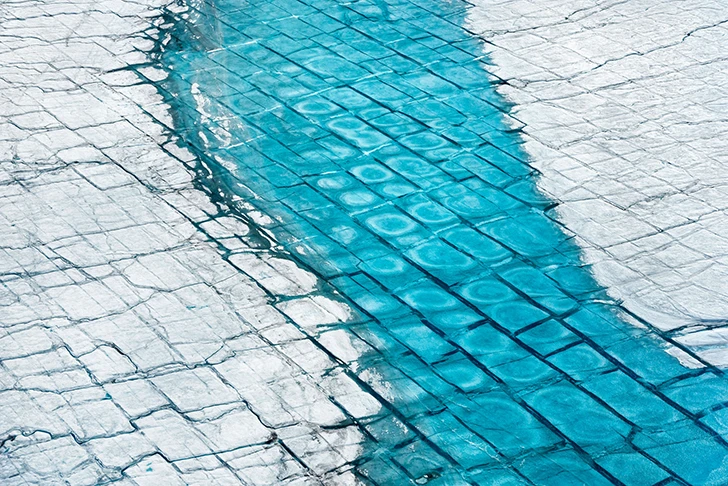
Meltwater pools in the lowlands of the Greenland ice sheet southeast of Ilulissat.
Beltra says people often look at his photographs and don't know what they are. But the photographer considers this an advantage. "Photographs that create such tension, where at first you don't even know what you're looking at, but you feel intrigued, lead to a slightly deeper relationship with the subject."
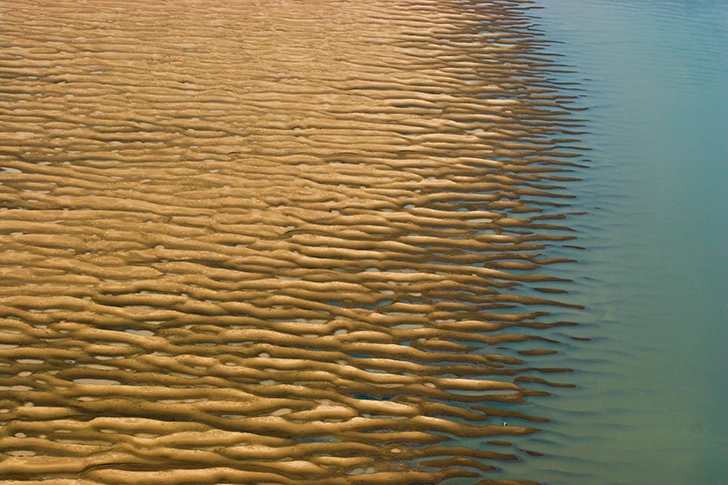
A severe drought has exposed the remains of a tree on the banks of the Madeira River near Nova Olinda do Norte in Brazil.
Beltra's projects require significant planning and are highly dependent on weather conditions. He works in a small charter plane, shooting through a narrow window behind the pilot. During the flight, he takes photographs almost continuously, using three cameras at once.
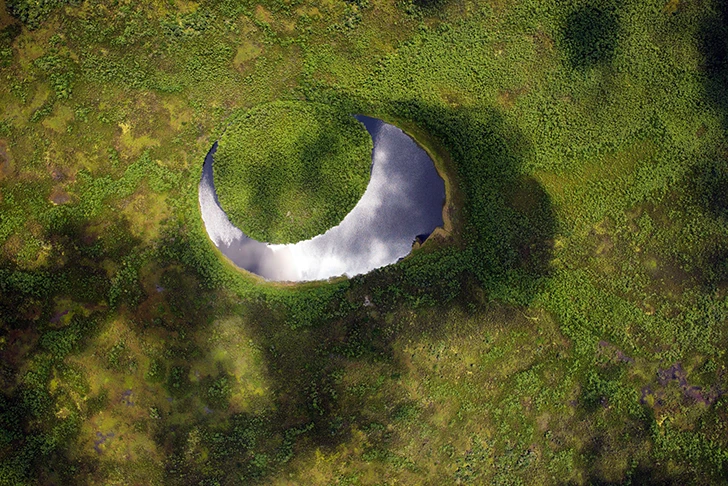
Deforested areas in the Amazon between Macapá and Santarém, Brazil.
Beltra spent a lot of time perfecting his technique and searching for unusual compositions, but there are still many factors to consider, such as the vibrations of an airplane.
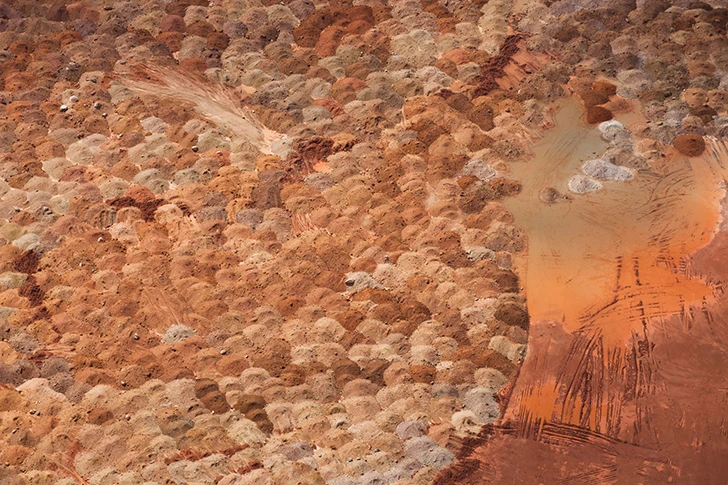
Construction of the Belo Monte Dam near Altamira, Brazil. "The dam will be the third largest in the world, flooding 400,000 hectares and displacing 20,000 people," says Beltra.
"Planes are difficult because you have to add speed into the equation; you can't slow down," says the photographer. "Composition isn't that simple; everything happens so fast. I always tell people it goes from my eyes to my fingers to my brain. I don't even really know how it happens."
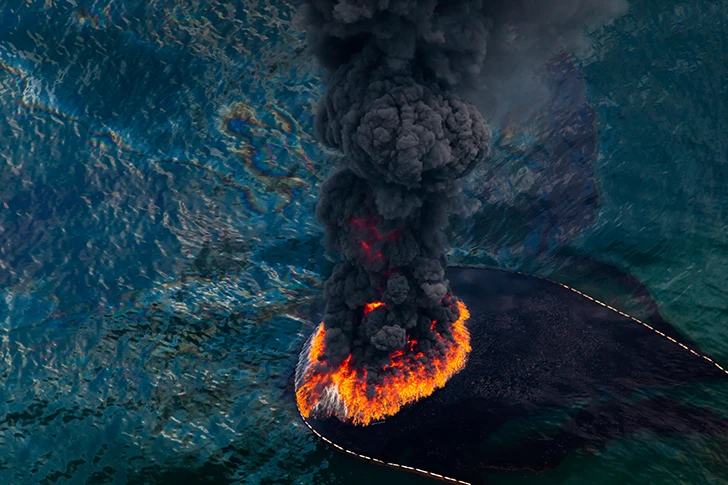
A plume of smoke rises from burning recovered oil in the Gulf of Mexico. Controlled fires were used to clear the Gulf of the film left by the BP oil spill.
Sometimes, Beltrá says, he doesn't even fully understand what he's captured until he looks back at the photos later. "There are photos I discover later when I'm editing them and think, 'Wow, this is incredible,' but I don't even remember taking them."
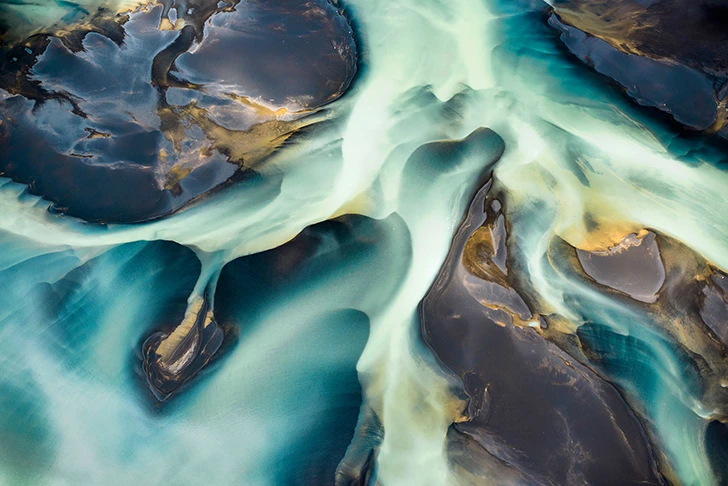
Water in Iceland's Olfusa River flows through sandbars into the Atlantic Ocean. Olfusa is the largest river in Iceland, covering approximately 6,000 square kilometers, or one-seventh of the country's territory. According to a University of Arizona study published in Geophysical Research Letters, parts of Iceland are rising by 3.3 cm per year due to melting ice sheets.
Beltra views his relationships with his pilots as collaborative. "I always say the caption should be shared; they definitely do most of the work," the photographer explains. "I try to meet them before the flight so they can understand what I'm trying to achieve." If, for example, Beltra sees a stunning landscape during a flight, the pilot will make a loop to help capture the shot.
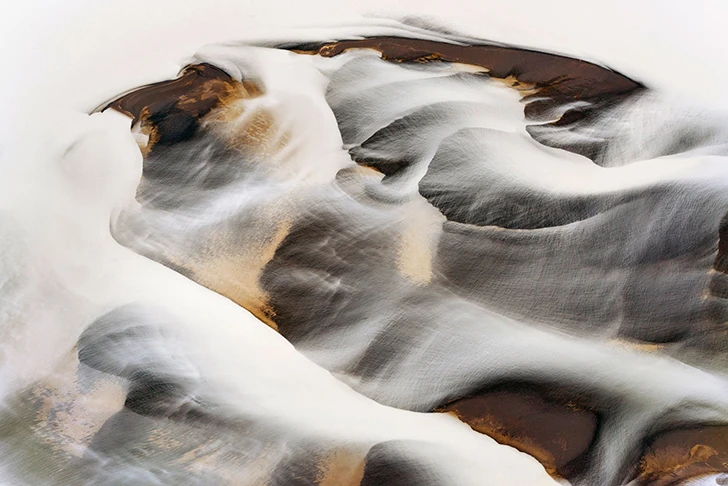
The Thjorsa River with milky white sediments in Iceland.
Fortunately, Beltra's fanatical dedication to his craft has been rewarded more than once: he has won the title of Nature Photographer of the Year and even presented one of his albums to Prince Charles.
But his main goal is to educate people about the dangers of climate change.
"The most important thing is to let people know that we're all in the same boat," says Beltrá. "Ultimately, we still live on the same planet, drink the same water, breathe the same air. I don't think there's anyone who doesn't want to keep all of that pure."

Download
Archive size 3.78 Mb, downloaded 25 times